THE ADVENTURE COLLECTIVE® · Independent discovery and booking for outdoor travel

Walk across black pumice, peer into the vast Valle del Bove and enter a lava tube on a guided Etna trek. This 5–7 hour morning or sunset route combines volcanic geology, endemic flora and dramatic panoramas with practical, guide-led safety.
Walk across black pumice, peer into the vast Valle del Bove and enter a lava tube on a guided Etna trek. This 5–7 hour morning or sunset route combines volcanic geology, endemic flora and dramatic panoramas with practical, guide-led safety.
A low sun slices across black pumice as the trail climbs from the Terrazza dell'Etna parking, and the mountain feels alive beneath your boots. The terrain shifts from shaded woodlands to open lava deserts; wind carries sulfur and the distant rumble of an active summit. You stand at the edge of Valle del Bove, where slopes fall away into a vast caldera that seems to push and pull the horizon.
Verified experiences and guided adventures in the surrounding area.
Operated by Etna Azimut Excursions · Nicolosi, Sicily
A low sun slices across black pumice as the trail climbs from the Terrazza dell'Etna parking, and the mountain feels alive beneath your boots. The terrain shifts from shaded woodlands to open lava deserts; wind carries sulfur and the distant rumble of an active summit. You stand at the edge of Valle del Bove, where slopes fall away into a vast caldera that seems to push and pull the horizon.
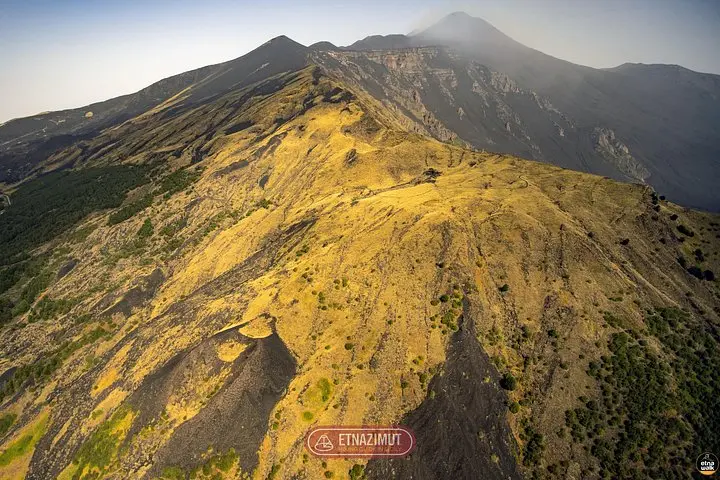
Mount Etna is Europe’s largest active volcano, its history written in overlapping lava flows and scoria cones. Human stories here go back to Greek settlers and local farming traditions that learned to coax vineyards from volcanic soil. Geologically, Etna is a composite volcano with frequent flank eruptions; the Valle del Bove is an erosional collapse that exposes recent flows and ancient layers, offering a living classroom for volcanic processes.
The trek blends cultural notes — rural Etnean agriculture and folklore — with stark geology: lava tubes, buttonhole craters, and sand-like ash where each footfall sinks. Wildlife is hardy and discreet; endemic plants recolonize old flows.
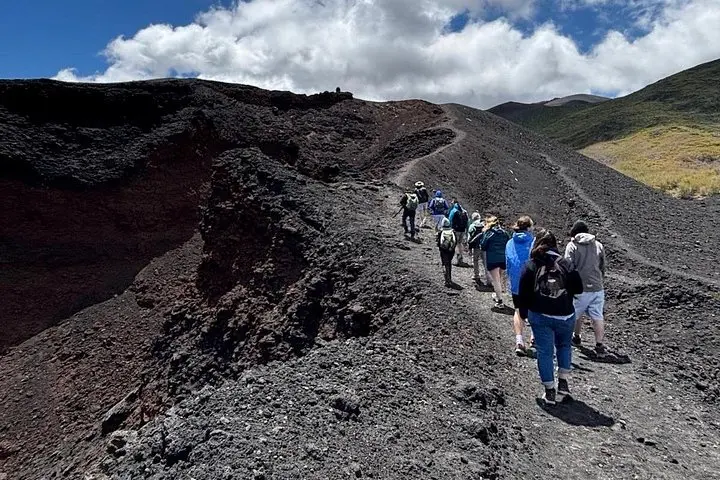
Practical guidance: expect 5–7 hours on mixed terrain (roughly 8–12 km with several hundred metres of ascent depending on route). Trails include volcanic sand, loose rock and short steep sections; good ankle-support boots and trekking poles are recommended. Carry 2–3 liters of water, layered clothing for wind and temperature swings, and a headlamp for cave visits. Guides usually supply helmets and torches for lava-tube exploration. Start early for cooler temperatures and the clearest views; sunset departures offer dramatic light but require careful timing for the return. Respect restricted zones — Etna is active and trail access can change with volcanic conditions.
Moderate: expect mixed surfaces, uneven rock and several hundred metres of ascent; a reasonable fitness level and steady pace are needed.
Guides provide helmets and torches and will assess conditions — caves visited are usually accessible and safe when permitted by authorities.
Sturdy boots, layers for wind, sun protection, 2–3L water, snacks, and a headlamp; guides often supply walking poles and helmets if needed.
Families with children who are accustomed to multi-hour hikes can participate, but organizers note it’s not suitable for infants or those with serious mobility issues.
Etna Azimut Excursions operates guided outdoor trips and adventures with an emphasis on safety, stewardship, and memorable experiences.
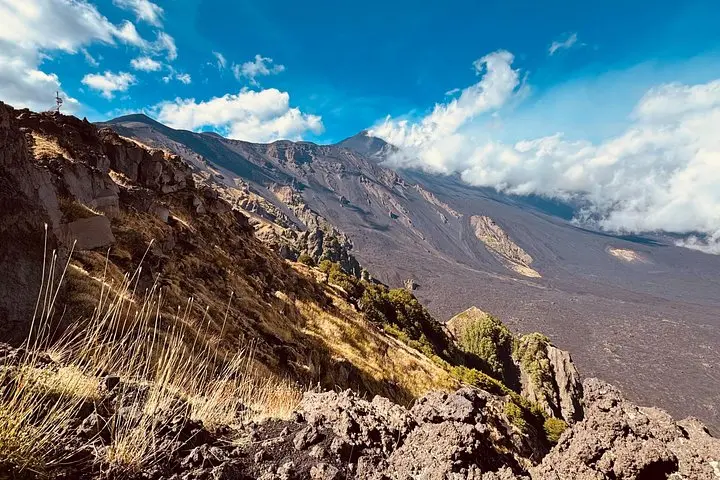
A low sun slices across black pumice as the trail climbs from the Terrazza dell'Etna parking, and the mountain feels alive beneath your boots. The terrain shifts from shaded woodlands to open lava deserts; wind carries sulfur and the distant rumble of an active summit. You stand at the edge of Valle del Bove, where slopes fall away into a vast caldera that seems to push and pull the horizon.
A low sun slices across black pumice as the trail climbs from the Terrazza dell'Etna parking, and the mountain feels alive beneath your boots. The terrain shifts from shaded woodlands to open lava deserts; wind carries sulfur and the distant rumble of an active summit. You stand at the edge of Valle del Bove, where slopes fall away into a vast caldera that seems to push and pull the horizon.
Mount Etna is Europe’s largest active volcano, its history written in overlapping lava flows and scoria cones. Human stories here go back to Greek settlers and local farming traditions that learned to coax vineyards from volcanic soil. Geologically, Etna is a composite volcano with frequent flank eruptions; the Valle del Bove is an erosional collapse that exposes recent flows and ancient layers, offering a living classroom for volcanic processes.
The trek blends cultural notes — rural Etnean agriculture and folklore — with stark geology: lava tubes, buttonhole craters, and sand-like ash where each footfall sinks. Wildlife is hardy and discreet; endemic plants recolonize old flows.
Practical guidance: expect 5–7 hours on mixed terrain (roughly 8–12 km with several hundred metres of ascent depending on route). Trails include volcanic sand, loose rock and short steep sections; good ankle-support boots and trekking poles are recommended. Carry 2–3 liters of water, layered clothing for wind and temperature swings, and a headlamp for cave visits. Guides usually supply helmets and torches for lava-tube exploration. Start early for cooler temperatures and the clearest views; sunset departures offer dramatic light but require careful timing for the return. Respect restricted zones — Etna is active and trail access can change with volcanic conditions.