THE ADVENTURE COLLECTIVE® · Independent discovery and booking for outdoor travel

Taste four Etna wines in an 18th-century Palmento, then wander a self-guided vineyard trail that threads volcanic soils and dry-stone walls between Catania and Mount Etna. Perfect for a short outdoor escape with strong local flavor.
Taste four Etna wines in an 18th-century Palmento, then wander a self-guided vineyard trail that threads volcanic soils and dry-stone walls between Catania and Mount Etna. Perfect for a short outdoor escape with strong local flavor.
You step off the short driveway and the city hum fades; the volcanic ground crunches underfoot and rows of vines slope toward the hulking silhouette of Mount Etna. The courtyard smells of warm stone and oak barrels, and the Palmento—an 18th-century press room—sits like an industrial relic that still breathes grape-scented history.
Verified experiences and guided adventures in the surrounding area.
Operated by Etna Urban Winery · Catania, Sicily
You step off the short driveway and the city hum fades; the volcanic ground crunches underfoot and rows of vines slope toward the hulking silhouette of Mount Etna. The courtyard smells of warm stone and oak barrels, and the Palmento—an 18th-century press room—sits like an industrial relic that still breathes grape-scented history.
This is a city-edge vineyard where eight generations have coaxed wine from Etna’s lava soils. Geologically, the land is young: porous basalt and mineral-rich ash give Etna wines a taut acidity and volcanic minerality. Culturally, this small operation reflects a countertrend—reclaiming agricultural use amid urban sprawl and preserving the dry-stone walls and nineteenth-century outbuildings that map older rhythms of the land.
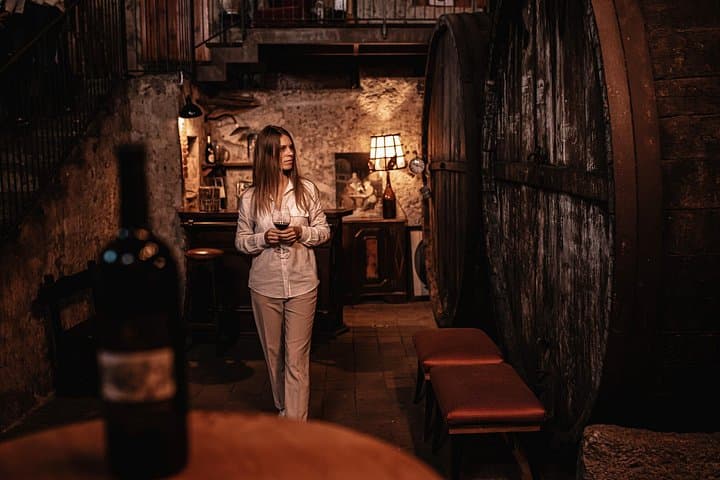
The visit begins with a guided tasting of four Etna wines—sparkling, rosé, white and red—paired with a Sicilian street-food platter designed to show how local flavors meet volcanic terroir. After tasting, a self-guided vineyard trail leads past oak remnants and field viewpoints; interpretive boards explain vine training, soil and altitude. The Palmento’s chestnut barrels and 1790 press are open for inspection, offering a tactile link to winemaking before industrial modernization.
Practical notes: the experience lasts about 90 minutes, is wheelchair accessible, and is suitable for all fitness levels. Wear closed-toe shoes for the vineyard walk, bring sun protection in summer, and allow time to relax in the garden facing Etna.
This is part history lesson, part easy urban trek and part tasting—ideal for travelers who want a short outdoor excursion with tangible local flavor.
Yes; the courtyard and Palmento are accessible and the operator notes wheelchair access for much of the visit, though some rough vineyard paths may be uneven.
Children can join the vineyard walk and a treasure map is available for kids, but wine tasting is restricted to guests 18 and over; soft drinks are provided for minors.
Take the Tangenziale towards Messina and exit at Paesi Etnei; follow local signs and the winery sits about 200 meters past the Petrol Company station on the right.
Bookings are typically instant-confirmation but prebooking is recommended, especially on weekends and during harvest season.
Etna Urban Winery operates guided outdoor trips and adventures with an emphasis on safety, stewardship, and memorable experiences.



You step off the short driveway and the city hum fades; the volcanic ground crunches underfoot and rows of vines slope toward the hulking silhouette of Mount Etna. The courtyard smells of warm stone and oak barrels, and the Palmento—an 18th-century press room—sits like an industrial relic that still breathes grape-scented history.
You step off the short driveway and the city hum fades; the volcanic ground crunches underfoot and rows of vines slope toward the hulking silhouette of Mount Etna. The courtyard smells of warm stone and oak barrels, and the Palmento—an 18th-century press room—sits like an industrial relic that still breathes grape-scented history.
This is a city-edge vineyard where eight generations have coaxed wine from Etna’s lava soils. Geologically, the land is young: porous basalt and mineral-rich ash give Etna wines a taut acidity and volcanic minerality. Culturally, this small operation reflects a countertrend—reclaiming agricultural use amid urban sprawl and preserving the dry-stone walls and nineteenth-century outbuildings that map older rhythms of the land.
The visit begins with a guided tasting of four Etna wines—sparkling, rosé, white and red—paired with a Sicilian street-food platter designed to show how local flavors meet volcanic terroir. After tasting, a self-guided vineyard trail leads past oak remnants and field viewpoints; interpretive boards explain vine training, soil and altitude. The Palmento’s chestnut barrels and 1790 press are open for inspection, offering a tactile link to winemaking before industrial modernization.
Practical notes: the experience lasts about 90 minutes, is wheelchair accessible, and is suitable for all fitness levels. Wear closed-toe shoes for the vineyard walk, bring sun protection in summer, and allow time to relax in the garden facing Etna.
This is part history lesson, part easy urban trek and part tasting—ideal for travelers who want a short outdoor excursion with tangible local flavor.