THE ADVENTURE COLLECTIVE® · Independent discovery and booking for outdoor travel

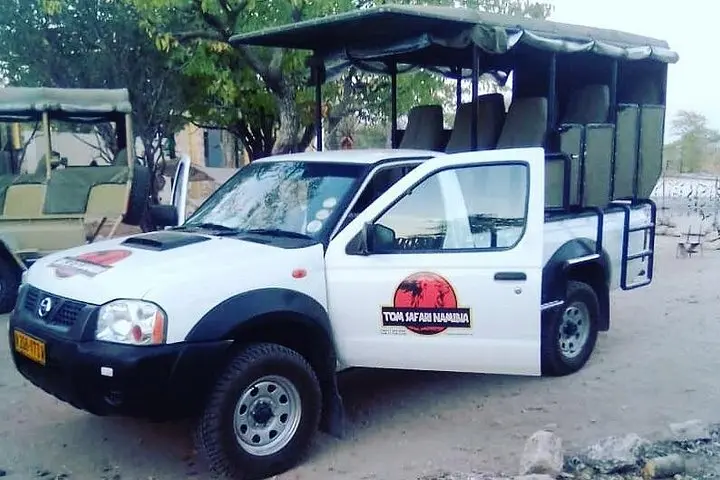
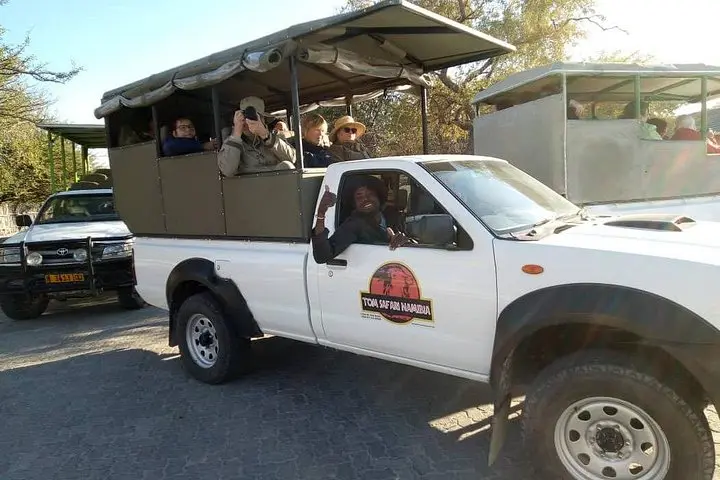
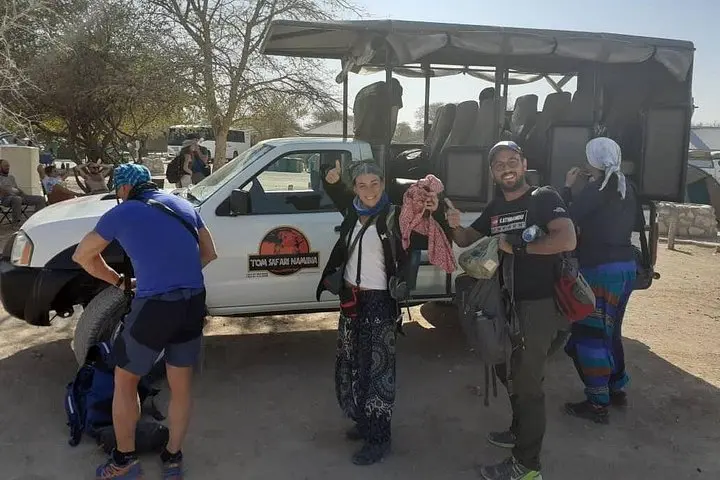
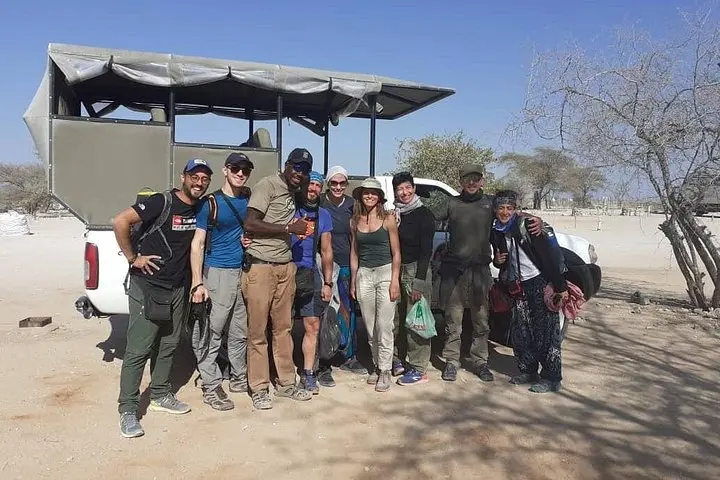
Spend a full day in Etosha National Park aboard elevated 9‑seat 4x4s led by guides who know the animals’ routes. Expect long gravel drives, waterhole stakeouts, and a supervised picnic with restroom access.
Spend a full day in Etosha National Park aboard elevated 9‑seat 4x4s led by guides who know the animals’ routes. Expect long gravel drives, waterhole stakeouts, and a supervised picnic with restroom access.
A low sun draws long shadows across the salt pan as a nine-seat 4x4 eases off the main road and into the park. The guide shuts down the engine; only the distant chuff of a buffalo and the click of binoculars interrupt the hush. Elevated seats and open windows make the bush feel close enough to touch—yet it’s the guide’s local knowledge that stitches the sightings into a coherent day.
Verified experiences and guided adventures in the surrounding area.
Operated by TOM SAFARI NAMIBIA · Okaukuejo (Etosha National Park), Oshikoto Region
A low sun draws long shadows across the salt pan as a nine-seat 4x4 eases off the main road and into the park. The guide shuts down the engine; only the distant chuff of a buffalo and the click of binoculars interrupt the hush. Elevated seats and open windows make the bush feel close enough to touch—yet it’s the guide’s local knowledge that stitches the sightings into a coherent day.
Etosha’s flat white pan is the remnant of an inland lake and underlies a landscape shaped by seasonal floods and volcanic ash. The park was set aside as a protected area in the early 20th century and later became a national park; it has long been central to local Herero and Ovambo communities who read water patterns and animal tracks the way others read maps.
Expect long drives on well-graded gravel and salt-crusted tracks punctuated by stops at permanent waterholes. The region’s geology concentrates wildlife around scarce water in the dry season; in the rainy months, grasses swell and predators range farther.
Practicalities: this is a full-day outing (roughly 10 hours) with lodge or campsite pickup. Vehicles seat nine with elevated views; guides provide blankets for morning chill and a supervised picnic with restrooms at designated stops. Dress in light layers, carry a wide-brim hat, sunglasses and at least 2 liters of water. Cameras with a 200–400mm lens work best from the raised seats; binoculars are essential.
Wildlife viewing rewards patience—early mornings and late afternoons are prime. Stay on tracks, keep noise low, and follow your guide’s instructions; the landscape here looks passive but it moves with purpose: predators stalking edges, elephants rerouting toward water.
This is a full‑day experience of approximately 10 hours, including pickup and a supervised picnic stop.
Etosha hosts over 100 species and sightings are common around waterholes, but wildlife cannot be guaranteed—sightings depend on season and animal movements.
The tour is family-friendly but not recommended for pregnant travelers; children should be supervised and follow guide instructions.
Local guides typically speak English and often Afrikaans or local languages; confirm any language needs when booking.
TOM SAFARI NAMIBIA operates guided outdoor trips and adventures with an emphasis on safety, stewardship, and memorable experiences.
A low sun draws long shadows across the salt pan as a nine-seat 4x4 eases off the main road and into the park. The guide shuts down the engine; only the distant chuff of a buffalo and the click of binoculars interrupt the hush. Elevated seats and open windows make the bush feel close enough to touch—yet it’s the guide’s local knowledge that stitches the sightings into a coherent day.
A low sun draws long shadows across the salt pan as a nine-seat 4x4 eases off the main road and into the park. The guide shuts down the engine; only the distant chuff of a buffalo and the click of binoculars interrupt the hush. Elevated seats and open windows make the bush feel close enough to touch—yet it’s the guide’s local knowledge that stitches the sightings into a coherent day.
Etosha’s flat white pan is the remnant of an inland lake and underlies a landscape shaped by seasonal floods and volcanic ash. The park was set aside as a protected area in the early 20th century and later became a national park; it has long been central to local Herero and Ovambo communities who read water patterns and animal tracks the way others read maps.
Expect long drives on well-graded gravel and salt-crusted tracks punctuated by stops at permanent waterholes. The region’s geology concentrates wildlife around scarce water in the dry season; in the rainy months, grasses swell and predators range farther.
Practicalities: this is a full-day outing (roughly 10 hours) with lodge or campsite pickup. Vehicles seat nine with elevated views; guides provide blankets for morning chill and a supervised picnic with restrooms at designated stops. Dress in light layers, carry a wide-brim hat, sunglasses and at least 2 liters of water. Cameras with a 200–400mm lens work best from the raised seats; binoculars are essential.
Wildlife viewing rewards patience—early mornings and late afternoons are prime. Stay on tracks, keep noise low, and follow your guide’s instructions; the landscape here looks passive but it moves with purpose: predators stalking edges, elephants rerouting toward water.