THE ADVENTURE COLLECTIVE® · Independent discovery and booking for outdoor travel

Attend the evening aarti at Pashupatinath and watch priests perform a powerful riverside ritual as the Bagmati darkens. This private transfer tour offers a close, respectful view of one of Nepal’s most sacred Shiva ceremonies.
Attend the evening aarti at Pashupatinath and watch priests perform a powerful riverside ritual as the Bagmati darkens. This private transfer tour offers a close, respectful view of one of Nepal’s most sacred Shiva ceremonies.
The sun slips behind the low hills of the Kathmandu Valley and the Bagmati River, dark and restless, seems to lean toward the riverbank as if to watch with you. Lamps are lit; the smell of incense rides the cool air. Priests in saffron move with precise rhythm, chanting that pulls the crowd quiet — an aarti performed on a riverside stage where smoke and sound shape the moment.
Verified experiences and guided adventures in the surrounding area.
Operated by Swami Narayan Travels Pvt Ltd · Kathmandu, Bagmati Province
The sun slips behind the low hills of the Kathmandu Valley and the Bagmati River, dark and restless, seems to lean toward the riverbank as if to watch with you. Lamps are lit; the smell of incense rides the cool air. Priests in saffron move with precise rhythm, chanting that pulls the crowd quiet — an aarti performed on a riverside stage where smoke and sound shape the moment.
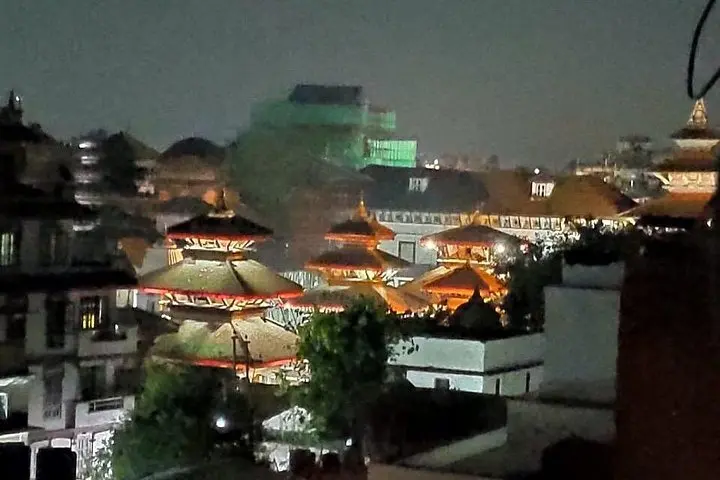
Pashupatinath is one of Nepal’s oldest and most important Shiva temples, part of the Kathmandu Valley UNESCO World Heritage area. Built and rebuilt across centuries, its pagoda roofs and intricately carved woodwork echo Newar craftsmanship. Geologically, the temple sits in the alluvial plain of the Bagmati, a river that has long shaped religious life here; culturally, the site is both a place of worship and living ritual, including active cremation ghats that testify to long-standing Hindu practices.
Expect a guided, private transfer from central Kathmandu (roughly 20–40 minutes depending on traffic), a short, gentle walk from the main gate to the aarti platform, and 60–90 minutes of ceremonial observation. Photography is restricted near the inner sanctum; non-Hindus generally view from designated spots. Dress modestly — shoulders and knees covered — and keep a low voice near ghats.
Practical tips: arrive early to find a good viewpoint on the riverbank, bring a light wrap against evening chill, and carry small change for temple offerings. The event is low-impact physically but high on sensory and cultural intensity: plan time afterward to process what you’ve witnessed and return slowly through the narrow streets of old Kathmandu.
No — access to the inner sanctum is generally restricted to Hindus; non-Hindu visitors can observe the aarti from designated viewing areas or the opposite riverbank.
Yes — the private tour includes round-trip transfer and hotel pickup and drop-off within Kathmandu as stated in the inclusions.
Photography is allowed in many parts of the complex but restricted in the inner sanctum and at sensitive ritual moments; follow your guide and local signs.
Parts of the complex and main approaches are wheelchair accessible, but some riverbank and ghat areas have steps and uneven stone surfaces.
Swami Narayan Travels Pvt Ltd operates guided outdoor trips and adventures with an emphasis on safety, stewardship, and memorable experiences.
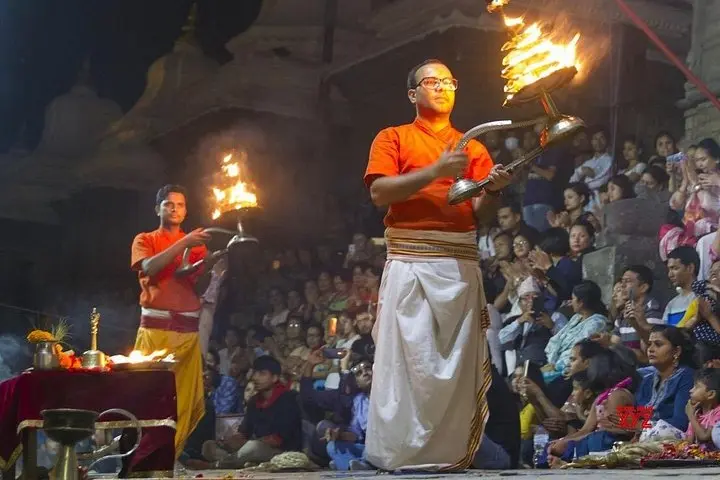
The sun slips behind the low hills of the Kathmandu Valley and the Bagmati River, dark and restless, seems to lean toward the riverbank as if to watch with you. Lamps are lit; the smell of incense rides the cool air. Priests in saffron move with precise rhythm, chanting that pulls the crowd quiet — an aarti performed on a riverside stage where smoke and sound shape the moment.
The sun slips behind the low hills of the Kathmandu Valley and the Bagmati River, dark and restless, seems to lean toward the riverbank as if to watch with you. Lamps are lit; the smell of incense rides the cool air. Priests in saffron move with precise rhythm, chanting that pulls the crowd quiet — an aarti performed on a riverside stage where smoke and sound shape the moment.
Pashupatinath is one of Nepal’s oldest and most important Shiva temples, part of the Kathmandu Valley UNESCO World Heritage area. Built and rebuilt across centuries, its pagoda roofs and intricately carved woodwork echo Newar craftsmanship. Geologically, the temple sits in the alluvial plain of the Bagmati, a river that has long shaped religious life here; culturally, the site is both a place of worship and living ritual, including active cremation ghats that testify to long-standing Hindu practices.
Expect a guided, private transfer from central Kathmandu (roughly 20–40 minutes depending on traffic), a short, gentle walk from the main gate to the aarti platform, and 60–90 minutes of ceremonial observation. Photography is restricted near the inner sanctum; non-Hindus generally view from designated spots. Dress modestly — shoulders and knees covered — and keep a low voice near ghats.
Practical tips: arrive early to find a good viewpoint on the riverbank, bring a light wrap against evening chill, and carry small change for temple offerings. The event is low-impact physically but high on sensory and cultural intensity: plan time afterward to process what you’ve witnessed and return slowly through the narrow streets of old Kathmandu.