THE ADVENTURE COLLECTIVE® · Independent discovery and booking for outdoor travel

A compact evening escape from Abu Dhabi: ride an insured Land Cruiser into rolling dunes for adrenaline-filled dune bashing, a quick camel photo-stop, sandboarding and a traditional camp with food and performances. Ideal for first-time visitors who want a curated desert experience.
A compact evening escape from Abu Dhabi: ride an insured Land Cruiser into rolling dunes for adrenaline-filled dune bashing, a quick camel photo-stop, sandboarding and a traditional camp with food and performances. Ideal for first-time visitors who want a curated desert experience.
The Land Cruiser hums away from Abu Dhabi as the city’s glass fades behind you and the desert expands—an ocean of wind-sculpted sand that dares you to read its contours. In 45–50 minutes the dunes grow taller, their ridgelines sharp against a lowering sky; drivers pick lines like surfers picking waves, and the vehicle rocks and slides over shoulders of sand.
Verified experiences and guided adventures in the surrounding area.
Operated by Extreme Arabia · Abu Dhabi, Abu Dhabi
The Land Cruiser hums away from Abu Dhabi as the city’s glass fades behind you and the desert expands—an ocean of wind-sculpted sand that dares you to read its contours. In 45–50 minutes the dunes grow taller, their ridgelines sharp against a lowering sky; drivers pick lines like surfers picking waves, and the vehicle rocks and slides over shoulders of sand.
This is Arabian Desert country: recent Holocene dunes built from coastal sediments and crushed shell, crossing territories once patrolled by camel caravans. Bedouin culture and falconry remain visible—falcons still posed for photographs—while modern safari camps stage an accessible slice of traditional life: coffee and dates, henna, Tanoura and belly dance around an open-fire barbecue.
Practically, the half-day evening safari is a packaged sequence: hotel pickup in an air-conditioned 4x4, a dune-bashing leg led by experienced marshals, a sandboarding try, a short camel ride for photos, then sunset and a camp with refreshments and performances. Expect moderate jostling during dune driving; the camel experience is brief and mostly photographic.
Wear breathable layers, closed shoes to keep sand out, and bring sun protection and at least 1–2 liters of water. If you have back, heart, or pregnancy concerns, skip the dune bashing—providers list it as unsuitable. Timing matters: arrive with room in your schedule to catch the sun’s last light and to settle after the bumpy return trip. For photographers, low light and long dune shadows make for dramatic frames—just secure cameras against sand. The camp’s communal setting is tourist-friendly but honoring local customs—modest dress for performances and a polite approach to cultural demonstrations—keeps the night respectful and rewarding.
Expect roughly 45–50 minutes by air-conditioned 4x4 depending on pickup location and traffic.
Operators typically allow children but recommend appropriate restraints and caution; ask about child seats and company age policies at booking.
Most evening safaris include a short camel ride primarily for photos; extended rides are rare on half-day excursions.
Yes—standard camps provide vegetarian choices; notify the operator in advance for dietary restrictions or specific needs.
Extreme Arabia operates guided outdoor trips and adventures with an emphasis on safety, stewardship, and memorable experiences.
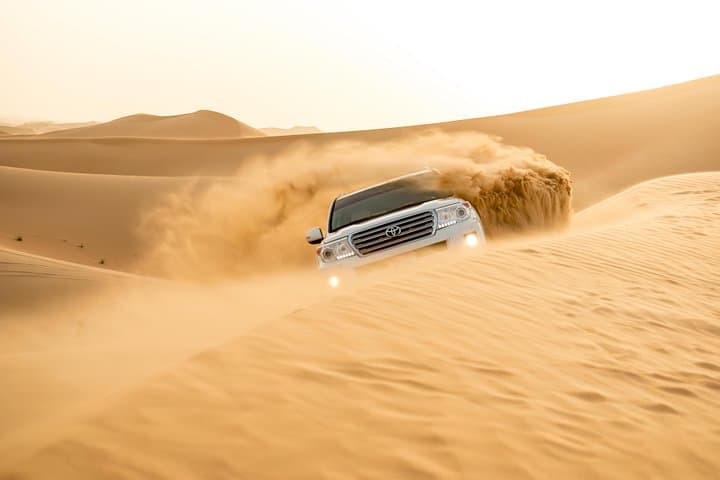
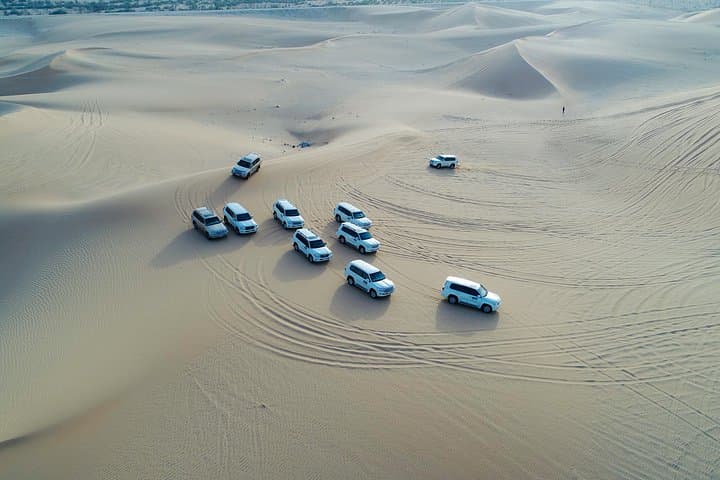
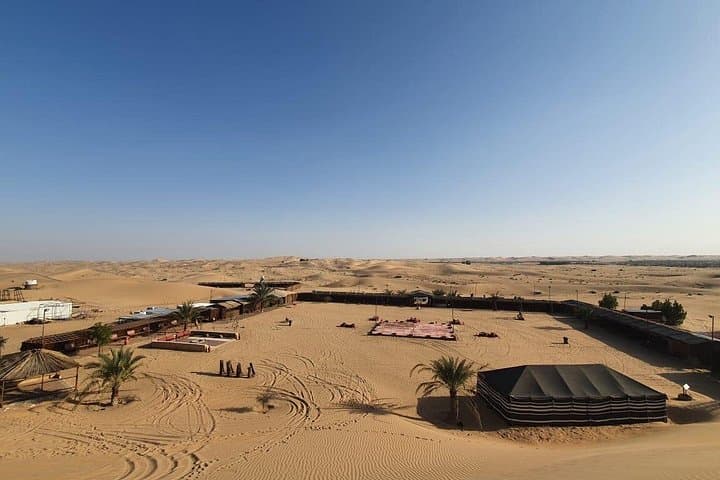
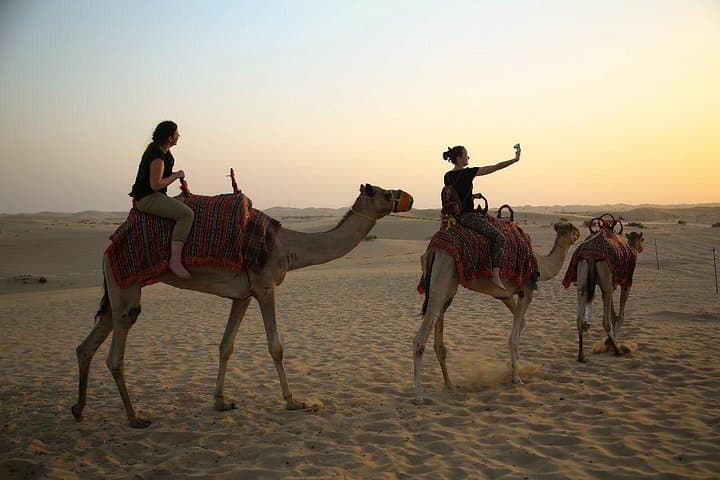
The Land Cruiser hums away from Abu Dhabi as the city’s glass fades behind you and the desert expands—an ocean of wind-sculpted sand that dares you to read its contours. In 45–50 minutes the dunes grow taller, their ridgelines sharp against a lowering sky; drivers pick lines like surfers picking waves, and the vehicle rocks and slides over shoulders of sand.
The Land Cruiser hums away from Abu Dhabi as the city’s glass fades behind you and the desert expands—an ocean of wind-sculpted sand that dares you to read its contours. In 45–50 minutes the dunes grow taller, their ridgelines sharp against a lowering sky; drivers pick lines like surfers picking waves, and the vehicle rocks and slides over shoulders of sand.
This is Arabian Desert country: recent Holocene dunes built from coastal sediments and crushed shell, crossing territories once patrolled by camel caravans. Bedouin culture and falconry remain visible—falcons still posed for photographs—while modern safari camps stage an accessible slice of traditional life: coffee and dates, henna, Tanoura and belly dance around an open-fire barbecue.
Practically, the half-day evening safari is a packaged sequence: hotel pickup in an air-conditioned 4x4, a dune-bashing leg led by experienced marshals, a sandboarding try, a short camel ride for photos, then sunset and a camp with refreshments and performances. Expect moderate jostling during dune driving; the camel experience is brief and mostly photographic.
Wear breathable layers, closed shoes to keep sand out, and bring sun protection and at least 1–2 liters of water. If you have back, heart, or pregnancy concerns, skip the dune bashing—providers list it as unsuitable. Timing matters: arrive with room in your schedule to catch the sun’s last light and to settle after the bumpy return trip. For photographers, low light and long dune shadows make for dramatic frames—just secure cameras against sand. The camp’s communal setting is tourist-friendly but honoring local customs—modest dress for performances and a polite approach to cultural demonstrations—keeps the night respectful and rewarding.