THE ADVENTURE COLLECTIVE® · Independent discovery and booking for outdoor travel

Take an evening into Dubai’s red dunes for high-speed dune bashing, sandboarding and a Bedouin-style camp dinner under open skies. This practical guide covers what to expect, safety tips, and how to prepare for the desert after-sunset chill.
Take an evening into Dubai’s red dunes for high-speed dune bashing, sandboarding and a Bedouin-style camp dinner under open skies. This practical guide covers what to expect, safety tips, and how to prepare for the desert after-sunset chill.
You pull away from Dubai’s glittering skyline and the city shrinks to a ribbon of light as the red dunes rise up like a silent, moving sea. The vehicle crests a slope, tires sink, then climb again — the dunes push you forward and the horizon opens into a broad, copper sky. As the sun slides low, the sand drinks the light and shadows race downhill.
Verified experiences and guided adventures in the surrounding area.
Operated by Desert Host Tourism LLC · Lahbab, Dubai
You pull away from Dubai’s glittering skyline and the city shrinks to a ribbon of light as the red dunes rise up like a silent, moving sea. The vehicle crests a slope, tires sink, then climb again — the dunes push you forward and the horizon opens into a broad, copper sky. As the sun slides low, the sand drinks the light and shadows race downhill.
This stretch of the Arabian Desert carries both geology and human memory: wind-sculpted sand that migrated over millennia, punctuated by ancient caravan routes and modern Bedouin hospitality reinterpreted for visitors. Camels still mark the cultural landscape as they did for nomads who read weather in the wind. Geologically, these “red dunes” owe their color to iron-oxide coatings on sand grains and to the region’s arid cycles that concentrate mineral staining.
Evening safaris combine adrenaline and low-key cultural immersion: dune bashing in 4x4s, sandboarding down steep faces, a gentle camel ride, then an open-air camp with grilled food and traditional entertainment. Guides explain local customs and offer photo stops as the sun sets.
Practical guidance: bring closed shoes for sandboarding, a light jacket for cooling desert nights, and a reusable water bottle — organizers typically supply cold drinks but hydration is key. Avoid heavy jewelry, secure loose items during dune bashing, and follow guides’ safety briefings.
Timing matters — late afternoon departures catch the best light and cooler temperatures. Respect the landscape: stay on designated routes, keep noise low near wildlife, and leave no trace to preserve the dunes for future travelers.
The typical duration is about seven hours, with hotel pickup in the late afternoon and drop-off after the camp entertainment.
Dune bashing is generally safe with professional drivers, but it’s not recommended for pregnant travelers or those with serious back or heart conditions.
Yes — sandboards are provided and guides will show a few dunes suitable for sliding; footwear with grip improves control.
Dinner and unlimited soft drinks/water are usually included; confirm dietary needs in advance with the operator.
Desert Host Tourism LLC operates guided outdoor trips and adventures with an emphasis on safety, stewardship, and memorable experiences.
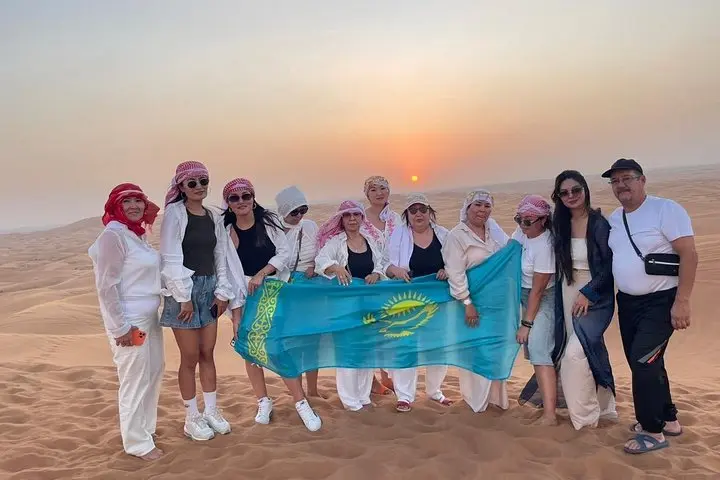



You pull away from Dubai’s glittering skyline and the city shrinks to a ribbon of light as the red dunes rise up like a silent, moving sea. The vehicle crests a slope, tires sink, then climb again — the dunes push you forward and the horizon opens into a broad, copper sky. As the sun slides low, the sand drinks the light and shadows race downhill.
You pull away from Dubai’s glittering skyline and the city shrinks to a ribbon of light as the red dunes rise up like a silent, moving sea. The vehicle crests a slope, tires sink, then climb again — the dunes push you forward and the horizon opens into a broad, copper sky. As the sun slides low, the sand drinks the light and shadows race downhill.
This stretch of the Arabian Desert carries both geology and human memory: wind-sculpted sand that migrated over millennia, punctuated by ancient caravan routes and modern Bedouin hospitality reinterpreted for visitors. Camels still mark the cultural landscape as they did for nomads who read weather in the wind. Geologically, these “red dunes” owe their color to iron-oxide coatings on sand grains and to the region’s arid cycles that concentrate mineral staining.
Evening safaris combine adrenaline and low-key cultural immersion: dune bashing in 4x4s, sandboarding down steep faces, a gentle camel ride, then an open-air camp with grilled food and traditional entertainment. Guides explain local customs and offer photo stops as the sun sets.
Practical guidance: bring closed shoes for sandboarding, a light jacket for cooling desert nights, and a reusable water bottle — organizers typically supply cold drinks but hydration is key. Avoid heavy jewelry, secure loose items during dune bashing, and follow guides’ safety briefings.
Timing matters — late afternoon departures catch the best light and cooler temperatures. Respect the landscape: stay on designated routes, keep noise low near wildlife, and leave no trace to preserve the dunes for future travelers.