THE ADVENTURE COLLECTIVE® · Independent discovery and booking for outdoor travel

Experience Gion after dusk on a three-hour guided walk through Hanamikoji, Yasaka Shrine, and Maruyama Park. Learn local history and etiquette while navigating lantern-lit alleys and historic temples.
Experience Gion after dusk on a three-hour guided walk through Hanamikoji, Yasaka Shrine, and Maruyama Park. Learn local history and etiquette while navigating lantern-lit alleys and historic temples.
A cool evening settles over Gion as lanterns ignite along narrow streets and the first shadows of the day slip between wooden machiya houses. On this three-hour guided walk, travelers move at a deliberate pace — down Hanamikoji Street, past lacquered teahouses, and through pockets of stone-paved alleys where the click of geta can still be imagined.
Verified experiences and guided adventures in the surrounding area.
Operated by Guydeez · Kyoto, Kyoto Prefecture
A cool evening settles over Gion as lanterns ignite along narrow streets and the first shadows of the day slip between wooden machiya houses. On this three-hour guided walk, travelers move at a deliberate pace — down Hanamikoji Street, past lacquered teahouses, and through pockets of stone-paved alleys where the click of geta can still be imagined.
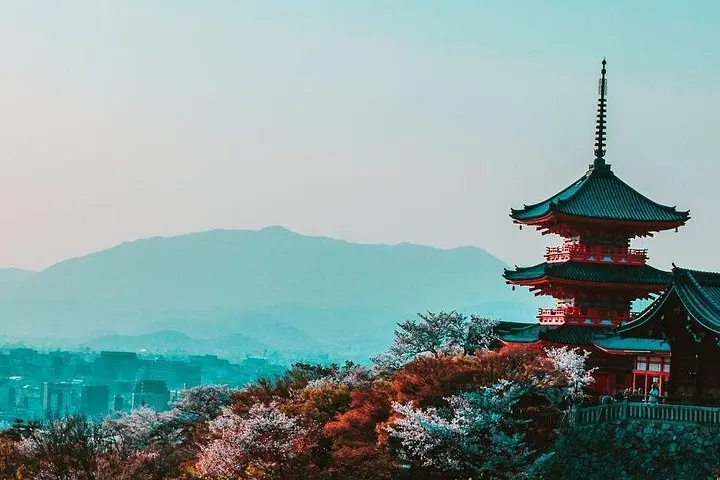
The route threads Yasaka Shrine’s glowing torii and the open lawns of Maruyama Park, then arcs toward Chion-in’s expansive Sanmon gate. These sites map centuries of Kyoto history: Gion grew as an entertainment district tied to Yasaka’s festivals, and hanamachi customs shaped the geiko and maiko arts still practiced nearby. Geology shows here in subtle ways — the Kamo River plain gave fertile ground for Kyoto’s settlement, while the compact, timber-built houses reflect local materials and earthquake-conscious construction.
Culturally, the district balances living tradition and tourism; guides emphasize respectful distance, quiet photography, and using local businesses for sustenance. Expect paved sidewalks, occasional stone steps, and steady urban lighting — but bring a light layer as evenings can cool quickly.
Practical notes: the tour lasts roughly three hours, is physically easy, and is best timed to arrive 30 minutes before sunset for the lantern-lit transition. Carry small bills for shrine offerings and snacks, wear comfortable shoes for cobbled streets, and keep your camera ready but courteous: approaching geiko or maiko for photos is inappropriate without permission. This walk is a compact, sensory way to meet Kyoto’s living past without rushing through it.
Most tours meet near a central Gion landmark (your booking confirmation will state the exact spot); the route typically begins on Hanamikoji and finishes near Yasaka Shrine or Maruyama Park.
There’s a chance to glimpse geiko or maiko in the streets, especially in early evening, but sightings aren’t guaranteed; guides advise observing quietly and not approaching them for photos.
The route is generally accessible along paved streets and park paths, but some alleys and temple approaches have steps; contact the operator in advance to confirm accommodations.
This is primarily a walking and cultural-tour; admission inside temples is usually not required for the itinerary described, and any optional entry costs are noted by the guide.
Guydeez operates guided outdoor trips and adventures with an emphasis on safety, stewardship, and memorable experiences.


A cool evening settles over Gion as lanterns ignite along narrow streets and the first shadows of the day slip between wooden machiya houses. On this three-hour guided walk, travelers move at a deliberate pace — down Hanamikoji Street, past lacquered teahouses, and through pockets of stone-paved alleys where the click of geta can still be imagined.
A cool evening settles over Gion as lanterns ignite along narrow streets and the first shadows of the day slip between wooden machiya houses. On this three-hour guided walk, travelers move at a deliberate pace — down Hanamikoji Street, past lacquered teahouses, and through pockets of stone-paved alleys where the click of geta can still be imagined.
The route threads Yasaka Shrine’s glowing torii and the open lawns of Maruyama Park, then arcs toward Chion-in’s expansive Sanmon gate. These sites map centuries of Kyoto history: Gion grew as an entertainment district tied to Yasaka’s festivals, and hanamachi customs shaped the geiko and maiko arts still practiced nearby. Geology shows here in subtle ways — the Kamo River plain gave fertile ground for Kyoto’s settlement, while the compact, timber-built houses reflect local materials and earthquake-conscious construction.
Culturally, the district balances living tradition and tourism; guides emphasize respectful distance, quiet photography, and using local businesses for sustenance. Expect paved sidewalks, occasional stone steps, and steady urban lighting — but bring a light layer as evenings can cool quickly.
Practical notes: the tour lasts roughly three hours, is physically easy, and is best timed to arrive 30 minutes before sunset for the lantern-lit transition. Carry small bills for shrine offerings and snacks, wear comfortable shoes for cobbled streets, and keep your camera ready but courteous: approaching geiko or maiko for photos is inappropriate without permission. This walk is a compact, sensory way to meet Kyoto’s living past without rushing through it.