THE ADVENTURE COLLECTIVE® · Independent discovery and booking for outdoor travel

Explore Marble Mountain’s caves and shrines in late afternoon, then walk Hoi An’s lantern-lit streets at night. This half-day evening tour pairs karst geology with living cultural heritage and local flavors.
Explore Marble Mountain’s caves and shrines in late afternoon, then walk Hoi An’s lantern-lit streets at night. This half-day evening tour pairs karst geology with living cultural heritage and local flavors.
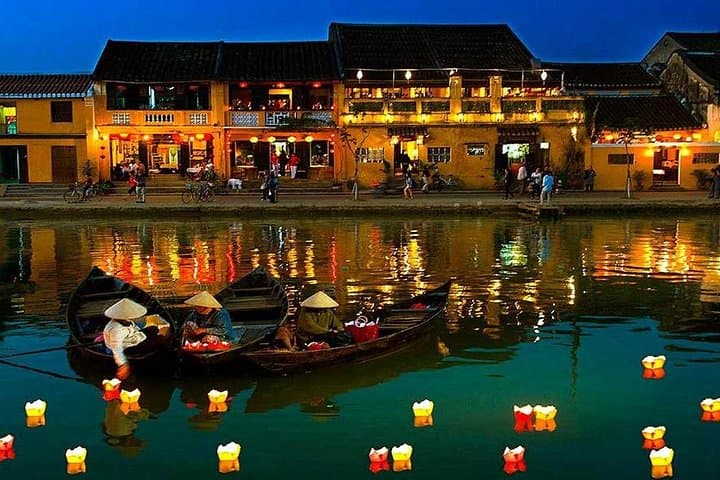
You arrive in the late afternoon as limestone steps cool under the setting sun and the first lanterns on the Hoai River begin to glow. Marble Mountain’s cavernous mouths draw you in—wind and distant chants give the stone a voice—before the tour moves downstream to Hoi An, where lanterns bob like small planets above narrow streets.
Verified experiences and guided adventures in the surrounding area.
Operated by Golden Bridge Bana Hills Tours · Da Nang, Da Nang
You arrive in the late afternoon as limestone steps cool under the setting sun and the first lanterns on the Hoai River begin to glow. Marble Mountain’s cavernous mouths draw you in—wind and distant chants give the stone a voice—before the tour moves downstream to Hoi An, where lanterns bob like small planets above narrow streets.
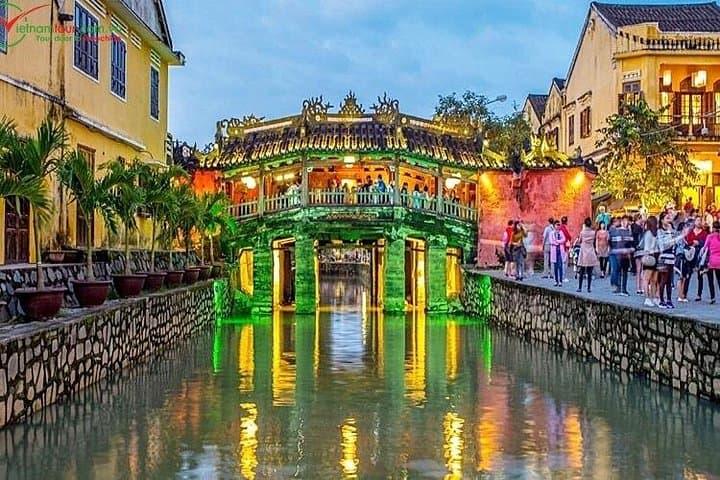
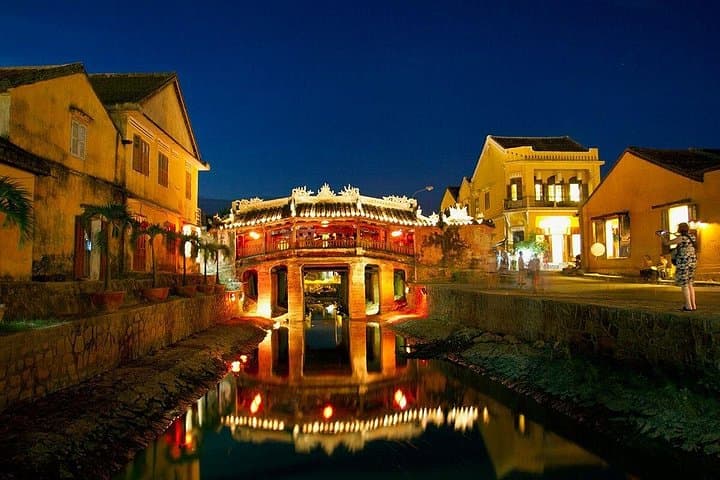
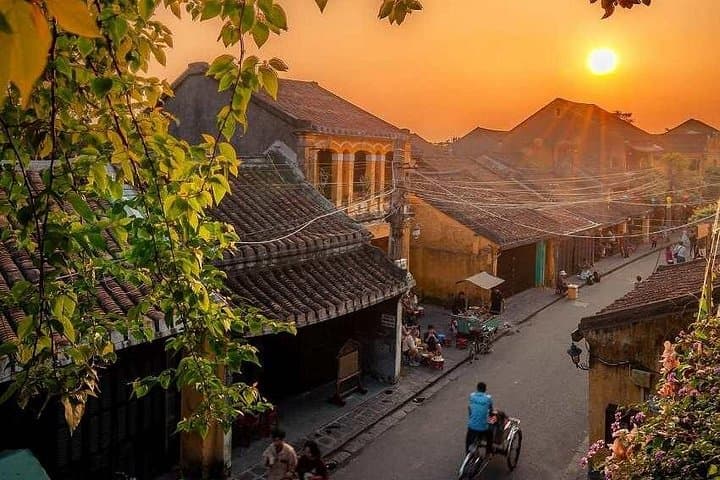
Marble Mountain (Ngu Hanh Son) is a cluster of five marble and limestone hills named for the five elements in Eastern cosmology. Caves carved by time and devotion house Buddhist shrines and offer vertical shafts of light that fracture through calcite. Hoi An, once a bustling 16th‑century trading port, preserves a living layer of Chinese, Japanese and Vietnamese architecture; the Japanese Covered Bridge remains the town’s most recognizable remnant of that era.
Expect steep stone steps, short cave passages, and compact alleys lined with craft shops. The geology is karst—sharp ridges, solution caves and narrow grottoes—so watch your footing and bring a light. The night market on the riverbank is a study in color and commerce: Cao lầu stalls, paper lantern-makers and musicians create a sensory circuit that’s easy to walk but crowded after dark.
Practical notes: tours run about seven hours, often include bottled water, dinner and guide, and are rated easy for general fitness. Visit on clear evenings for the best lantern photography; avoid typhoon season (Oct–Nov) when rough seas and heavy rain can cancel shore logistics. Wear grippy shoes, carry a compact light, and budget time to wander Hoi An’s alleys after the guided portion ends.
The itinerary is about seven hours total, typically mid-afternoon pickup with evening drop-off.
Yes—activity is rated easy, but the route includes stone steps and cave climbs that may be challenging for some mobility issues.
This tour description lists admission as not applicable; check booking details—some operators include entry, others do not.
Tours may be canceled for heavy rain or typhoons; standard booking policies often allow full refunds if canceled 24 hours in advance.
Golden Bridge Bana Hills Tours operates guided outdoor trips and adventures with an emphasis on safety, stewardship, and memorable experiences.
You arrive in the late afternoon as limestone steps cool under the setting sun and the first lanterns on the Hoai River begin to glow. Marble Mountain’s cavernous mouths draw you in—wind and distant chants give the stone a voice—before the tour moves downstream to Hoi An, where lanterns bob like small planets above narrow streets.
You arrive in the late afternoon as limestone steps cool under the setting sun and the first lanterns on the Hoai River begin to glow. Marble Mountain’s cavernous mouths draw you in—wind and distant chants give the stone a voice—before the tour moves downstream to Hoi An, where lanterns bob like small planets above narrow streets.
Marble Mountain (Ngu Hanh Son) is a cluster of five marble and limestone hills named for the five elements in Eastern cosmology. Caves carved by time and devotion house Buddhist shrines and offer vertical shafts of light that fracture through calcite. Hoi An, once a bustling 16th‑century trading port, preserves a living layer of Chinese, Japanese and Vietnamese architecture; the Japanese Covered Bridge remains the town’s most recognizable remnant of that era.
Expect steep stone steps, short cave passages, and compact alleys lined with craft shops. The geology is karst—sharp ridges, solution caves and narrow grottoes—so watch your footing and bring a light. The night market on the riverbank is a study in color and commerce: Cao lầu stalls, paper lantern-makers and musicians create a sensory circuit that’s easy to walk but crowded after dark.
Practical notes: tours run about seven hours, often include bottled water, dinner and guide, and are rated easy for general fitness. Visit on clear evenings for the best lantern photography; avoid typhoon season (Oct–Nov) when rough seas and heavy rain can cancel shore logistics. Wear grippy shoes, carry a compact light, and budget time to wander Hoi An’s alleys after the guided portion ends.