THE ADVENTURE COLLECTIVE® · Independent discovery and booking for outdoor travel

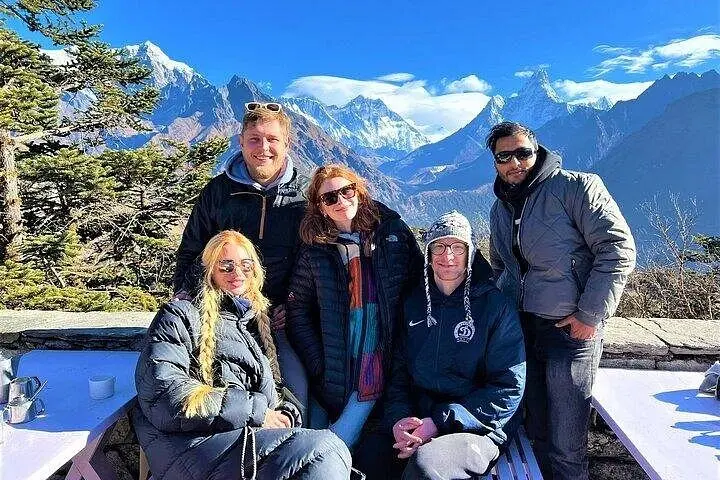
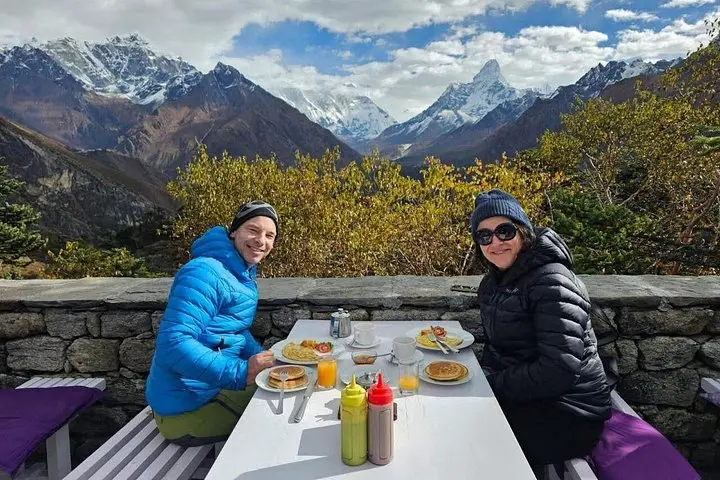
Soar from Kathmandu into the heart of the Himalaya and land at the Everest View Hotel for breakfast with panoramic views of Everest, Lhotse and Ama Dablam. This half-day helicopter tour packs a multi-day trek into a single, weather-dependent morning.
Soar from Kathmandu into the heart of the Himalaya and land at the Everest View Hotel for breakfast with panoramic views of Everest, Lhotse and Ama Dablam. This half-day helicopter tour packs a multi-day trek into a single, weather-dependent morning.
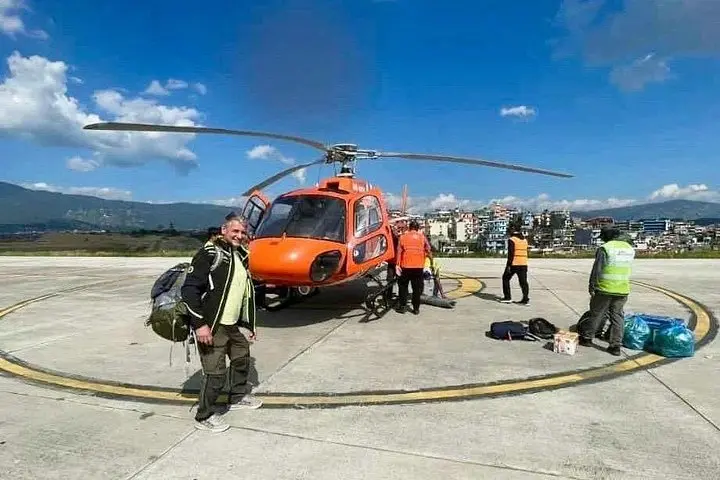
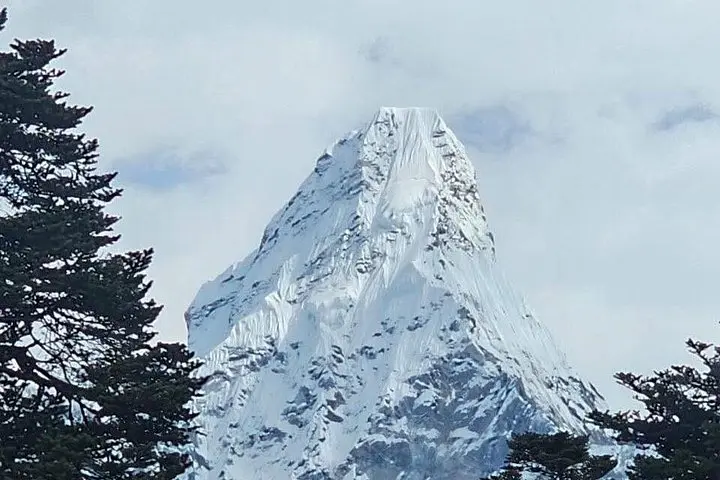
The helicopter lifts above the gray roofs of Kathmandu before the city falls away and the Himalaya rushes toward you — serrated ridges, blue-white glaciers and villages clinging to steep valleys. From the cabin you float over Lukla’s dramatic airstrip, skirt Pheriche and cross the jumble of moraines that mark the approach to Everest Base Camp. Touching down at Everest View Hotel, the windows frame Everest, Lhotse and Ama Dablam like a natural amphitheater; a slow breakfast is a rare, calm punctuation in an otherwise adrenaline-rich morning.
Verified experiences and guided adventures in the surrounding area.
Operated by Aspiration Adventure · Namche Bazaar, Province No. 1
The helicopter lifts above the gray roofs of Kathmandu before the city falls away and the Himalaya rushes toward you — serrated ridges, blue-white glaciers and villages clinging to steep valleys. From the cabin you float over Lukla’s dramatic airstrip, skirt Pheriche and cross the jumble of moraines that mark the approach to Everest Base Camp. Touching down at Everest View Hotel, the windows frame Everest, Lhotse and Ama Dablam like a natural amphitheater; a slow breakfast is a rare, calm punctuation in an otherwise adrenaline-rich morning.
These mountains are young in geological terms: uplifted by the ongoing collision of the Indian and Eurasian plates, their rock and ice sculpt a landscape shaped by avalanches and crevasses as much as by human footholds. Culturally, the route threads Sherpa villages and Buddhist monasteries — a living network that has supported mountaineering since the mid-20th century and continues to welcome visitors with quiet pragmatism.
Practically, this flight compresses a multi-day trek into a half-day experience, ideal for travelers short on time or looking for a low-impact way to see Everest. Expect an early pickup in Kathmandu, a pre-flight briefing, and about four to five hours from hotel pickup to return. Weather dictates timing; operators commonly reserve the clearest morning. Bring warm layers, eye protection against snow glare, and a charged camera — window shots and wide panoramas are the day’s currency.
Safety protocols and experienced pilots minimize altitude exposure, but anyone with cardiovascular issues should consult a physician. For photographers and first-time visitors alike, the tour offers a high-altitude perspective that feels both intimate and elemental: the mountains push back, and you rise to meet them.
No trekking fitness is required — the tour is a scenic flight with short periods on the ground; however, you must be able to board the helicopter and stand during the hotel stop.
The itinerary typically includes a brief landing period and an optional breakfast at Everest View Hotel, subject to weather and operational conditions.
Yes — flights prioritize safety and visibility; operators will reschedule or refund if conditions are unsafe or visibility is poor.
Altitude exposure is limited because the flight minimizes time spent at high elevation, but anyone with serious cardiovascular or respiratory conditions should consult a doctor beforehand.
Aspiration Adventure operates guided outdoor trips and adventures with an emphasis on safety, stewardship, and memorable experiences.
The helicopter lifts above the gray roofs of Kathmandu before the city falls away and the Himalaya rushes toward you — serrated ridges, blue-white glaciers and villages clinging to steep valleys. From the cabin you float over Lukla’s dramatic airstrip, skirt Pheriche and cross the jumble of moraines that mark the approach to Everest Base Camp. Touching down at Everest View Hotel, the windows frame Everest, Lhotse and Ama Dablam like a natural amphitheater; a slow breakfast is a rare, calm punctuation in an otherwise adrenaline-rich morning.
The helicopter lifts above the gray roofs of Kathmandu before the city falls away and the Himalaya rushes toward you — serrated ridges, blue-white glaciers and villages clinging to steep valleys. From the cabin you float over Lukla’s dramatic airstrip, skirt Pheriche and cross the jumble of moraines that mark the approach to Everest Base Camp. Touching down at Everest View Hotel, the windows frame Everest, Lhotse and Ama Dablam like a natural amphitheater; a slow breakfast is a rare, calm punctuation in an otherwise adrenaline-rich morning.
These mountains are young in geological terms: uplifted by the ongoing collision of the Indian and Eurasian plates, their rock and ice sculpt a landscape shaped by avalanches and crevasses as much as by human footholds. Culturally, the route threads Sherpa villages and Buddhist monasteries — a living network that has supported mountaineering since the mid-20th century and continues to welcome visitors with quiet pragmatism.
Practically, this flight compresses a multi-day trek into a half-day experience, ideal for travelers short on time or looking for a low-impact way to see Everest. Expect an early pickup in Kathmandu, a pre-flight briefing, and about four to five hours from hotel pickup to return. Weather dictates timing; operators commonly reserve the clearest morning. Bring warm layers, eye protection against snow glare, and a charged camera — window shots and wide panoramas are the day’s currency.
Safety protocols and experienced pilots minimize altitude exposure, but anyone with cardiovascular issues should consult a physician. For photographers and first-time visitors alike, the tour offers a high-altitude perspective that feels both intimate and elemental: the mountains push back, and you rise to meet them.