THE ADVENTURE COLLECTIVE® · Independent discovery and booking for outdoor travel

An 11-day trek from Lukla to Everest Base Camp and Kala Patthar, this classic high‑altitude route crosses Sagarmatha National Park, Sherpa villages and moraines with sustained views of Everest, Lhotse and Ama Dablam. Expect long days, acclimatization stops and lodge stays en route.
An 11-day trek from Lukla to Everest Base Camp and Kala Patthar, this classic high‑altitude route crosses Sagarmatha National Park, Sherpa villages and moraines with sustained views of Everest, Lhotse and Ama Dablam. Expect long days, acclimatization stops and lodge stays en route.
You step off a tiny Twin Otter onto Lukla’s rocky airstrip and the trail immediately pulls you into a higher world—rivers pushing the valley floor, prayer flags snapping like bright punctuation against the wind. The Dudh Kosi dares you forward; pine and rhododendron thin, then vanish as stone, ice and moraine take over.
Verified experiences and guided adventures in the surrounding area.
Operated by Unique Path Trekking Expedition Pvt. Ltd · Lukla, Province No. 1
You step off a tiny Twin Otter onto Lukla’s rocky airstrip and the trail immediately pulls you into a higher world—rivers pushing the valley floor, prayer flags snapping like bright punctuation against the wind. The Dudh Kosi dares you forward; pine and rhododendron thin, then vanish as stone, ice and moraine take over.
This route threads through Sagarmatha National Park, a UNESCO-protected landscape shaped by the India‑Asia collision that raised the world’s highest summits. Villages along the way—Namche, Tengboche, Pangboche—are living Sherpa communities with monasteries, mani walls and a culture shaped around high‑altitude agriculture and Himalayan mountaineering history (Hillary and Tenzing passed here on the road to the summit).
Geologically the trek crosses glacial forefields and lateral moraines, offering direct views into the Khumbu Icefall and the north faces of Ama Dablam, Lhotse and Everest. Wildlife here is alpine: keep an eye for Himalayan tahr on rocky slopes and the iridescent monal in the timberline.
Practically, the standard itinerary takes about 10–12 days with critical acclimatization stops in Namche and a rest day option; expect daily walking of 4–6 hours on mixed stone, packed-earth and icy tracks with cumulative altitude gain to 5,545 m at Kala Patthar. Hydration, steady pacing, layered clothing and sun protection are essential. Flights to/from Lukla are weather-dependent—build buffer days into your schedule. Lodges provide basic hot meals, twin rooms, and often oxygen‑saturation checks; emergency helicopter rescue is arranged through insurance. Approach this as a careful, patient ascent: respect the altitude, follow your guide, and the raw, glacial panorama will reward the effort.
Typical itineraries are 10–12 days from Lukla to Everest Base Camp and back, with a high point at Kala Patthar around 5,545 m and Everest Base Camp at ~5,364 m.
Previous multi-day trekking experience is strongly recommended; while no technical climbing skills are required, you must manage altitude, cold and long walking days.
Trekkers need Sagarmatha National Park entry and TIMS registration; tour operators generally handle these permits on your behalf.
Teahouse lodges provide twin rooms, basic hot meals and boiled drinking water (or water to purify); expect simple facilities and colder conditions at higher elevations.
Unique Path Trekking Expedition Pvt. Ltd operates guided outdoor trips and adventures with an emphasis on safety, stewardship, and memorable experiences.
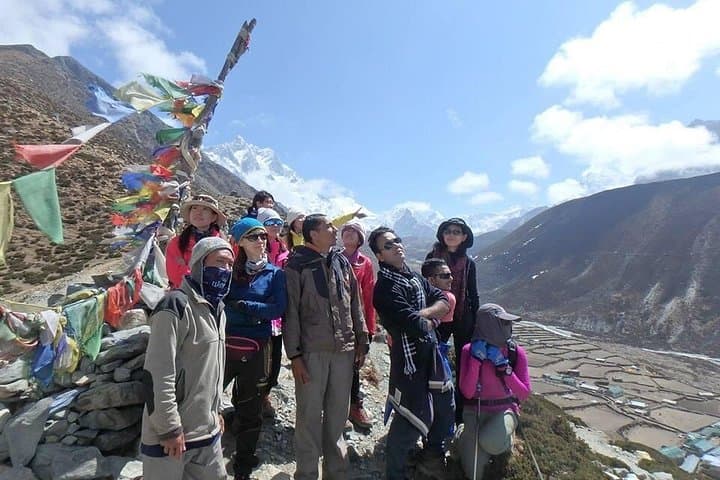


You step off a tiny Twin Otter onto Lukla’s rocky airstrip and the trail immediately pulls you into a higher world—rivers pushing the valley floor, prayer flags snapping like bright punctuation against the wind. The Dudh Kosi dares you forward; pine and rhododendron thin, then vanish as stone, ice and moraine take over.
You step off a tiny Twin Otter onto Lukla’s rocky airstrip and the trail immediately pulls you into a higher world—rivers pushing the valley floor, prayer flags snapping like bright punctuation against the wind. The Dudh Kosi dares you forward; pine and rhododendron thin, then vanish as stone, ice and moraine take over.
This route threads through Sagarmatha National Park, a UNESCO-protected landscape shaped by the India‑Asia collision that raised the world’s highest summits. Villages along the way—Namche, Tengboche, Pangboche—are living Sherpa communities with monasteries, mani walls and a culture shaped around high‑altitude agriculture and Himalayan mountaineering history (Hillary and Tenzing passed here on the road to the summit).
Geologically the trek crosses glacial forefields and lateral moraines, offering direct views into the Khumbu Icefall and the north faces of Ama Dablam, Lhotse and Everest. Wildlife here is alpine: keep an eye for Himalayan tahr on rocky slopes and the iridescent monal in the timberline.
Practically, the standard itinerary takes about 10–12 days with critical acclimatization stops in Namche and a rest day option; expect daily walking of 4–6 hours on mixed stone, packed-earth and icy tracks with cumulative altitude gain to 5,545 m at Kala Patthar. Hydration, steady pacing, layered clothing and sun protection are essential. Flights to/from Lukla are weather-dependent—build buffer days into your schedule. Lodges provide basic hot meals, twin rooms, and often oxygen‑saturation checks; emergency helicopter rescue is arranged through insurance. Approach this as a careful, patient ascent: respect the altitude, follow your guide, and the raw, glacial panorama will reward the effort.