THE ADVENTURE COLLECTIVE® · Independent discovery and booking for outdoor travel

A 12‑day trek from Lukla to Everest Base Camp and Kala Patthar that balances high‑altitude challenge with cultural immersion in the Sherpa villages of the Khumbu. Expect steep climbs, moraine crossings, and iconic Himalayan panoramas.
A 12‑day trek from Lukla to Everest Base Camp and Kala Patthar that balances high‑altitude challenge with cultural immersion in the Sherpa villages of the Khumbu. Expect steep climbs, moraine crossings, and iconic Himalayan panoramas.
The first light strips across the Khumbu and the air hits like a cold promise — thin, sharp, honest. You leave Kathmandu’s chaos for a 40‑minute flight into Lukla, step onto a runway that feels carved from the side of the mountain, and follow a rope of stone and prayer flags that climbs through rhododendron forests, villages and moraine fields toward the glacier that dares you to come closer.
Verified experiences and guided adventures in the surrounding area.
Operated by Exciting Nepal Treks and Expedition · Lukla, Kosī Province
The first light strips across the Khumbu and the air hits like a cold promise — thin, sharp, honest. You leave Kathmandu’s chaos for a 40‑minute flight into Lukla, step onto a runway that feels carved from the side of the mountain, and follow a rope of stone and prayer flags that climbs through rhododendron forests, villages and moraine fields toward the glacier that dares you to come closer.
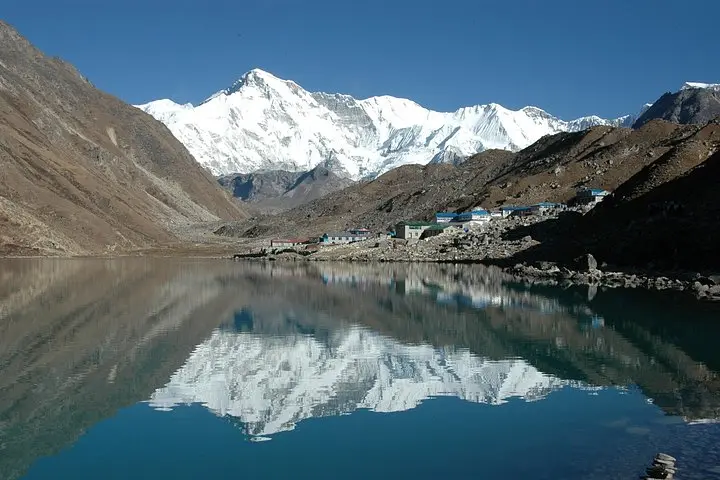
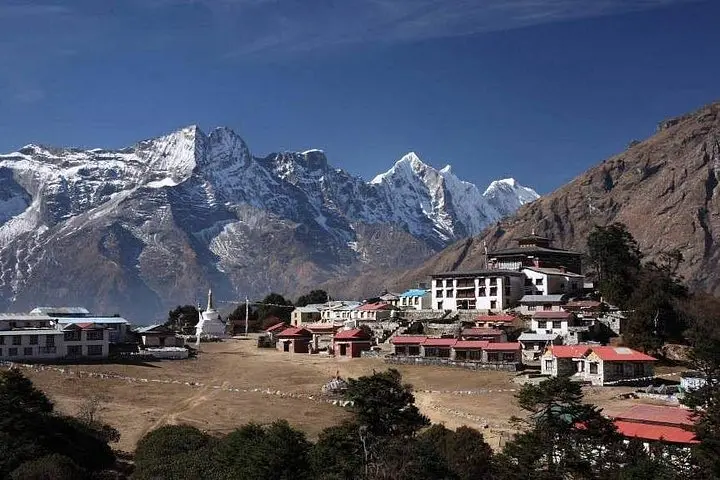
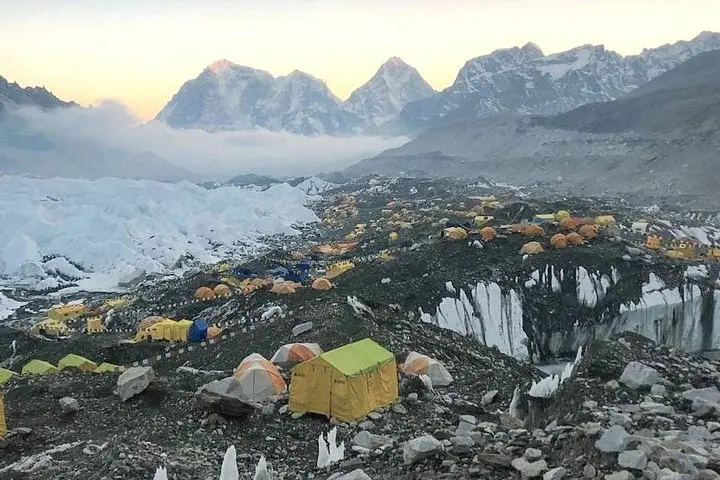
This route threads through Sagarmatha National Park, a UNESCO site where Sherpa culture and Himalayan geology meet: hanging glaciers and terminal moraines mark the slow, grinding history of ice; gompas and mani walls speak to centuries of Buddhist practice and Himalayan trade. The trek’s rhythm—ascend, descend, cross, repeat—adds up to nearly 9,000 meters of cumulative ascent over the itinerary, a statistic that underlines the real challenge beyond distance: altitude.
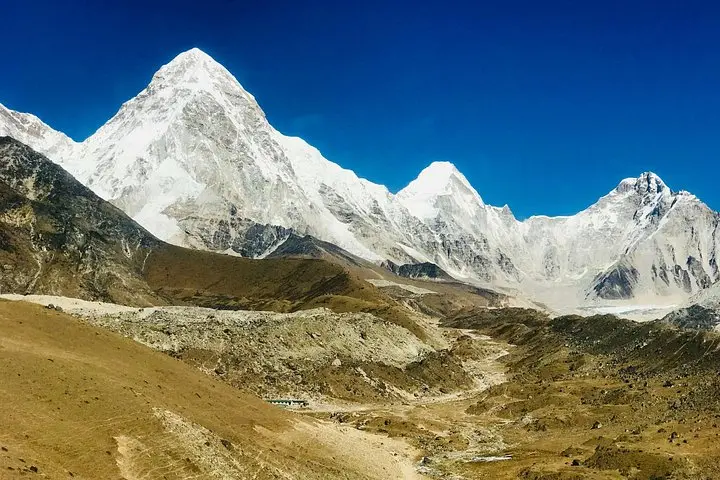
Expect stone steps, loose moraine, and widened trails near teahouses; expect the Khumbu River to push you along on lower sections and the wind to test you above 5,000 m. Acclimatization days in Namche and Dingboche are non‑negotiable; Kala Patthar’s sunrise view of Everest is the technical highlight rather than a technical climb.
Practical guidance: pack layers for big diurnal swings, move deliberately to manage altitude, hydrate often and carry iodine or a purifier for village water. Footwear with solid ankle support helps on rocky, icy approaches; trekking poles reduce knee strain on long descents. Book flights and permits early in spring and autumn; weather windows close quickly. With preparation, this is a strenuous, high‑reward trek — one that puts the mountain within photographic reach and leaves a clear, physical memory of the Himalaya’s scale.
Prior high‑altitude trekking experience helps but isn’t mandatory; good fitness and strict acclimatization are essential to reduce AMS risk.
Pre‑monsoon spring (March–May) and post‑monsoon autumn (September–November) offer the most stable weather and clear mountain views.
Daily hiking ranges from 3–8 hours with varied elevation change; expect longer days approaching Lobuche, Gorak Shep and Kala Patthar.
Yes — Sagarmatha National Park permit and TIMS (Trekkers’ Information Management System) card are required; guides or operators usually arrange these.
Exciting Nepal Treks and Expedition operates guided outdoor trips and adventures with an emphasis on safety, stewardship, and memorable experiences.
The first light strips across the Khumbu and the air hits like a cold promise — thin, sharp, honest. You leave Kathmandu’s chaos for a 40‑minute flight into Lukla, step onto a runway that feels carved from the side of the mountain, and follow a rope of stone and prayer flags that climbs through rhododendron forests, villages and moraine fields toward the glacier that dares you to come closer.
The first light strips across the Khumbu and the air hits like a cold promise — thin, sharp, honest. You leave Kathmandu’s chaos for a 40‑minute flight into Lukla, step onto a runway that feels carved from the side of the mountain, and follow a rope of stone and prayer flags that climbs through rhododendron forests, villages and moraine fields toward the glacier that dares you to come closer.
This route threads through Sagarmatha National Park, a UNESCO site where Sherpa culture and Himalayan geology meet: hanging glaciers and terminal moraines mark the slow, grinding history of ice; gompas and mani walls speak to centuries of Buddhist practice and Himalayan trade. The trek’s rhythm—ascend, descend, cross, repeat—adds up to nearly 9,000 meters of cumulative ascent over the itinerary, a statistic that underlines the real challenge beyond distance: altitude.
Expect stone steps, loose moraine, and widened trails near teahouses; expect the Khumbu River to push you along on lower sections and the wind to test you above 5,000 m. Acclimatization days in Namche and Dingboche are non‑negotiable; Kala Patthar’s sunrise view of Everest is the technical highlight rather than a technical climb.
Practical guidance: pack layers for big diurnal swings, move deliberately to manage altitude, hydrate often and carry iodine or a purifier for village water. Footwear with solid ankle support helps on rocky, icy approaches; trekking poles reduce knee strain on long descents. Book flights and permits early in spring and autumn; weather windows close quickly. With preparation, this is a strenuous, high‑reward trek — one that puts the mountain within photographic reach and leaves a clear, physical memory of the Himalaya’s scale.