THE ADVENTURE COLLECTIVE® · Independent discovery and booking for outdoor travel

A high-altitude classic: a 13–15 day guided trek from Kathmandu to Everest Base Camp and Kala Patthar. Expect long teahouse days, essential acclimatization, and sweeping Himalayan views.
A high-altitude classic: a 13–15 day guided trek from Kathmandu to Everest Base Camp and Kala Patthar. Expect long teahouse days, essential acclimatization, and sweeping Himalayan views.
Your lungs tighten in thin, cold air as the trail climbs out of a pine-scented bowl toward Namche Bazaar, the Khumbu opening its teeth of granite and ice above you.
Verified experiences and guided adventures in the surrounding area.
Operated by Unique Adventure International Pvt. Ltd. · Lukla, Bagmati Province
Your lungs tighten in thin, cold air as the trail climbs out of a pine-scented bowl toward Namche Bazaar, the Khumbu opening its teeth of granite and ice above you.
This classic 13–15 day trek begins with a 30‑minute mountain flight from Kathmandu to Lukla (2,860m) and threads teahouse-to-teahouse through Sherpa villages, rhododendron forests and moraine fields to Everest Base Camp (approx. 5,360–5,400m) and the panoramic summit viewpoint of Kala Patthar (5,545m).
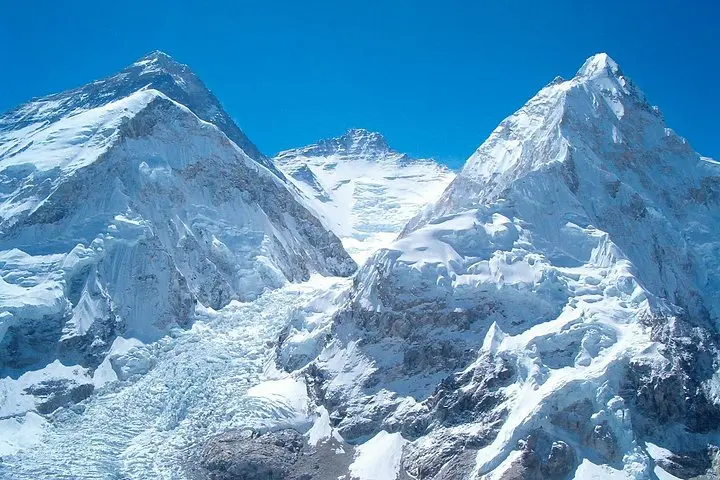
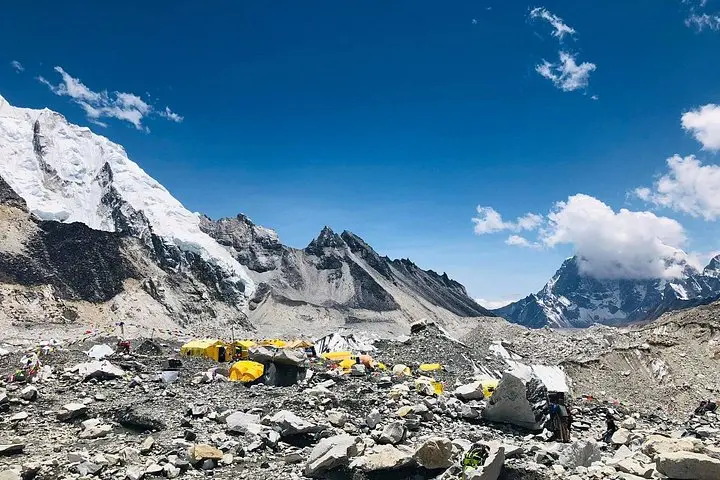
The route crosses the Dudh Koshi, gains Namche (3,440m) with a steep 590m climb, then alternates acclimatization days in Namche and Dingboche (4,360m) with long high‑altitude marches to Lobuche and Gorakhshep. Geology here is young Himalayan thrust and glacial ice; the Khumbu Glacier pushes moraine and icefall down into the valley, shaping the barren, wind-swept high camp approaches.
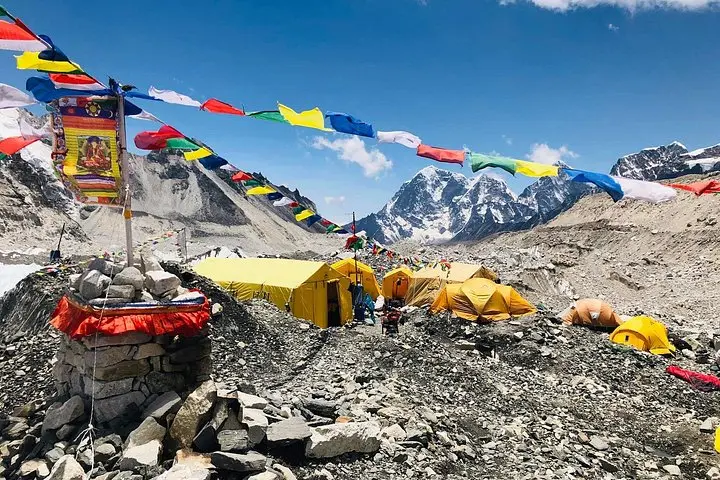
Culturally, you’ll pass gompas, mani walls and market towns where Sherpa Buddhist practice and Himalayan hospitality frame each evening. Practicalities matter: flights to Lukla are weather-dependent, permits for Sagarmatha National Park and TIMS are required, and daily walking ranges 4–8 hours over rocky, uneven ground.
Bring layered insulation, a reliable down jacket and sturdy boots, and plan acclimatization days—altitude, not distance, is the limiting factor. Expect cold nights, limited electricity at higher guesthouses, and unforgettable dawns when Everest and Lhotse cut the sky.
This trek rewards patience and preparation: move deliberately, hydrate, watch your pulse and oxygen saturation, and the high Himalaya will reveal themselves on a series of hard-earned mornings.
Pre-monsoon spring (March–May) and autumn (late September–November) offer the most stable weather, clearer mountain views and milder trekking conditions.
No technical mountaineering skills are required for the standard trek to Base Camp and Kala Patthar, but experience with long high‑altitude trekking is highly recommended.
You must carry a Sagarmatha National Park entry permit and a TIMS card; the operator typically arranges these before or during the early days of the trek.
Lukla flights are commonly delayed or canceled due to mountain weather and visibility; plan buffer days and remain flexible with your itinerary.
Unique Adventure International Pvt. Ltd. operates guided outdoor trips and adventures with an emphasis on safety, stewardship, and memorable experiences.
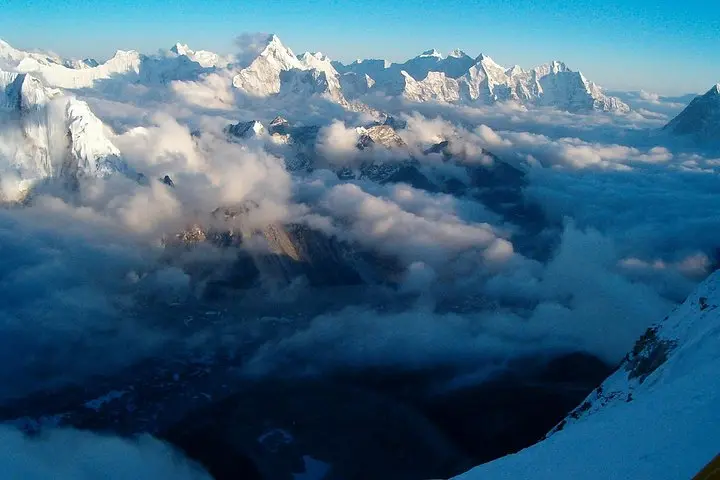
Your lungs tighten in thin, cold air as the trail climbs out of a pine-scented bowl toward Namche Bazaar, the Khumbu opening its teeth of granite and ice above you.
Your lungs tighten in thin, cold air as the trail climbs out of a pine-scented bowl toward Namche Bazaar, the Khumbu opening its teeth of granite and ice above you.
This classic 13–15 day trek begins with a 30‑minute mountain flight from Kathmandu to Lukla (2,860m) and threads teahouse-to-teahouse through Sherpa villages, rhododendron forests and moraine fields to Everest Base Camp (approx. 5,360–5,400m) and the panoramic summit viewpoint of Kala Patthar (5,545m).
The route crosses the Dudh Koshi, gains Namche (3,440m) with a steep 590m climb, then alternates acclimatization days in Namche and Dingboche (4,360m) with long high‑altitude marches to Lobuche and Gorakhshep. Geology here is young Himalayan thrust and glacial ice; the Khumbu Glacier pushes moraine and icefall down into the valley, shaping the barren, wind-swept high camp approaches.
Culturally, you’ll pass gompas, mani walls and market towns where Sherpa Buddhist practice and Himalayan hospitality frame each evening. Practicalities matter: flights to Lukla are weather-dependent, permits for Sagarmatha National Park and TIMS are required, and daily walking ranges 4–8 hours over rocky, uneven ground.
Bring layered insulation, a reliable down jacket and sturdy boots, and plan acclimatization days—altitude, not distance, is the limiting factor. Expect cold nights, limited electricity at higher guesthouses, and unforgettable dawns when Everest and Lhotse cut the sky.
This trek rewards patience and preparation: move deliberately, hydrate, watch your pulse and oxygen saturation, and the high Himalaya will reveal themselves on a series of hard-earned mornings.