THE ADVENTURE COLLECTIVE® · Independent discovery and booking for outdoor travel

A classic 14–15 day Himalayan trek from Lukla to Everest Base Camp and Kalapathar that balances cultural encounters with strenuous high-altitude hiking. Expect teahouse nights, steady acclimatization, and dramatic summit views.
A classic 14–15 day Himalayan trek from Lukla to Everest Base Camp and Kalapathar that balances cultural encounters with strenuous high-altitude hiking. Expect teahouse nights, steady acclimatization, and dramatic summit views.
On a clear morning the Himalayan skyline pins itself against pale blue, and the trail out of Lukla climbs into a world of prayer flags and stone staircases. The air thins in stages as you move from rhododendron-scented valleys through Sherpa villages to the glacial dust and wind-carved moraines around Gorak Shep and Kalapathar.
Verified experiences and guided adventures in the surrounding area.
Operated by Nepal Trek Ways Pvt. Ltd. · Lukla, Koshi Province
On a clear morning the Himalayan skyline pins itself against pale blue, and the trail out of Lukla climbs into a world of prayer flags and stone staircases. The air thins in stages as you move from rhododendron-scented valleys through Sherpa villages to the glacial dust and wind-carved moraines around Gorak Shep and Kalapathar.
This route follows paths used for centuries by traders and Sherpa farmers; modern teahouses and lodges now line the way. Geologically the region is young—steep folds of sedimentary rock pushed up by the collision of the Indian and Eurasian plates—so expect frequent scree slopes, river-crossing bridges, and panoramic views of Everest, Lhotse, Ama Dablam and Nuptse.
Culturally, the trek passes monasteries and mani walls where locals pause to spin prayer wheels; Namche Bazaar hosts a small mountain museum that outlines the Everest era and Sherpa mountaineering history. Wildlife is subtle: Himalayan thar on steep rock faces, and bearded vultures circling thermals.
Practical guidance: the itinerary spans roughly 14–15 days with scheduled acclimatization days at Namche and Dingboche—stick to those slow gains. Footwear with rigid support and microspikes for early/late season is useful. Hydrate often; altitude symptoms can appear even on well-trained trekkers. Weather shifts can be sudden—sun one hour, wind-whipped snow the next—so layer and keep a waterproof shell at hand. Flights to and from Lukla are scenic but weather-dependent; allow buffer days for delays. If your aim is the sunrise on Kalapathar, plan an early start from Gorak Shep and be prepared for thin air and a stiff climb; the summit view rewards the effort with a close, raw profile of Everest itself.
Yes—trekking in the Sagarmatha National Park requires a TIMS card and park entry permit; guides or operators usually handle these.
Pre-monsoon (March–May) and post-monsoon (September–November) offer the most stable weather and the best mountain visibility.
Altitude illness is a real risk above 3,000 m; follow acclimatization days, ascend gradually, and descend immediately if symptoms worsen.
Teahouses offer basic rooms with shared bathrooms and communal dining; expect simple bedding, hot meals, and limited electricity at higher elevations.
Nepal Trek Ways Pvt. Ltd. operates guided outdoor trips and adventures with an emphasis on safety, stewardship, and memorable experiences.
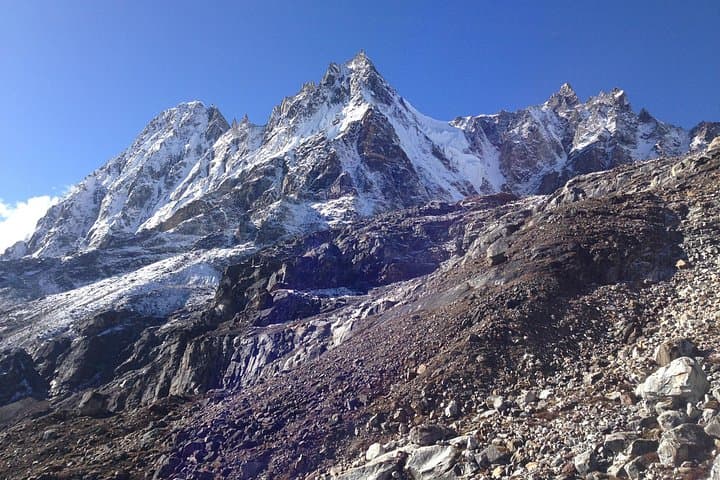


On a clear morning the Himalayan skyline pins itself against pale blue, and the trail out of Lukla climbs into a world of prayer flags and stone staircases. The air thins in stages as you move from rhododendron-scented valleys through Sherpa villages to the glacial dust and wind-carved moraines around Gorak Shep and Kalapathar.
On a clear morning the Himalayan skyline pins itself against pale blue, and the trail out of Lukla climbs into a world of prayer flags and stone staircases. The air thins in stages as you move from rhododendron-scented valleys through Sherpa villages to the glacial dust and wind-carved moraines around Gorak Shep and Kalapathar.
This route follows paths used for centuries by traders and Sherpa farmers; modern teahouses and lodges now line the way. Geologically the region is young—steep folds of sedimentary rock pushed up by the collision of the Indian and Eurasian plates—so expect frequent scree slopes, river-crossing bridges, and panoramic views of Everest, Lhotse, Ama Dablam and Nuptse.
Culturally, the trek passes monasteries and mani walls where locals pause to spin prayer wheels; Namche Bazaar hosts a small mountain museum that outlines the Everest era and Sherpa mountaineering history. Wildlife is subtle: Himalayan thar on steep rock faces, and bearded vultures circling thermals.
Practical guidance: the itinerary spans roughly 14–15 days with scheduled acclimatization days at Namche and Dingboche—stick to those slow gains. Footwear with rigid support and microspikes for early/late season is useful. Hydrate often; altitude symptoms can appear even on well-trained trekkers. Weather shifts can be sudden—sun one hour, wind-whipped snow the next—so layer and keep a waterproof shell at hand. Flights to and from Lukla are scenic but weather-dependent; allow buffer days for delays. If your aim is the sunrise on Kalapathar, plan an early start from Gorak Shep and be prepared for thin air and a stiff climb; the summit view rewards the effort with a close, raw profile of Everest itself.