THE ADVENTURE COLLECTIVE® · Independent discovery and booking for outdoor travel

A classic 18-day trek from Kathmandu to Kala Pattar and Everest Base Camp, this journey balances careful acclimatization with raw high-altitude scenery. Expect long walking days, communal teahouses, and unforgettable glacier views.
A classic 18-day trek from Kathmandu to Kala Pattar and Everest Base Camp, this journey balances careful acclimatization with raw high-altitude scenery. Expect long walking days, communal teahouses, and unforgettable glacier views.
The plane banks low over a serrated skyline and Lukla’s tiny runway appears like a strip of light cut into the mountains. You feel the drop in oxygen almost immediately — a crispness to each breath, a higher pitch to the wind. By the time the group files out under prayer flags and yak bells, the Himalaya have already taken their first claim on your senses.
Verified experiences and guided adventures in the surrounding area.
Operated by Tusker Trail Kilimanjaro Adventures · Lukla, Province No. 1
The plane banks low over a serrated skyline and Lukla’s tiny runway appears like a strip of light cut into the mountains. You feel the drop in oxygen almost immediately — a crispness to each breath, a higher pitch to the wind. By the time the group files out under prayer flags and yak bells, the Himalaya have already taken their first claim on your senses.
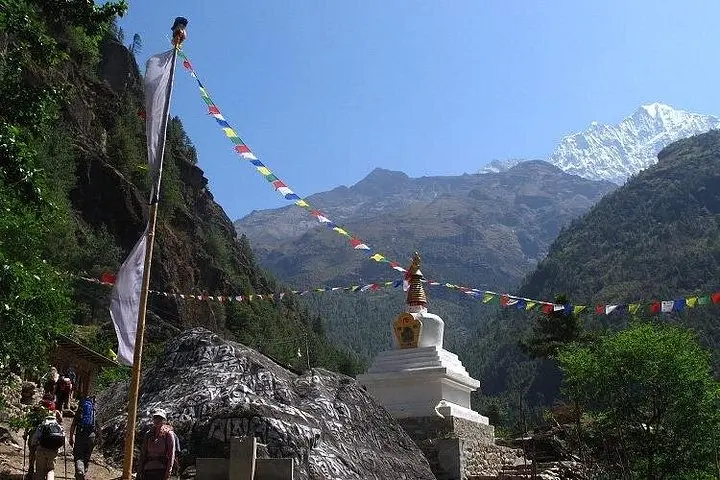
This 18-day itinerary follows the classic Khumbu route: a short flight from Kathmandu to Lukla, a slow climb through rhododendron forests and Sherpa villages, and two deliberate acclimatization stops in Namche and Pheriche before the moraine and the thin-air reach of Gorak Shep and Everest Base Camp. Geologically, the trail runs along the Khumbu Glacier’s terminal moraine; the landscape is young, raw rock and compressed ice, with Everest itself a jagged result of the Indian subcontinent slamming into Asia over millions of years.
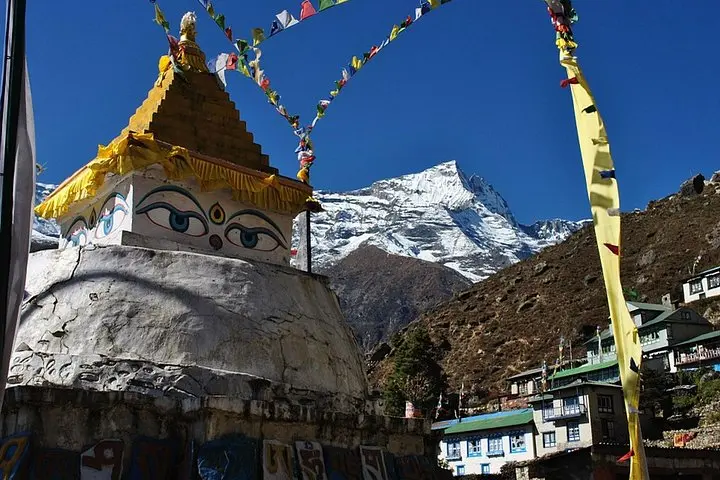
Culture threads through every tea-house stop. Sherpa villages are trading posts turned high-altitude hosts — chortens, monasteries and prayer wheels mark route junctions. Expect hearty dal bhat and surprisingly good western dishes cooked by the trek’s crew; the itinerary includes breakfast, lunch and dinner most days, prepared locally. You’ll sleep in basic lodges, where hot water and charging access are communal commodities.
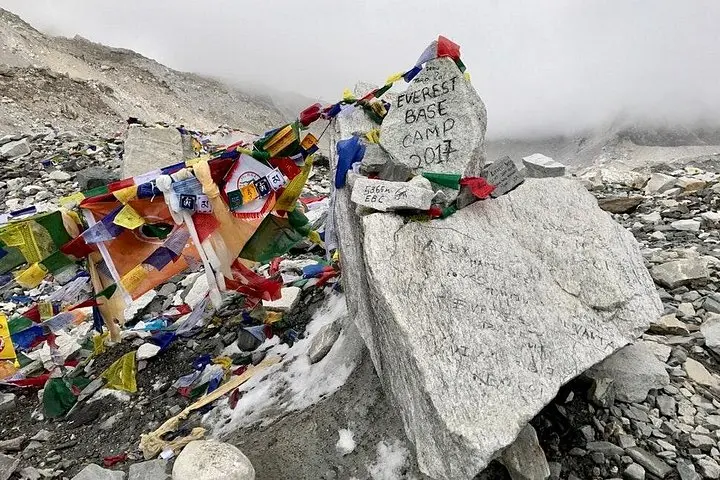
Days are measured in elevation and hours: most walking days average 4–7 hours, with key high points including Kala Pattar (5,643 m / 18,513 ft) for the skyline view, and Base Camp itself at roughly 5,360 m / 17,598 ft. The itinerary builds altitude slowly — Namche for two nights, Pheriche for two nights — a proven approach to reduce acute mountain sickness risk. Terrain varies from forested switchbacks and rocky river crossings to open moraines and wind-scoured high camp trails.
Practical matters shape success: flights to Lukla are weather-dependent — allow buffer days. Drink aggressively, carry a purification method, and know the early symptoms of altitude illness. Use porters to keep your pack light; tipping is customary. Bring layered clothing for a wide diurnal range, a 0°C (or warmer) sleeping bag if you prefer extra comfort, sturdy waterproof boots, and high-SPF sun protection — the UV at altitude is punishing.
Best windows for clarity and stable weather are spring (March–May) and autumn (September–November). Monsoon season softens trails but brings low visibility, and winter is brutally cold though quiet. The reward is less abstract than the effort: a raw, glacial forefield at the foot of the world’s tallest mountain, and the steady, human warmth of the Sherpa communities that make the route possible.
Spring (March–May) and autumn (September–November) offer the most stable weather and visibility; monsoon months bring heavy rain and cloudy views.
No technical mountaineering skills are required for the standard EBC trek—this is a strenuous hike rather than a climb.
Lukla flights are routine but weather-dependent; delays or cancellations are common—schedule buffer days into your travel plans.
Basic toilets are available at tea houses; hot showers are usually offered for a fee or intermittently depending on fuel availability.
Early symptoms include headache, nausea, dizziness and poor sleep; descend immediately and seek medical help if symptoms worsen or don't improve with rest.
Yes—licensed guides and porters are available and recommended to carry loads and manage logistics; tipping is customary for good service.
Tusker Trail Kilimanjaro Adventures operates guided outdoor trips and adventures with an emphasis on safety, stewardship, and memorable experiences.
The plane banks low over a serrated skyline and Lukla’s tiny runway appears like a strip of light cut into the mountains. You feel the drop in oxygen almost immediately — a crispness to each breath, a higher pitch to the wind. By the time the group files out under prayer flags and yak bells, the Himalaya have already taken their first claim on your senses.
The plane banks low over a serrated skyline and Lukla’s tiny runway appears like a strip of light cut into the mountains. You feel the drop in oxygen almost immediately — a crispness to each breath, a higher pitch to the wind. By the time the group files out under prayer flags and yak bells, the Himalaya have already taken their first claim on your senses.
This 18-day itinerary follows the classic Khumbu route: a short flight from Kathmandu to Lukla, a slow climb through rhododendron forests and Sherpa villages, and two deliberate acclimatization stops in Namche and Pheriche before the moraine and the thin-air reach of Gorak Shep and Everest Base Camp. Geologically, the trail runs along the Khumbu Glacier’s terminal moraine; the landscape is young, raw rock and compressed ice, with Everest itself a jagged result of the Indian subcontinent slamming into Asia over millions of years.
Culture threads through every tea-house stop. Sherpa villages are trading posts turned high-altitude hosts — chortens, monasteries and prayer wheels mark route junctions. Expect hearty dal bhat and surprisingly good western dishes cooked by the trek’s crew; the itinerary includes breakfast, lunch and dinner most days, prepared locally. You’ll sleep in basic lodges, where hot water and charging access are communal commodities.
Days are measured in elevation and hours: most walking days average 4–7 hours, with key high points including Kala Pattar (5,643 m / 18,513 ft) for the skyline view, and Base Camp itself at roughly 5,360 m / 17,598 ft. The itinerary builds altitude slowly — Namche for two nights, Pheriche for two nights — a proven approach to reduce acute mountain sickness risk. Terrain varies from forested switchbacks and rocky river crossings to open moraines and wind-scoured high camp trails.
Practical matters shape success: flights to Lukla are weather-dependent — allow buffer days. Drink aggressively, carry a purification method, and know the early symptoms of altitude illness. Use porters to keep your pack light; tipping is customary. Bring layered clothing for a wide diurnal range, a 0°C (or warmer) sleeping bag if you prefer extra comfort, sturdy waterproof boots, and high-SPF sun protection — the UV at altitude is punishing.
Best windows for clarity and stable weather are spring (March–May) and autumn (September–November). Monsoon season softens trails but brings low visibility, and winter is brutally cold though quiet. The reward is less abstract than the effort: a raw, glacial forefield at the foot of the world’s tallest mountain, and the steady, human warmth of the Sherpa communities that make the route possible.