THE ADVENTURE COLLECTIVE® · Independent discovery and booking for outdoor travel

A classic 12–14 day trek from Lukla to Everest Base Camp and Kala Patthar, following the historic Jiri-Lukla approach. Expect forested trails, high-altitude moraine, Sherpa villages, and panoramic views—plan for acclimatization and unpredictable Lukla flights.
A classic 12–14 day trek from Lukla to Everest Base Camp and Kala Patthar, following the historic Jiri-Lukla approach. Expect forested trails, high-altitude moraine, Sherpa villages, and panoramic views—plan for acclimatization and unpredictable Lukla flights.
By the time the Lukla airstrip appears you feel the mountain’s draw: thin air, prayer flags snapping, and a river far below pushing the valley toward the Himalaya.
Verified experiences and guided adventures in the surrounding area.
Operated by Shepherd Holidays · Kathmandu, Province No. 1
By the time the Lukla airstrip appears you feel the mountain’s draw: thin air, prayer flags snapping, and a river far below pushing the valley toward the Himalaya.
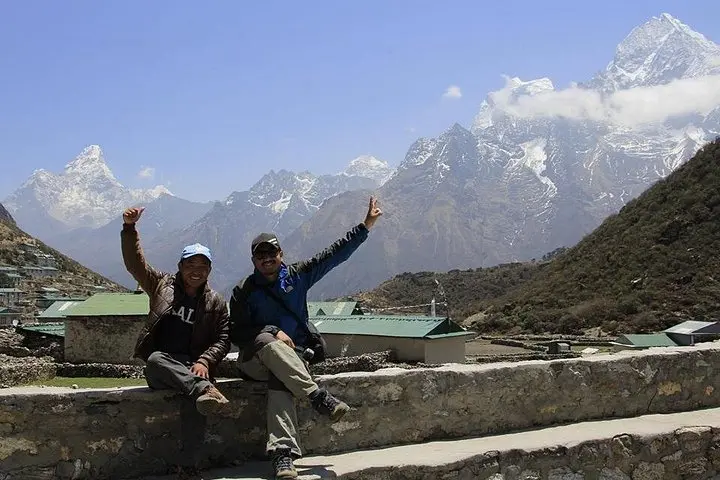
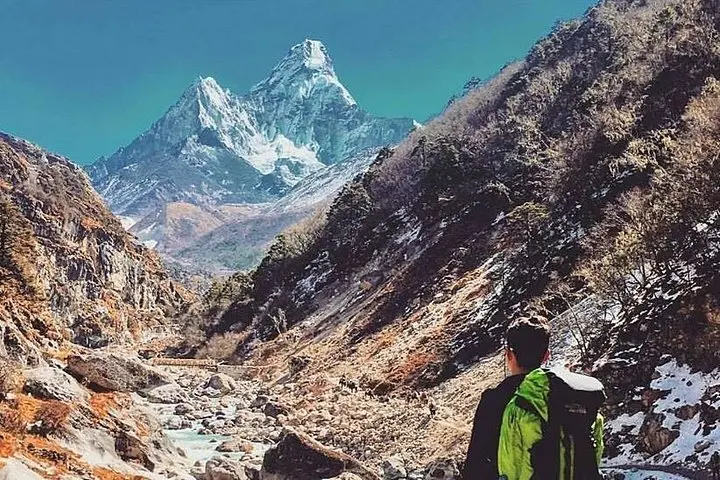
The 14-day trek from Lukla to Everest Base Camp follows pine and rhododendron slopes, crosses suspension bridges, and climbs moraines to Gorak Shep’s wind-scoured flats. Early mornings bring crisp panoramas; afternoons can tighten into sudden blue-white weather that demands layers.
This trail follows history—an older Jiri-Lukla approach used in the era of Sir Edmund Hillary and Tenzing Norgay—and runs through the Mahalangur Himal, where granite and schist have heaved Everest skyward. Sherpa culture is constant: mani walls, monasteries at Tengboche and Khumjung, and terrace fields that show human adaptation to altitude.
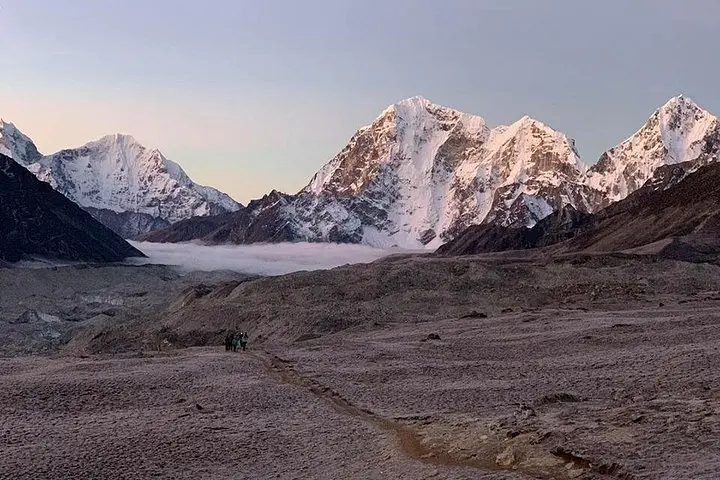
Terrain varies from packed dirt and forest tracks to rocky scree and glacial moraine. Acclimatization days in Namche and Dingboche are built into the schedule for a reason: elevation gain is steady and oxygen thins above 4,000 m. Teahouses and basic services are common up to Lobuche but sparse higher; expect colder nights and fewer menu choices.
Practical guidance—plan 12–14 days, prioritize slow ascent and hydration, carry a warm sleeping bag (many companies supply one), and be ready for flight delays to/from Lukla. Good ankle-support boots and trekking poles improve stability on descents. Buy TIMS and Sagarmatha National Park permits, respect local customs, and pack out non-biodegradable waste. With measured pacing and altitude awareness, the reward is unmatched: the granite bulk of Everest filling the skyline from Kala Patthar.
Yes—TIMS and Sagarmatha National Park entry permits are required and are typically arranged by operators.
Flights are notoriously weather-dependent; cancellations or delays are common—plan buffer days and be prepared for early departures.
Acclimatization days are built in; monitor symptoms, ascend slowly, stay hydrated, and consider prophylactic acetazolamide after consulting a doctor.
Late spring (April–May) and fall (September–November) offer the best weather and visibility; spring has rhododendrons in bloom.
Shepherd Holidays operates guided outdoor trips and adventures with an emphasis on safety, stewardship, and memorable experiences.
By the time the Lukla airstrip appears you feel the mountain’s draw: thin air, prayer flags snapping, and a river far below pushing the valley toward the Himalaya.
By the time the Lukla airstrip appears you feel the mountain’s draw: thin air, prayer flags snapping, and a river far below pushing the valley toward the Himalaya.
The 14-day trek from Lukla to Everest Base Camp follows pine and rhododendron slopes, crosses suspension bridges, and climbs moraines to Gorak Shep’s wind-scoured flats. Early mornings bring crisp panoramas; afternoons can tighten into sudden blue-white weather that demands layers.
This trail follows history—an older Jiri-Lukla approach used in the era of Sir Edmund Hillary and Tenzing Norgay—and runs through the Mahalangur Himal, where granite and schist have heaved Everest skyward. Sherpa culture is constant: mani walls, monasteries at Tengboche and Khumjung, and terrace fields that show human adaptation to altitude.
Terrain varies from packed dirt and forest tracks to rocky scree and glacial moraine. Acclimatization days in Namche and Dingboche are built into the schedule for a reason: elevation gain is steady and oxygen thins above 4,000 m. Teahouses and basic services are common up to Lobuche but sparse higher; expect colder nights and fewer menu choices.
Practical guidance—plan 12–14 days, prioritize slow ascent and hydration, carry a warm sleeping bag (many companies supply one), and be ready for flight delays to/from Lukla. Good ankle-support boots and trekking poles improve stability on descents. Buy TIMS and Sagarmatha National Park permits, respect local customs, and pack out non-biodegradable waste. With measured pacing and altitude awareness, the reward is unmatched: the granite bulk of Everest filling the skyline from Kala Patthar.