THE ADVENTURE COLLECTIVE® · Independent discovery and booking for outdoor travel

An 18-day high-altitude circuit linking Everest Base Camp with the Gokyo Valley via Cho La: expect glacier views, Sherpa villages, and a demanding yet non-technical passage at 5,350m. Plan for acclimatization and variable trail conditions.
An 18-day high-altitude circuit linking Everest Base Camp with the Gokyo Valley via Cho La: expect glacier views, Sherpa villages, and a demanding yet non-technical passage at 5,350m. Plan for acclimatization and variable trail conditions.
You step off the short Lukla flight into a thin-air morning where prayer flags snap and glaciers loom like slow-moving cities. The trail climbs from rhododendron forest through sherpa villages, crossing suspension bridges that creak under packs, then opens to the blue mirrors of the Gokyo lakes and the knife-edge crest of Cho La.
Verified experiences and guided adventures in the surrounding area.
Operated by Happyland Treks · Lukla, Province No. 1
You step off the short Lukla flight into a thin-air morning where prayer flags snap and glaciers loom like slow-moving cities. The trail climbs from rhododendron forest through sherpa villages, crossing suspension bridges that creak under packs, then opens to the blue mirrors of the Gokyo lakes and the knife-edge crest of Cho La.
This route links two classic Khumbu itineraries: the cultural hubs of Namche and Tengboche, and the glacial amphitheater of Gorakshep and Everest Base Camp. Geologically the valley is young—Himalayan uplift has stacked granite and sediment into glaciers and moraines; you’ll traverse lateral moraines, glacial streams and high alpine tundra. Sherpa culture is ever-present: mani stones, high-altitude gompas, and teahouses where yak butter tea fuels long days.
Expect sustained daily gains, multiple acclimatization days, and a high pass at roughly 5,350–5,550 m (Cho La and Gokyo Ri/Kalapattar). Terrain ranges from packed dirt and rocky switchbacks to icy sections near the pass—non-technical but exposed.
Practical guidance: plan for 18 days including Lukla flights and Kathmandu transfers. Hydrate early, monitor altitude symptoms, and build 8–12 weeks of aerobic conditioning and consecutive-day hikes before departure. Footwear should be sturdy, waterproof boots with good ankle support; crampons and an ice axe are useful in shoulder seasons. Fly weather-dependent into Lukla—allow buffer days. Tea-house accommodation is basic; layers, a warm sleeping bag, and small cash for tips and local purchases will keep the trip smooth. The reward is uncompromising mountain presence: Everest and its neighbors filling the horizon, daring you to breathe deeper and keep walking.
Cho La is non-technical but exposed, with loose rock and icy patches; good fitness and basic crampon experience are recommended.
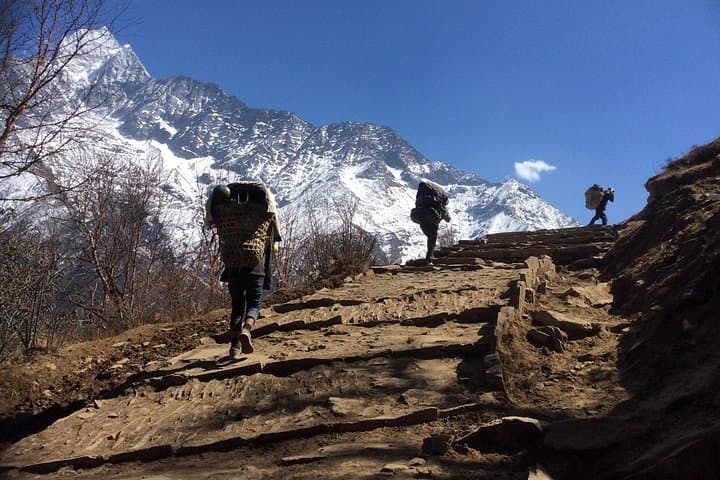
Guides and porters are strongly recommended for navigation, logistics, and altitude safety; porters typically carry shared loads on a 1:2 basis.
Pre-monsoon (March–May) and post-monsoon (late Sept–Nov) offer the most stable weather and clear views; shoulder seasons bring more ice or snow.
Altitude risk is real—proper acclimatization, pacing, awareness of symptoms, and willingness to descend are essential to stay safe.
Happyland Treks operates guided outdoor trips and adventures with an emphasis on safety, stewardship, and memorable experiences.

You step off the short Lukla flight into a thin-air morning where prayer flags snap and glaciers loom like slow-moving cities. The trail climbs from rhododendron forest through sherpa villages, crossing suspension bridges that creak under packs, then opens to the blue mirrors of the Gokyo lakes and the knife-edge crest of Cho La.
You step off the short Lukla flight into a thin-air morning where prayer flags snap and glaciers loom like slow-moving cities. The trail climbs from rhododendron forest through sherpa villages, crossing suspension bridges that creak under packs, then opens to the blue mirrors of the Gokyo lakes and the knife-edge crest of Cho La.
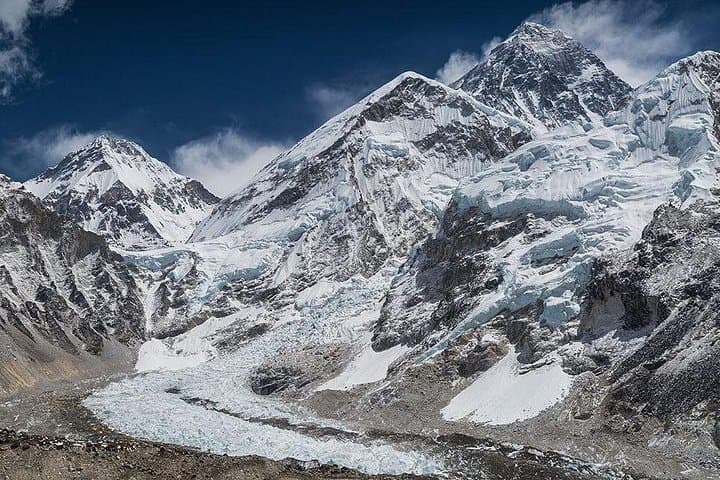
This route links two classic Khumbu itineraries: the cultural hubs of Namche and Tengboche, and the glacial amphitheater of Gorakshep and Everest Base Camp. Geologically the valley is young—Himalayan uplift has stacked granite and sediment into glaciers and moraines; you’ll traverse lateral moraines, glacial streams and high alpine tundra. Sherpa culture is ever-present: mani stones, high-altitude gompas, and teahouses where yak butter tea fuels long days.
Expect sustained daily gains, multiple acclimatization days, and a high pass at roughly 5,350–5,550 m (Cho La and Gokyo Ri/Kalapattar). Terrain ranges from packed dirt and rocky switchbacks to icy sections near the pass—non-technical but exposed.
Practical guidance: plan for 18 days including Lukla flights and Kathmandu transfers. Hydrate early, monitor altitude symptoms, and build 8–12 weeks of aerobic conditioning and consecutive-day hikes before departure. Footwear should be sturdy, waterproof boots with good ankle support; crampons and an ice axe are useful in shoulder seasons. Fly weather-dependent into Lukla—allow buffer days. Tea-house accommodation is basic; layers, a warm sleeping bag, and small cash for tips and local purchases will keep the trip smooth. The reward is uncompromising mountain presence: Everest and its neighbors filling the horizon, daring you to breathe deeper and keep walking.