THE ADVENTURE COLLECTIVE® · Independent discovery and booking for outdoor travel

Short on time but seeking Himalayan highs? This concentrated Lukla–Namche circuit packs Everest, Tengboche Monastery, and Sherpa village life into a multilayered six-day alpine trek. Expect long days, high passes, and tea‑house comforts.
Short on time but seeking Himalayan highs? This concentrated Lukla–Namche circuit packs Everest, Tengboche Monastery, and Sherpa village life into a multilayered six-day alpine trek. Expect long days, high passes, and tea‑house comforts.
You step out of the tiny Lukla airstrip into a cold, high-altitude morning: prayer flags snapping, the Dudh Koshi river daring you down the valley, and the ridge-line of Ama Dablam sharpening the horizon. Over the next days the trail alternates—soft pine duff, wooden suspension bridges that sway with each pack, and steep switchbacks that reveal Everest as a distant, white peak first and as an immense presence later.
Verified experiences and guided adventures in the surrounding area.
Operated by Bold Himalaya Treks and Travels Pvt Ltd · Namche Bazaar, Solukhumbu District
You step out of the tiny Lukla airstrip into a cold, high-altitude morning: prayer flags snapping, the Dudh Koshi river daring you down the valley, and the ridge-line of Ama Dablam sharpening the horizon. Over the next days the trail alternates—soft pine duff, wooden suspension bridges that sway with each pack, and steep switchbacks that reveal Everest as a distant, white peak first and as an immense presence later.
This itinerary threads Sherpa culture and Himalayan geology. Villages like Phakding and Namche Bazaar grew where trade routes crossed glacier-fed rivers; monasteries such as Tengboche anchor spiritual life and offer sweeping views of Lhotse and Nuptse. The terrain sits on uplifted metamorphic rocks; moraines and polished river stones speak to recent glacial action, while pockets of rhododendron and pine shelter pheasants and Himalayan thar.
Expect long walking days—three to seven hours—on alternating uphill and downhill trails, sleeping in sturdy tea houses. Guides handle permits (Everest National Park, TIMS) and local logistics; flights to and from Lukla are weather-dependent and dramatic.
Practical edge: acclimatize, drink frequently, and plan layered insulation for big diurnal swings. Footwear with stiff soles and traction is essential on rocky steps and wet wooden planks. Carry cash for tea house extras, and use a guide familiar with altitude signs—mild headaches early on are common; anything worsening warrants descent.
This trek delivers mountain spectacle and Sherpa hospitality in concentrated form—compact, demanding, and unforgettable.
No technical high-altitude climbs are included, but prior multi-day trekking experience and good fitness help; altitude awareness and a conservative pace are crucial.
Spring (April–May) and fall (September–November) offer the most stable weather and best visibility for views of Everest and Ama Dablam.
Flights depend on mountain weather and visibility; cancellations are common—allow buffer days and be prepared for a road-bus alternative to Jiri in rare cases.
Tea-house lodges provide basic private rooms and meals (breakfast, lunch, dinner); bring cash for extras like hot showers and snacks.
Bold Himalaya Treks and Travels Pvt Ltd operates guided outdoor trips and adventures with an emphasis on safety, stewardship, and memorable experiences.
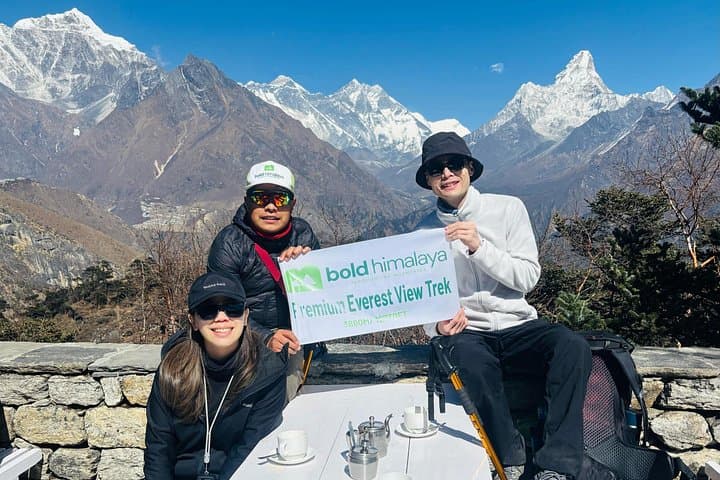

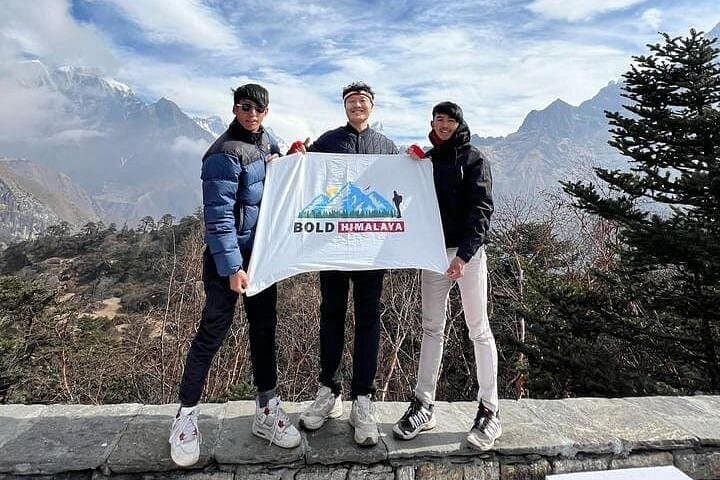

You step out of the tiny Lukla airstrip into a cold, high-altitude morning: prayer flags snapping, the Dudh Koshi river daring you down the valley, and the ridge-line of Ama Dablam sharpening the horizon. Over the next days the trail alternates—soft pine duff, wooden suspension bridges that sway with each pack, and steep switchbacks that reveal Everest as a distant, white peak first and as an immense presence later.
You step out of the tiny Lukla airstrip into a cold, high-altitude morning: prayer flags snapping, the Dudh Koshi river daring you down the valley, and the ridge-line of Ama Dablam sharpening the horizon. Over the next days the trail alternates—soft pine duff, wooden suspension bridges that sway with each pack, and steep switchbacks that reveal Everest as a distant, white peak first and as an immense presence later.
This itinerary threads Sherpa culture and Himalayan geology. Villages like Phakding and Namche Bazaar grew where trade routes crossed glacier-fed rivers; monasteries such as Tengboche anchor spiritual life and offer sweeping views of Lhotse and Nuptse. The terrain sits on uplifted metamorphic rocks; moraines and polished river stones speak to recent glacial action, while pockets of rhododendron and pine shelter pheasants and Himalayan thar.
Expect long walking days—three to seven hours—on alternating uphill and downhill trails, sleeping in sturdy tea houses. Guides handle permits (Everest National Park, TIMS) and local logistics; flights to and from Lukla are weather-dependent and dramatic.
Practical edge: acclimatize, drink frequently, and plan layered insulation for big diurnal swings. Footwear with stiff soles and traction is essential on rocky steps and wet wooden planks. Carry cash for tea house extras, and use a guide familiar with altitude signs—mild headaches early on are common; anything worsening warrants descent.
This trek delivers mountain spectacle and Sherpa hospitality in concentrated form—compact, demanding, and unforgettable.