THE ADVENTURE COLLECTIVE® · Independent discovery and booking for outdoor travel

See Everest from the air and have breakfast at one of the world’s highest hotels. This half-day helicopter trip from Kathmandu delivers towering Himalayan views with minimal altitude exposure.
See Everest from the air and have breakfast at one of the world’s highest hotels. This half-day helicopter trip from Kathmandu delivers towering Himalayan views with minimal altitude exposure.
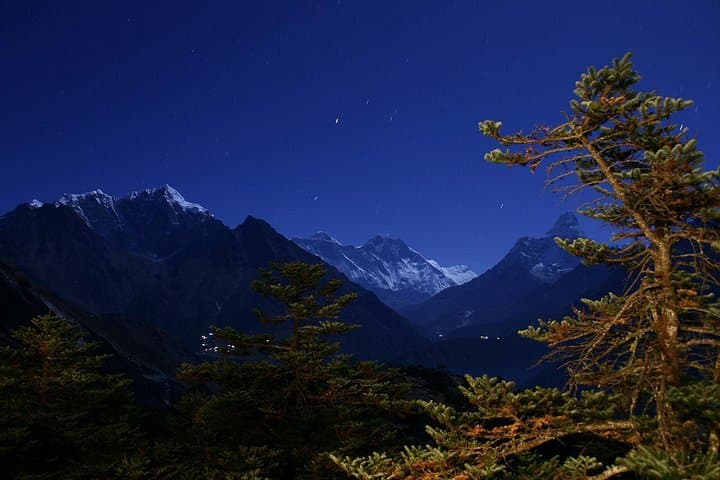
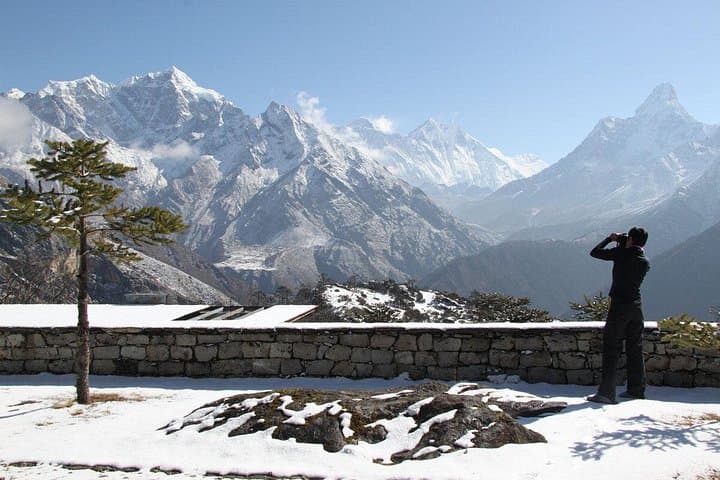
The city is still dark when the drive peels away from Kathmandu toward Tribhuvan Airport; lights blur and the Himalaya sit ahead like a folded map. In an hour you’re airborne, the valley shrinking beneath you, and the mountains growing, their ridges catching light like silver knives. The helicopter arcs toward the Khumbu, a line of giants — Everest, Lhotse, Ama Dablam — that push the sky aside and insist on attention.
Verified experiences and guided adventures in the surrounding area.
Operated by Himalayan Adventure Treks and Tours Pvt Ltd · Syangboche, Province No. 1
The city is still dark when the drive peels away from Kathmandu toward Tribhuvan Airport; lights blur and the Himalaya sit ahead like a folded map. In an hour you’re airborne, the valley shrinking beneath you, and the mountains growing, their ridges catching light like silver knives. The helicopter arcs toward the Khumbu, a line of giants — Everest, Lhotse, Ama Dablam — that push the sky aside and insist on attention.
This one-day flight traces the modern story of access to Everest: once a multi-week pilgrimage for climbers and pilgrims, now a brief aerial corridor that opens alpine panoramas to travelers with limited time. Syangboche’s Hotel Everest View, perched above Namche Bazaar at roughly 3,800–3,900 m, was built in the 1970s to give guests a close but comfortable look at the peaks; it remains one of the highest hotels with full-service breakfasts on site.
Geology here is dramatic—young, uplifted crust folded by the collision of the Indian and Eurasian plates—so the skyline reads like a textbook of orogeny. Culturally, the Khumbu is Sherpa country: prayer flags, mani walls, and tea houses mark a centuries-old mountain life focused on hospitality and mountaineering.
Practical notes: flights commonly stop in Lukla for fuel and are weather-dependent; clear morning windows give the best visibility. Expect thin air at Syangboche—move slowly, hydrate, and limit exertion. Bring windproof layers, sunglasses, and a camera with a fast shutter. The procedure includes hotel pickup in Kathmandu, a short drive to the airport, a round-trip helicopter transfer, breakfast at Everest View, photo time, and return to the city, all within about 4–5 hours. For travelers unable to trek to base camp, this flight delivers the summit spectacle with minimal altitude exposure and maximum photographic payoff.
Total door-to-door time is about 4–5 hours, including hotel pickup, airport procedures, a short refuel stop (often Lukla), breakfast at Syangboche, and return to Kathmandu.
No—the flight visits Syangboche/Everest View Hotel for breakfast and photo stops; it does not land at Everest Base Camp or Kala Patthar.
Because the landing altitude is around 3,800–3,900 m and exposure is brief, many with mild altitude sensitivity tolerate it, but anyone with serious altitude-related conditions should consult a doctor beforehand.
Mountain weather—clouds, wind, and poor visibility—are the main causes of cancellations; operators usually require early-morning departures for the best windows and offer refunds if canceled 24+ hours in advance.
Himalayan Adventure Treks and Tours Pvt Ltd operates guided outdoor trips and adventures with an emphasis on safety, stewardship, and memorable experiences.


The city is still dark when the drive peels away from Kathmandu toward Tribhuvan Airport; lights blur and the Himalaya sit ahead like a folded map. In an hour you’re airborne, the valley shrinking beneath you, and the mountains growing, their ridges catching light like silver knives. The helicopter arcs toward the Khumbu, a line of giants — Everest, Lhotse, Ama Dablam — that push the sky aside and insist on attention.
The city is still dark when the drive peels away from Kathmandu toward Tribhuvan Airport; lights blur and the Himalaya sit ahead like a folded map. In an hour you’re airborne, the valley shrinking beneath you, and the mountains growing, their ridges catching light like silver knives. The helicopter arcs toward the Khumbu, a line of giants — Everest, Lhotse, Ama Dablam — that push the sky aside and insist on attention.
This one-day flight traces the modern story of access to Everest: once a multi-week pilgrimage for climbers and pilgrims, now a brief aerial corridor that opens alpine panoramas to travelers with limited time. Syangboche’s Hotel Everest View, perched above Namche Bazaar at roughly 3,800–3,900 m, was built in the 1970s to give guests a close but comfortable look at the peaks; it remains one of the highest hotels with full-service breakfasts on site.
Geology here is dramatic—young, uplifted crust folded by the collision of the Indian and Eurasian plates—so the skyline reads like a textbook of orogeny. Culturally, the Khumbu is Sherpa country: prayer flags, mani walls, and tea houses mark a centuries-old mountain life focused on hospitality and mountaineering.
Practical notes: flights commonly stop in Lukla for fuel and are weather-dependent; clear morning windows give the best visibility. Expect thin air at Syangboche—move slowly, hydrate, and limit exertion. Bring windproof layers, sunglasses, and a camera with a fast shutter. The procedure includes hotel pickup in Kathmandu, a short drive to the airport, a round-trip helicopter transfer, breakfast at Everest View, photo time, and return to the city, all within about 4–5 hours. For travelers unable to trek to base camp, this flight delivers the summit spectacle with minimal altitude exposure and maximum photographic payoff.