THE ADVENTURE COLLECTIVE® · Independent discovery and booking for outdoor travel

A demanding 20-day traverse of the Khumbu that links Everest Base Camp, Kala Patthar and the Gokyo lakes via Kongma La, Cho La and Renjo La. Expect long high-altitude days, teahouse nights and panoramic Himalayan exposure.
A demanding 20-day traverse of the Khumbu that links Everest Base Camp, Kala Patthar and the Gokyo lakes via Kongma La, Cho La and Renjo La. Expect long high-altitude days, teahouse nights and panoramic Himalayan exposure.
You emerge from the thin, oxygen-keen air at Lukla and the valley opens: prayer flags snap, a glacier rumbles in the distance, and the trail climbs into a world that measures time by altitude rather than clocks.
Verified experiences and guided adventures in the surrounding area.
Operated by Himalayan Adventure Treks and Tours Pvt Ltd · Namche Bazaar, Province No. 1 (Solukhumbu)
You emerge from the thin, oxygen-keen air at Lukla and the valley opens: prayer flags snap, a glacier rumbles in the distance, and the trail climbs into a world that measures time by altitude rather than clocks.
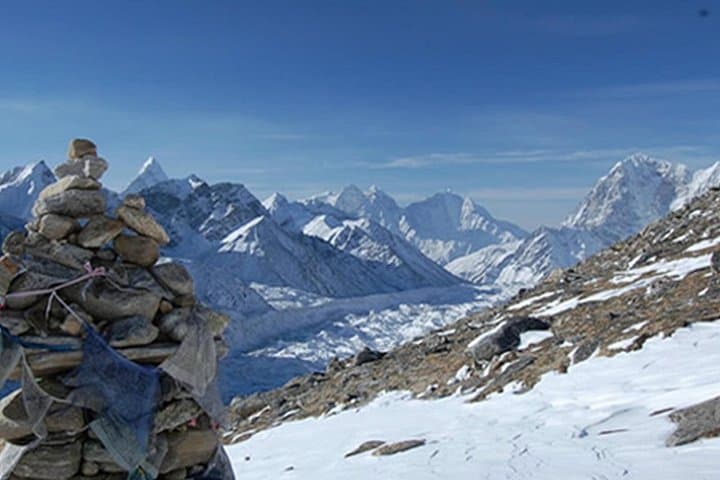
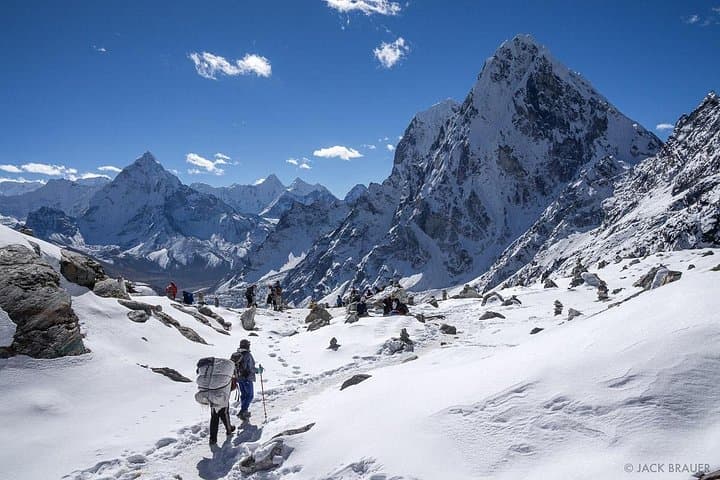
This 20-day circuit threads the classic Khumbu villages and three serious saddles—Kongma La (≈5,535 m), Cho La (≈5,420 m) and Renjo La (≈5,360 m)—linking Everest Base Camp, Kala Patthar and the turquoise Gokyo lakes. Geologically the route runs along the Mahalangur range and the vast Ngozumpa glacier, Nepal’s longest, exposing moraines, mixed rock and seasonal ice. Culturally, you walk through Sherpa villages, visit monasteries at Tengboche and Khumjung, and pass fields ringed with stone walls where barley still grows on the windy slopes.
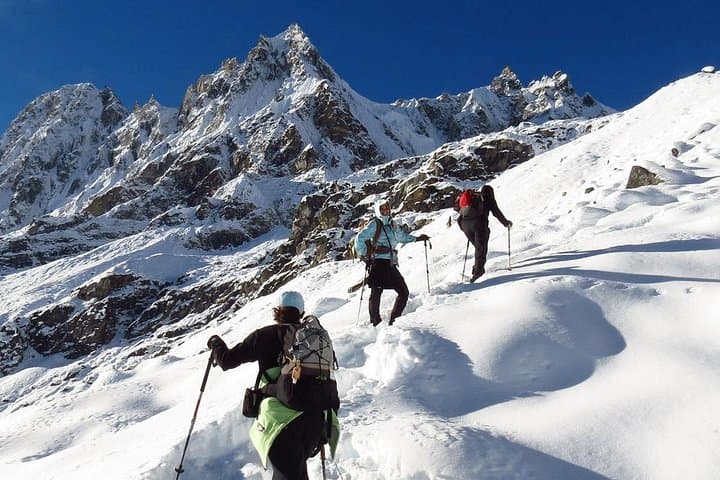
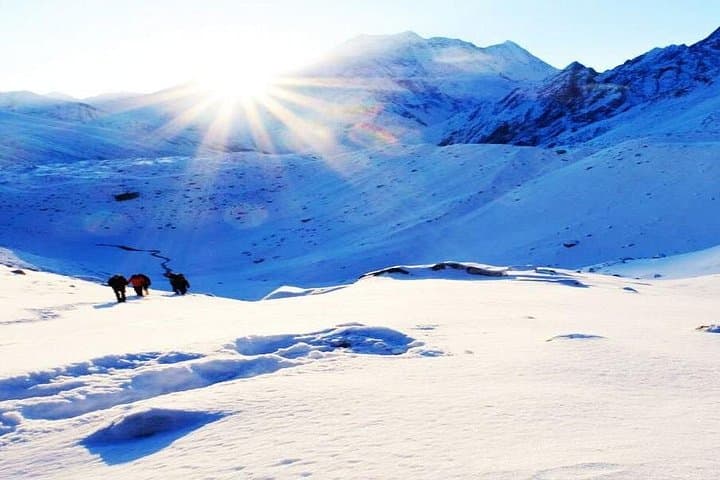
Expect tea-house nights, strong sun at elevation, and mornings measured in crampon steps rather than minutes. Weather shifts fast: clear, bone-dry mornings can turn to spindrift and wind on the passes. The trail demands sustained cardio fitness, careful acclimatization days at Namche, Dingboche and Gokyo, and readiness for long uphill days above 5,000 m.
Practical guidance: fly Lukla early, budget buffer days for weather, carry layered insulation and sun protection, and keep cash for teahouse extras. Hydrate before and during each long climb, watch for signs of altitude sickness, and travel with an experienced guide who manages permits (TIMS, Sagarmatha NP) and evacuation logistics. On balance, this is a high-reward, high-effort Himalayan traverse—raw, panoramic, and uncompromising.
Yes—previous multi-day trekking above 3,500 m and good cardiovascular conditioning are highly recommended; the route includes several days above 5,000 m.
Generally no; the trek is non-technical but involves scrambling and seasonal ice where basic crampon skills are useful and guides decide when to use them.
Trekkers need TIMS (Trekkers’ Information Management System) and a Sagarmatha National Park permit; these are usually handled by the operator before departure.
Pre- and post-monsoon windows—late March to May and late September to November—offer the most stable weather and clearer views; shoulder seasons bring fewer crowds but more variable conditions.
Himalayan Adventure Treks and Tours Pvt Ltd operates guided outdoor trips and adventures with an emphasis on safety, stewardship, and memorable experiences.
You emerge from the thin, oxygen-keen air at Lukla and the valley opens: prayer flags snap, a glacier rumbles in the distance, and the trail climbs into a world that measures time by altitude rather than clocks.
You emerge from the thin, oxygen-keen air at Lukla and the valley opens: prayer flags snap, a glacier rumbles in the distance, and the trail climbs into a world that measures time by altitude rather than clocks.
This 20-day circuit threads the classic Khumbu villages and three serious saddles—Kongma La (≈5,535 m), Cho La (≈5,420 m) and Renjo La (≈5,360 m)—linking Everest Base Camp, Kala Patthar and the turquoise Gokyo lakes. Geologically the route runs along the Mahalangur range and the vast Ngozumpa glacier, Nepal’s longest, exposing moraines, mixed rock and seasonal ice. Culturally, you walk through Sherpa villages, visit monasteries at Tengboche and Khumjung, and pass fields ringed with stone walls where barley still grows on the windy slopes.
Expect tea-house nights, strong sun at elevation, and mornings measured in crampon steps rather than minutes. Weather shifts fast: clear, bone-dry mornings can turn to spindrift and wind on the passes. The trail demands sustained cardio fitness, careful acclimatization days at Namche, Dingboche and Gokyo, and readiness for long uphill days above 5,000 m.
Practical guidance: fly Lukla early, budget buffer days for weather, carry layered insulation and sun protection, and keep cash for teahouse extras. Hydrate before and during each long climb, watch for signs of altitude sickness, and travel with an experienced guide who manages permits (TIMS, Sagarmatha NP) and evacuation logistics. On balance, this is a high-reward, high-effort Himalayan traverse—raw, panoramic, and uncompromising.