THE ADVENTURE COLLECTIVE® · Independent discovery and booking for outdoor travel

Glide through mangrove tunnels and into cypress ponds on a guided kayak tour from Everglades City. Expect close wildlife encounters, paddling instruction, and hands-on lessons about the Everglades' unique tidal ecology.
Glide through mangrove tunnels and into cypress ponds on a guided kayak tour from Everglades City. Expect close wildlife encounters, paddling instruction, and hands-on lessons about the Everglades' unique tidal ecology.
You push off into a green hush—the paddle slices glassy water, and the mangrove roots close behind you like a slow-moving door. Light filters through tangled prop roots and the air smells faintly of peat and salt; an osprey circles and data-lines the sky with a shadow before dropping to a distant snag. For three to four hours you move through the inland edges of the Everglades where cypress domes and mangrove tunnels shape routes more than maps do.
Verified experiences and guided adventures in the surrounding area.
Operated by Everglades Adventures Kayak & Eco Tours · Everglades City, Florida
You push off into a green hush—the paddle slices glassy water, and the mangrove roots close behind you like a slow-moving door. Light filters through tangled prop roots and the air smells faintly of peat and salt; an osprey circles and data-lines the sky with a shadow before dropping to a distant snag. For three to four hours you move through the inland edges of the Everglades where cypress domes and mangrove tunnels shape routes more than maps do.
This is a landscape written in water. The Everglades sits on a limestone shelf where slow, sheet-flowing water once spread for miles; over millennia that flow carved peat, established sawgrass marshes, and allowed mangrove forests to claim tidal edges. The region around Everglades City and the Ten Thousand Islands was home to Calusa communities long before European contact—people who navigated these same channels in dugout canoes and read the tides for food and travel. Later, 19th and early 20th-century settlers fished and harvested oysters along these banks, leaving small seafood shacks and boat canals that still mark the coastline.
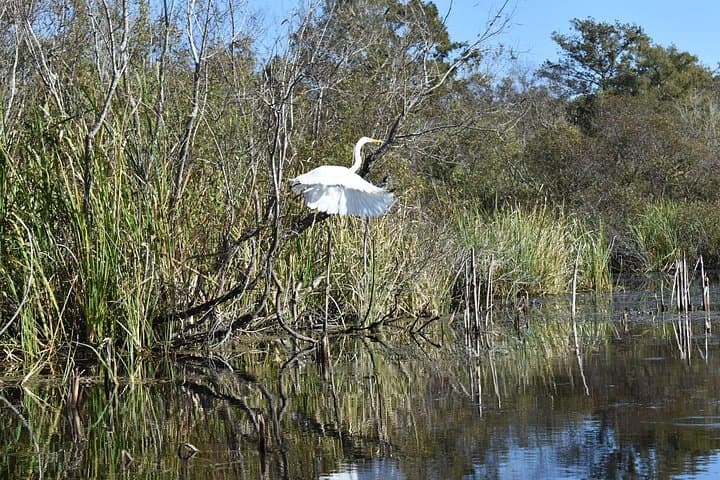
On a guided kayak tour you get the dual experience of wildlife viewing and hands-on paddling instruction. Guides explain local geology and ecology in plain terms—why cypress form domes, how mangrove pneumatophores breathe, and how tidal rhythm concentrates fish and birds. You’ll likely see American alligators sunning on banks, bald eagles hunting overhead, and a chorus of wading birds: herons, egrets and roseate spoonbills in season.
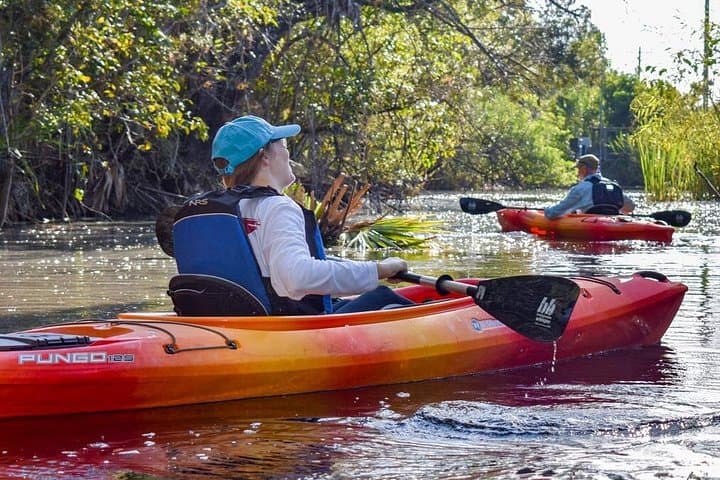
Practical details matter here: tours run about 3–4 hours and cover calm mangrove tunnels and open cypress ponds. The operator provides kayaks, paddles, personal flotation devices, bottled water, and snacks; basic paddling instruction is included, so beginners who are moderately fit can participate. Check-in occurs at the Ivey House in Everglades City—plan your arrival around morning light when wildlife is most active and heat and insects are lower.
Respect the edge between you and wild animals—never attempt to feed or approach alligators or birds. Tides affect routes: lower tides expose more mudflats and channel restrictions, while high tides make mangrove labyrinths deeper and quieter. Bring reef-safe sunscreen, a wide-brim hat, layered sun-protective clothing, and footwear that can get wet. If you want cleaner photos, ask your guide about vantage points for reflections in cypress ponds and the best spots for spotting raptors.
The Everglades is a fragile system facing sea-level rise and pollution; choose operators who follow Leave No Trace boating practices and use reef-safe products. This guided kayak trip is equal parts natural history and small-boat exercise—a close-range window into one of the continent’s most dynamic coastal wetlands.
Moderate fitness is required—participants should be able to paddle for several hours and step in/out of a kayak; basic instruction is provided.
Yes, personal flotation devices are provided and required to be worn throughout the tour.
Age policies vary by operator; children can often join with parental supervision—check the booking terms for minimum age.
Alligators are common, but sightings aren’t guaranteed; guides know where to look and follow safe viewing distances.
Tours are canceled for unsafe conditions (high winds or storms); operators typically offer full refunds if canceled within the stated policy.
No prior experience is necessary—guided tours include paddling instruction and choose routes appropriate for skill level.
Everglades Adventures Kayak & Eco Tours operates guided outdoor trips and adventures with an emphasis on safety, stewardship, and memorable experiences.
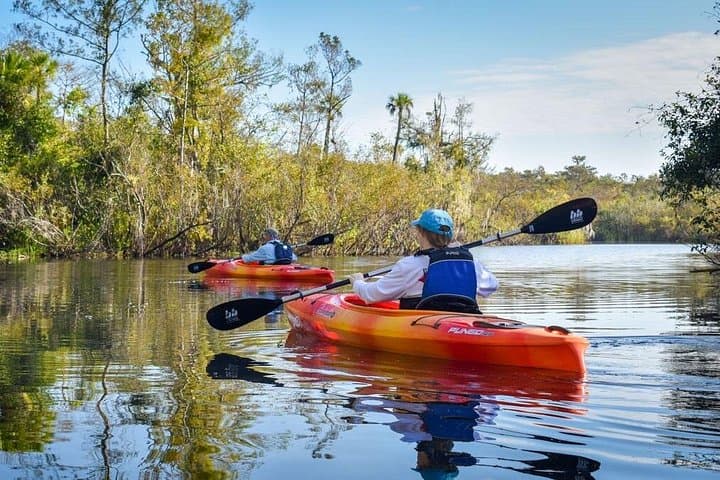
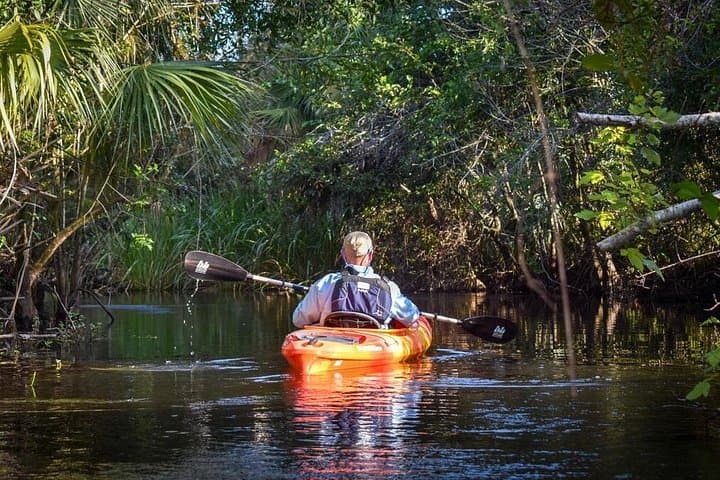
You push off into a green hush—the paddle slices glassy water, and the mangrove roots close behind you like a slow-moving door. Light filters through tangled prop roots and the air smells faintly of peat and salt; an osprey circles and data-lines the sky with a shadow before dropping to a distant snag. For three to four hours you move through the inland edges of the Everglades where cypress domes and mangrove tunnels shape routes more than maps do.
You push off into a green hush—the paddle slices glassy water, and the mangrove roots close behind you like a slow-moving door. Light filters through tangled prop roots and the air smells faintly of peat and salt; an osprey circles and data-lines the sky with a shadow before dropping to a distant snag. For three to four hours you move through the inland edges of the Everglades where cypress domes and mangrove tunnels shape routes more than maps do.
This is a landscape written in water. The Everglades sits on a limestone shelf where slow, sheet-flowing water once spread for miles; over millennia that flow carved peat, established sawgrass marshes, and allowed mangrove forests to claim tidal edges. The region around Everglades City and the Ten Thousand Islands was home to Calusa communities long before European contact—people who navigated these same channels in dugout canoes and read the tides for food and travel. Later, 19th and early 20th-century settlers fished and harvested oysters along these banks, leaving small seafood shacks and boat canals that still mark the coastline.
On a guided kayak tour you get the dual experience of wildlife viewing and hands-on paddling instruction. Guides explain local geology and ecology in plain terms—why cypress form domes, how mangrove pneumatophores breathe, and how tidal rhythm concentrates fish and birds. You’ll likely see American alligators sunning on banks, bald eagles hunting overhead, and a chorus of wading birds: herons, egrets and roseate spoonbills in season.
Practical details matter here: tours run about 3–4 hours and cover calm mangrove tunnels and open cypress ponds. The operator provides kayaks, paddles, personal flotation devices, bottled water, and snacks; basic paddling instruction is included, so beginners who are moderately fit can participate. Check-in occurs at the Ivey House in Everglades City—plan your arrival around morning light when wildlife is most active and heat and insects are lower.
Respect the edge between you and wild animals—never attempt to feed or approach alligators or birds. Tides affect routes: lower tides expose more mudflats and channel restrictions, while high tides make mangrove labyrinths deeper and quieter. Bring reef-safe sunscreen, a wide-brim hat, layered sun-protective clothing, and footwear that can get wet. If you want cleaner photos, ask your guide about vantage points for reflections in cypress ponds and the best spots for spotting raptors.
The Everglades is a fragile system facing sea-level rise and pollution; choose operators who follow Leave No Trace boating practices and use reef-safe products. This guided kayak trip is equal parts natural history and small-boat exercise—a close-range window into one of the continent’s most dynamic coastal wetlands.