THE ADVENTURE COLLECTIVE® · Independent discovery and booking for outdoor travel

Explore two centuries of science and spectacle on a private 2‑hour guided tour of the Smithsonian National Museum of Natural History. See the Hope Diamond, giant fossils, and Ocean Hall with a knowledgeable guide who tailors the route to your interests.
Explore two centuries of science and spectacle on a private 2‑hour guided tour of the Smithsonian National Museum of Natural History. See the Hope Diamond, giant fossils, and Ocean Hall with a knowledgeable guide who tailors the route to your interests.
Step onto the broad Madison Drive steps, feel the city’s pulse slow as the museum’s stone face swallows the noise. Inside, light slides across glass cases and the Hope Diamond holds a cool, deliberate glare—objects here don’t just sit; they watch you back.
Verified experiences and guided adventures in the surrounding area.
Operated by Babylon Tours DC · Washington, District of Columbia
Step onto the broad Madison Drive steps, feel the city’s pulse slow as the museum’s stone face swallows the noise. Inside, light slides across glass cases and the Hope Diamond holds a cool, deliberate glare—objects here don’t just sit; they watch you back.
The National Museum of Natural History opened in 1910 and has expanded into one of the world’s largest natural science collections, built on donations, expeditions, and museum-led research. Geology and paleontology share the same long rooms—minerals flash their internal geometry while fossil skeletons arc like frozen storms. Cultural displays include mummies and ritual objects that reflect colonial-era collecting practices and evolving museum ethics.
Local guides bridge science and story: expect focused interpretation on gems, mammals, and the museum’s landmark Ocean Hall. The building itself is part exhibit—neoclassical architecture that channels early-20th-century ambitions to catalogue the natural world.
Practical guidance: this is a 2-hour private tour; arrive 10 minutes early at the Madison Drive NW stairs. Security restricts large bags—carry a small daypack or none at all. Wear comfortable walking shoes; rooms vary in temperature. Photography is allowed in most halls but some spaces require quiet or restricted conversation; your guide will flag those spots.
Timing matters—mornings are quieter on weekdays; afternoons draw families. If a gallery is closed for conservation, guides will pivot to alternate highlights. Bring a charged phone for contact information and any accessibility needs; the tour is wheelchair accessible but some rooms can be narrow during peak hours.
Meet on the large stairs at the Madison Drive NW entrance facing the National Mall; arrive at least 10 minutes early.
No—large suitcases and oversized bags are not permitted through security; small backpacks and purses are fine.
Yes, the tour is wheelchair accessible, though some galleries can be tight during peak times—notify operators in advance for assistance.
Yes; as a private guided experience the route is tailored to highlights you request, subject to temporary gallery closures.
Babylon Tours DC operates guided outdoor trips and adventures with an emphasis on safety, stewardship, and memorable experiences.


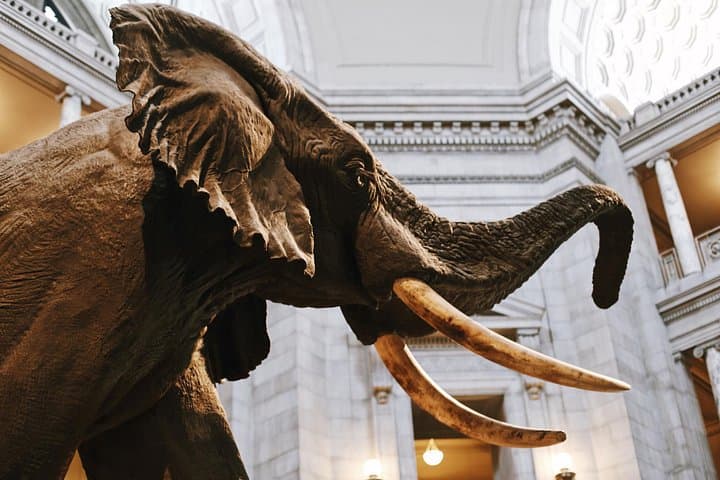
Step onto the broad Madison Drive steps, feel the city’s pulse slow as the museum’s stone face swallows the noise. Inside, light slides across glass cases and the Hope Diamond holds a cool, deliberate glare—objects here don’t just sit; they watch you back.
Step onto the broad Madison Drive steps, feel the city’s pulse slow as the museum’s stone face swallows the noise. Inside, light slides across glass cases and the Hope Diamond holds a cool, deliberate glare—objects here don’t just sit; they watch you back.
The National Museum of Natural History opened in 1910 and has expanded into one of the world’s largest natural science collections, built on donations, expeditions, and museum-led research. Geology and paleontology share the same long rooms—minerals flash their internal geometry while fossil skeletons arc like frozen storms. Cultural displays include mummies and ritual objects that reflect colonial-era collecting practices and evolving museum ethics.
Local guides bridge science and story: expect focused interpretation on gems, mammals, and the museum’s landmark Ocean Hall. The building itself is part exhibit—neoclassical architecture that channels early-20th-century ambitions to catalogue the natural world.
Practical guidance: this is a 2-hour private tour; arrive 10 minutes early at the Madison Drive NW stairs. Security restricts large bags—carry a small daypack or none at all. Wear comfortable walking shoes; rooms vary in temperature. Photography is allowed in most halls but some spaces require quiet or restricted conversation; your guide will flag those spots.
Timing matters—mornings are quieter on weekdays; afternoons draw families. If a gallery is closed for conservation, guides will pivot to alternate highlights. Bring a charged phone for contact information and any accessibility needs; the tour is wheelchair accessible but some rooms can be narrow during peak hours.