THE ADVENTURE COLLECTIVE® · Independent discovery and booking for outdoor travel

Trace Jordan’s long sweep in eight days — from Amman’s citadel and Jerash’s colonnades to Petra’s carved facades, a Wadi Rum jeep safari and Red Sea snorkeling in Aqaba. This guided group tour pairs archaeology, desert adventure and local hospitality with practical daily logistics.
Trace Jordan’s long sweep in eight days — from Amman’s citadel and Jerash’s colonnades to Petra’s carved facades, a Wadi Rum jeep safari and Red Sea snorkeling in Aqaba. This guided group tour pairs archaeology, desert adventure and local hospitality with practical daily logistics.
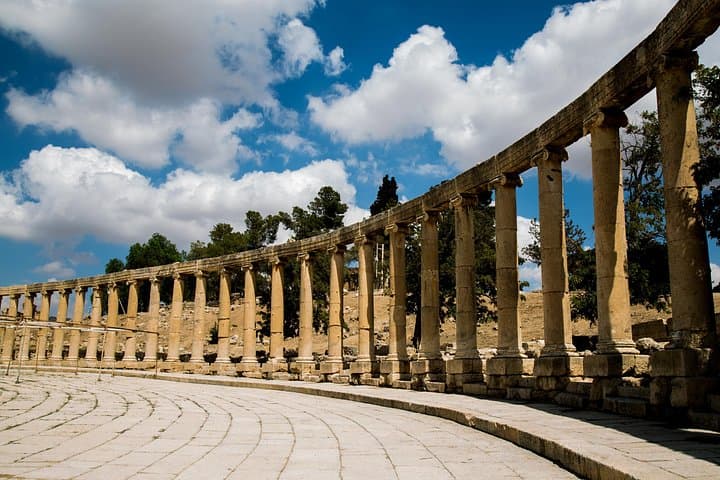
Morning light edges the limestone roofs of Amman as the group assembles in a hotel lobby — the starting point for eight days that curve from ancient columns and mosaic floors to rose-red cliffs and wind-swept desert. On day one the city yawns open: Citadel stones, a Roman theater, and a market where the smell of za'atar and fresh-baked flatbread thread through the alleys. From there the tempo shifts — olive groves and family kitchens in Ajloun, the marble peristyles of Jerash, and the claustrophobic rock throat of Petra that drops you suddenly into a city hewn from living stone.
Verified experiences and guided adventures in the surrounding area.
Operated by Experience Jordan Adventures · Amman, Amman Governorate
Morning light edges the limestone roofs of Amman as the group assembles in a hotel lobby — the starting point for eight days that curve from ancient columns and mosaic floors to rose-red cliffs and wind-swept desert. On day one the city yawns open: Citadel stones, a Roman theater, and a market where the smell of za'atar and fresh-baked flatbread thread through the alleys. From there the tempo shifts — olive groves and family kitchens in Ajloun, the marble peristyles of Jerash, and the claustrophobic rock throat of Petra that drops you suddenly into a city hewn from living stone.
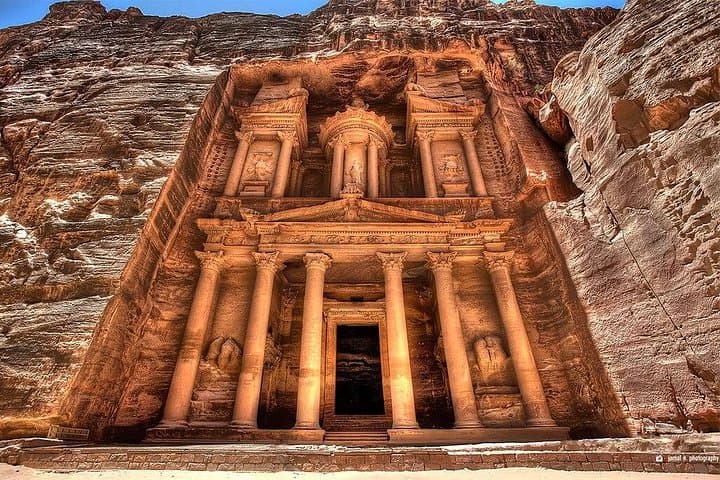
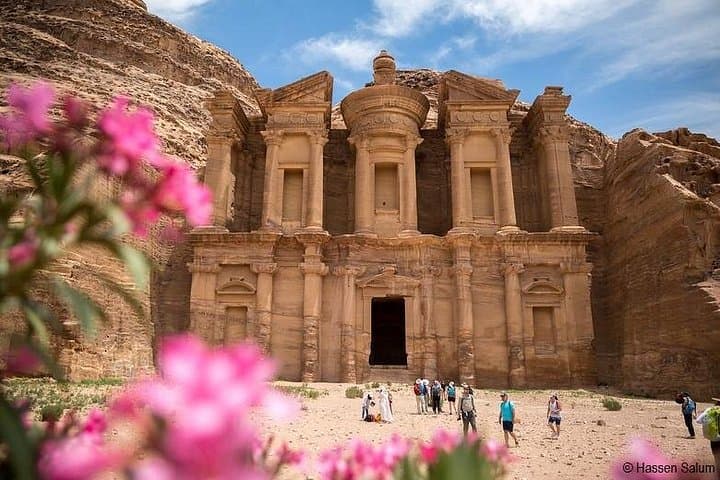
This itinerary is a study in Jordan’s layers. Geology explains Petra’s façades — soft sandstone etched by wind and water into the cliffs that frame the Siq — while nearby Wadi Rum is a landscape of granite and basalt shoulders, where wind has sculpted domes and narrow canyons. History runs as long as the roads: Crusader keeps like Karak and Shobak outline medieval politics, while Madaba’s Byzantine mosaics map a Christian pilgrimage world. In Aqaba the Red Sea arrives as a counterpoint: coral gardens and iridescent fish below a scorching sky.
The practical architecture of the tour is simple and efficient. Travel is by private, air-conditioned vehicle with a maximum shared group of 14, and most days combine 3–6 hours of guided exploration with transit legs that range from short drives to the longer runs south (Amman to Petra ≈ 220 km, roughly 3–4 hours). Expect full-day outings in Petra (six to eight hours with walking and some steep staircases), a 4-hour Wadi Rum jeep safari including short hikes and camel rides, and a glass-bottom boat snorkel off Aqaba.
Bring the right rhythm: start early in Petra to avoid midday heat; plan breaks and hydration on long drives; and reserve energy for unpaved trails in Wadi Rum. Dress modestly in towns and pack swimwear for the Dead Sea and Aqaba; sunscreen, a small daypack, and layers for cool desert nights make the trip more comfortable. The tour balances guided sites with pockets of free time for markets, cafés, and conversations with local hosts — including a family meal in Orjan where olive trees and centuries of farming shape daily life.
For travelers, this is not an endurance trek but a carefully paced cultural circuit: historic citadels, natural spectacles, and an intimate window into Jordanian hospitality. With clear logistics, varied terrain, and moments of unexpected quiet — a sunset smear over Wadi Rum or the sudden reveal of Petra’s Treasury at the end of the Siq — the itinerary rewards curiosity and a readiness to walk, listen, and linger.
Many nationalities require a visa on arrival at Queen Alia International Airport; check current requirements with Jordanian authorities before travel.
Yes — the itinerary notes suitability for all fitness levels, but families and older travelers should be prepared for long days and uneven ground in Petra and Wadi Rum.
Guides are typically English-speaking and provide historical and cultural context; additional local guides may join at sites depending on group size.
Most hotels offer luggage storage; ask your operator in advance if you need bags moved between hotels on travel days.
Breakfast is provided daily and several lunches and dinners are included as per the itinerary; check specifics for days when free time allows independent dining.
Floating at the Dead Sea is safe but avoid getting water in eyes or open wounds; snorkeling in Aqaba is safe from organized boats with provided life jackets and basic gear.
Experience Jordan Adventures operates guided outdoor trips and adventures with an emphasis on safety, stewardship, and memorable experiences.

Morning light edges the limestone roofs of Amman as the group assembles in a hotel lobby — the starting point for eight days that curve from ancient columns and mosaic floors to rose-red cliffs and wind-swept desert. On day one the city yawns open: Citadel stones, a Roman theater, and a market where the smell of za'atar and fresh-baked flatbread thread through the alleys. From there the tempo shifts — olive groves and family kitchens in Ajloun, the marble peristyles of Jerash, and the claustrophobic rock throat of Petra that drops you suddenly into a city hewn from living stone.
Morning light edges the limestone roofs of Amman as the group assembles in a hotel lobby — the starting point for eight days that curve from ancient columns and mosaic floors to rose-red cliffs and wind-swept desert. On day one the city yawns open: Citadel stones, a Roman theater, and a market where the smell of za'atar and fresh-baked flatbread thread through the alleys. From there the tempo shifts — olive groves and family kitchens in Ajloun, the marble peristyles of Jerash, and the claustrophobic rock throat of Petra that drops you suddenly into a city hewn from living stone.
This itinerary is a study in Jordan’s layers. Geology explains Petra’s façades — soft sandstone etched by wind and water into the cliffs that frame the Siq — while nearby Wadi Rum is a landscape of granite and basalt shoulders, where wind has sculpted domes and narrow canyons. History runs as long as the roads: Crusader keeps like Karak and Shobak outline medieval politics, while Madaba’s Byzantine mosaics map a Christian pilgrimage world. In Aqaba the Red Sea arrives as a counterpoint: coral gardens and iridescent fish below a scorching sky.
The practical architecture of the tour is simple and efficient. Travel is by private, air-conditioned vehicle with a maximum shared group of 14, and most days combine 3–6 hours of guided exploration with transit legs that range from short drives to the longer runs south (Amman to Petra ≈ 220 km, roughly 3–4 hours). Expect full-day outings in Petra (six to eight hours with walking and some steep staircases), a 4-hour Wadi Rum jeep safari including short hikes and camel rides, and a glass-bottom boat snorkel off Aqaba.
Bring the right rhythm: start early in Petra to avoid midday heat; plan breaks and hydration on long drives; and reserve energy for unpaved trails in Wadi Rum. Dress modestly in towns and pack swimwear for the Dead Sea and Aqaba; sunscreen, a small daypack, and layers for cool desert nights make the trip more comfortable. The tour balances guided sites with pockets of free time for markets, cafés, and conversations with local hosts — including a family meal in Orjan where olive trees and centuries of farming shape daily life.
For travelers, this is not an endurance trek but a carefully paced cultural circuit: historic citadels, natural spectacles, and an intimate window into Jordanian hospitality. With clear logistics, varied terrain, and moments of unexpected quiet — a sunset smear over Wadi Rum or the sudden reveal of Petra’s Treasury at the end of the Siq — the itinerary rewards curiosity and a readiness to walk, listen, and linger.