THE ADVENTURE COLLECTIVE® · Independent discovery and booking for outdoor travel
Spend 90 minutes with an expert guide tracing Florence’s Renaissance heart from the Duomo to the Ponte Vecchio. This compact walking tour packs architectural context, cultural history, and local tips into a single, accessible route.
Spend 90 minutes with an expert guide tracing Florence’s Renaissance heart from the Duomo to the Ponte Vecchio. This compact walking tour packs architectural context, cultural history, and local tips into a single, accessible route.
Morning light spills across the marble bands of Piazza del Duomo, and the city seems to breathe at the pace of footsteps and church bells. An expert guide leads a small group through narrow streets where stone and history press close, pausing so that Brunelleschi’s dome, Giotto’s campanile and the Baptistery’s bronze doors can be taken in from the ideal angle.
Verified experiences and guided adventures in the surrounding area.
Operated by Florence with Locals Group Tours · Florence, Tuscany
Morning light spills across the marble bands of Piazza del Duomo, and the city seems to breathe at the pace of footsteps and church bells. An expert guide leads a small group through narrow streets where stone and history press close, pausing so that Brunelleschi’s dome, Giotto’s campanile and the Baptistery’s bronze doors can be taken in from the ideal angle.
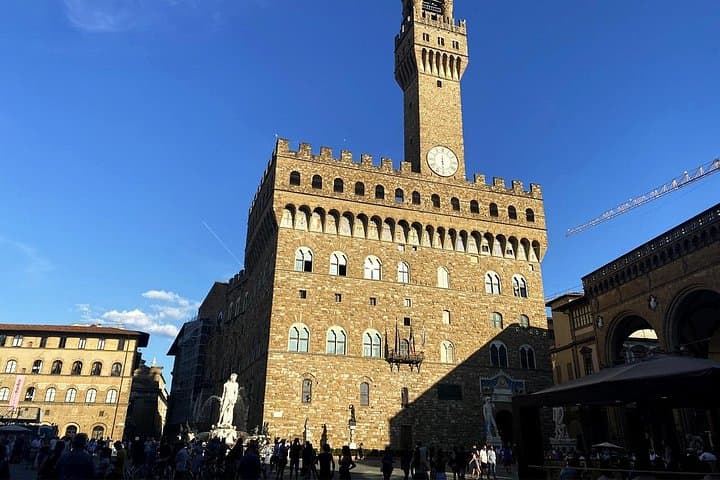
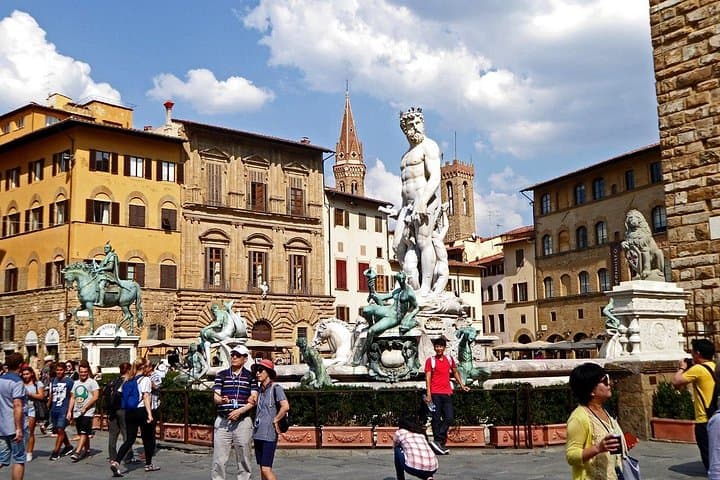
Florence is an urban landscape carved by politics, patronage and craft. Medieval guildhouses became galleries; the Medici transformed civic space into a stage for art that changed Europe. Geology here matters—local Carrara and Apuan marbles and Tuscan sandstone shaped façades and workshops, while the Arno River dictated trade routes and the city’s footprint. The guide layers cultural context—how guilds commissioned public sculpture, why the Ponte Vecchio kept its shops—and points out quieter details: a worn step where a procession paused, a coat of arms above a doorway.
Practical guidance is straightforward. The tour covers roughly a mile of central, paved streets with frequent stops and short standing explanations. Expect 90 minutes of walking and listening; bring a water bottle, comfortable shoes, and sun protection in summer. Timing matters—mornings are cooler and less crowded, while early afternoons bring more traffic near the Uffizi and Ponte Vecchio.
This tour suits travelers who want concentrated historical interpretation without museum immersion. It’s an efficient, sensory way to orient yourself to Florence’s civic heart before you dig deeper into galleries and workshops.
The tour lasts about 90 minutes and covers roughly 1–1.5 miles of central Florence on paved streets with frequent stops.
Yes—this tour is stroller-accessible and suitable for families, though cobbles can be bumpy and some standing is required.
No—this walking tour interprets exterior sites and public squares; museum entry is not included but the guide will point out highlights and logistics for later visits.
Tours are typically led in English by a local expert; private bookings may offer other languages on request—check availability when booking.
Florence with Locals Group Tours operates guided outdoor trips and adventures with an emphasis on safety, stewardship, and memorable experiences.
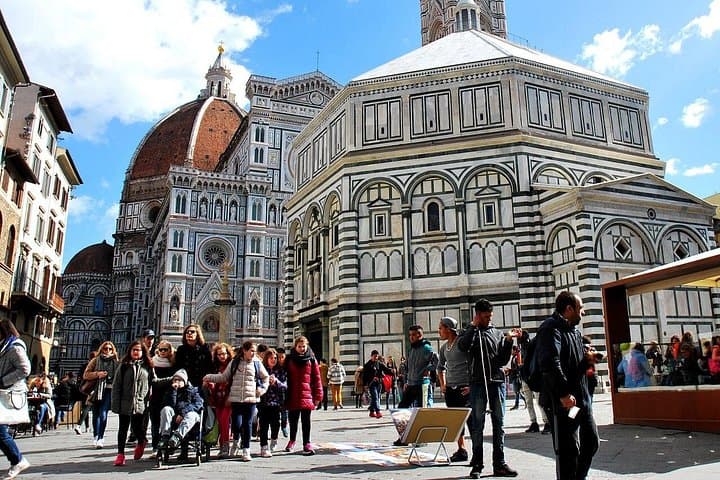
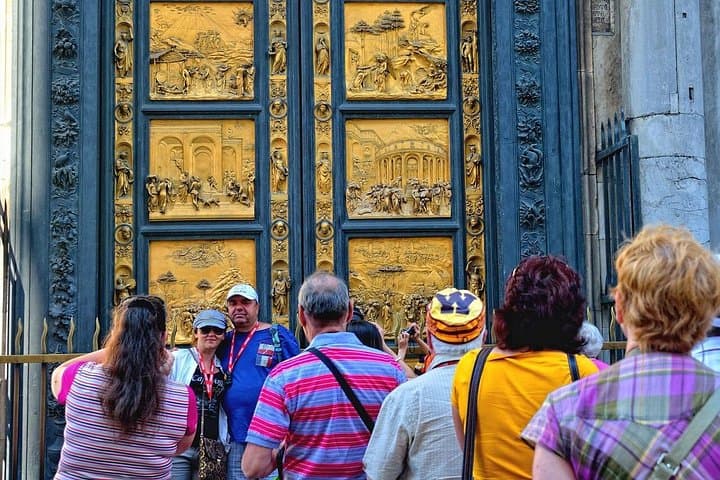
Morning light spills across the marble bands of Piazza del Duomo, and the city seems to breathe at the pace of footsteps and church bells. An expert guide leads a small group through narrow streets where stone and history press close, pausing so that Brunelleschi’s dome, Giotto’s campanile and the Baptistery’s bronze doors can be taken in from the ideal angle.
Morning light spills across the marble bands of Piazza del Duomo, and the city seems to breathe at the pace of footsteps and church bells. An expert guide leads a small group through narrow streets where stone and history press close, pausing so that Brunelleschi’s dome, Giotto’s campanile and the Baptistery’s bronze doors can be taken in from the ideal angle.
Florence is an urban landscape carved by politics, patronage and craft. Medieval guildhouses became galleries; the Medici transformed civic space into a stage for art that changed Europe. Geology here matters—local Carrara and Apuan marbles and Tuscan sandstone shaped façades and workshops, while the Arno River dictated trade routes and the city’s footprint. The guide layers cultural context—how guilds commissioned public sculpture, why the Ponte Vecchio kept its shops—and points out quieter details: a worn step where a procession paused, a coat of arms above a doorway.
Practical guidance is straightforward. The tour covers roughly a mile of central, paved streets with frequent stops and short standing explanations. Expect 90 minutes of walking and listening; bring a water bottle, comfortable shoes, and sun protection in summer. Timing matters—mornings are cooler and less crowded, while early afternoons bring more traffic near the Uffizi and Ponte Vecchio.
This tour suits travelers who want concentrated historical interpretation without museum immersion. It’s an efficient, sensory way to orient yourself to Florence’s civic heart before you dig deeper into galleries and workshops.
