THE ADVENTURE COLLECTIVE® · Independent discovery and booking for outdoor travel

Taste argan oil, meet the women who make it, then navigate Souk El Had’s bustling alleys of spices and crafts. This half-day tour pairs hands-on artisan insight with practical shopping tips for first-time visitors.
Taste argan oil, meet the women who make it, then navigate Souk El Had’s bustling alleys of spices and crafts. This half-day tour pairs hands-on artisan insight with practical shopping tips for first-time visitors.
You step out of the cooling shade of the minibus into a wash of spice and sun: saffron-bright piles, baskets of preserved lemons, and the steady rhythm of negotiation. A short drive from Agadir’s beachfront drops you at an active argan cooperative where local women demonstrate the slow, hands-on process that turns argan kernels into golden oil — a ritual of cracking, grinding and cold-pressing that feels part craft, part chemistry.
Verified experiences and guided adventures in the surrounding area.
Operated by The best guide '' king mohamed 7" · Agadir, Souss-Massa
You step out of the cooling shade of the minibus into a wash of spice and sun: saffron-bright piles, baskets of preserved lemons, and the steady rhythm of negotiation. A short drive from Agadir’s beachfront drops you at an active argan cooperative where local women demonstrate the slow, hands-on process that turns argan kernels into golden oil — a ritual of cracking, grinding and cold-pressing that feels part craft, part chemistry.
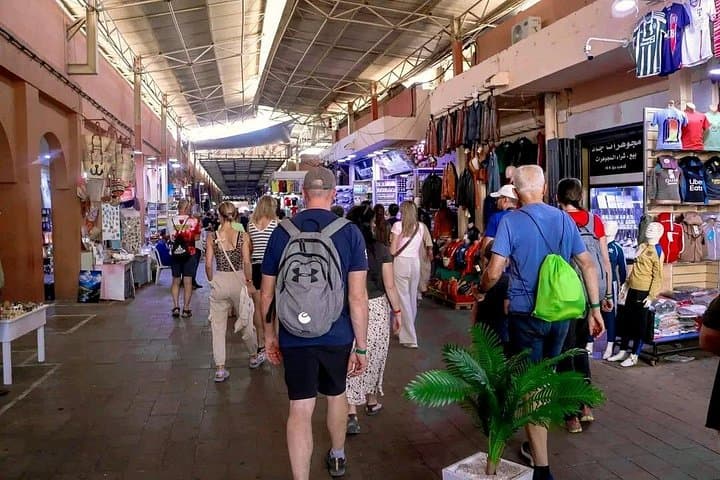
The argan tree is a survivor of the region’s dry soils; its woody roots bind the hills while its oil binds local economy and heritage. From the cooperative, the tour threads into Souk El Had—one of Morocco’s largest markets—where 6,000 stalls fill a thirteen-hectare grid. You’ll pass spice merchants calling prices, textile stalls displaying woven throws, and stalls of cured olives and local honey for tasting.
Beyond the sensory bustle there’s history: Agadir rebuilt after the 1960 earthquake, and Souk El Had became a modern civic center while keeping older trading customs. The argan cooperative model also reflects a conservation story — supporting women’s income while protecting argan woodlands recognized for their ecological value.
Practical notes: wear comfortable, closed-toe shoes for uneven surfaces, carry small bills for bargaining, and schedule morning or late-afternoon visits to avoid peak heat. The half-day format fits easily into a broader Agadir itinerary and is wheelchair accessible in core areas, though some market aisles are narrow. Expect 3–4 hours of walking, tasting and bargaining that gives a compact, tangible introduction to southern Moroccan craft and commerce.
Yes — the cooperative is family-friendly and wheelchair accessible in core areas; children can watch demonstrations and taste products under supervision.
Yes — cooperatives sell cold-pressed argan oil and cosmetic products; check seals and ask about extraction methods to ensure authenticity.
No — bargaining is customary; start lower than the asking price and negotiate politely, aiming for a fair middle ground.
The main cooperative and some market areas are wheelchair accessible, but certain aisles may be narrow or crowded — inform the operator of needs when booking.
The best guide '' king mohamed 7" operates guided outdoor trips and adventures with an emphasis on safety, stewardship, and memorable experiences.


You step out of the cooling shade of the minibus into a wash of spice and sun: saffron-bright piles, baskets of preserved lemons, and the steady rhythm of negotiation. A short drive from Agadir’s beachfront drops you at an active argan cooperative where local women demonstrate the slow, hands-on process that turns argan kernels into golden oil — a ritual of cracking, grinding and cold-pressing that feels part craft, part chemistry.
You step out of the cooling shade of the minibus into a wash of spice and sun: saffron-bright piles, baskets of preserved lemons, and the steady rhythm of negotiation. A short drive from Agadir’s beachfront drops you at an active argan cooperative where local women demonstrate the slow, hands-on process that turns argan kernels into golden oil — a ritual of cracking, grinding and cold-pressing that feels part craft, part chemistry.
The argan tree is a survivor of the region’s dry soils; its woody roots bind the hills while its oil binds local economy and heritage. From the cooperative, the tour threads into Souk El Had—one of Morocco’s largest markets—where 6,000 stalls fill a thirteen-hectare grid. You’ll pass spice merchants calling prices, textile stalls displaying woven throws, and stalls of cured olives and local honey for tasting.
Beyond the sensory bustle there’s history: Agadir rebuilt after the 1960 earthquake, and Souk El Had became a modern civic center while keeping older trading customs. The argan cooperative model also reflects a conservation story — supporting women’s income while protecting argan woodlands recognized for their ecological value.
Practical notes: wear comfortable, closed-toe shoes for uneven surfaces, carry small bills for bargaining, and schedule morning or late-afternoon visits to avoid peak heat. The half-day format fits easily into a broader Agadir itinerary and is wheelchair accessible in core areas, though some market aisles are narrow. Expect 3–4 hours of walking, tasting and bargaining that gives a compact, tangible introduction to southern Moroccan craft and commerce.