THE ADVENTURE COLLECTIVE® · Independent discovery and booking for outdoor travel

Spend a private day tracing Greece’s layered past from Octavian’s Nikopolis to the mythic mouth of the Acheron. This guided route pairs sweeping coastal views with compact hikes across archaeological sites and modern memorials.
Spend a private day tracing Greece’s layered past from Octavian’s Nikopolis to the mythic mouth of the Acheron. This guided route pairs sweeping coastal views with compact hikes across archaeological sites and modern memorials.
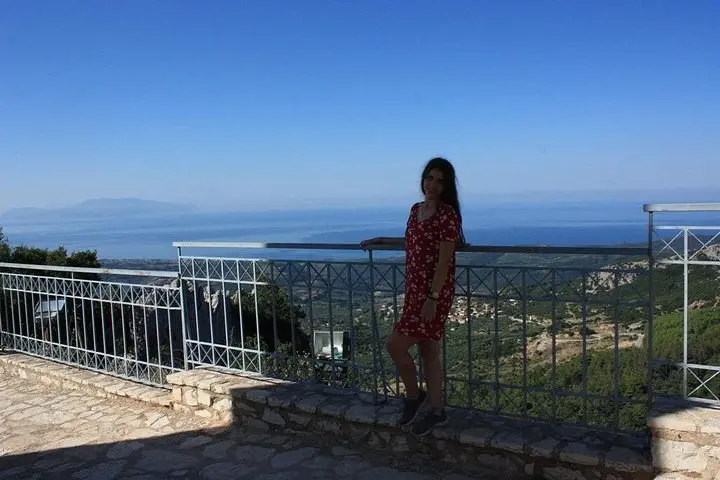
Walk out of an air-conditioned van and the Ionian light hits marble and scrub; wind from the sea dares you to look farther. This full-day private tour threads the archaeological remains of Nikopolis, the hilltop grid of ancient Kassope, the cliff-top Monument of Zalongo and the myth-haunted Acheron estuary, stitching Roman ambition to Greek legend.
Verified experiences and guided adventures in the surrounding area.
Operated by Epirus Traveller · Preveza, Epirus
Walk out of an air-conditioned van and the Ionian light hits marble and scrub; wind from the sea dares you to look farther. This full-day private tour threads the archaeological remains of Nikopolis, the hilltop grid of ancient Kassope, the cliff-top Monument of Zalongo and the myth-haunted Acheron estuary, stitching Roman ambition to Greek legend.
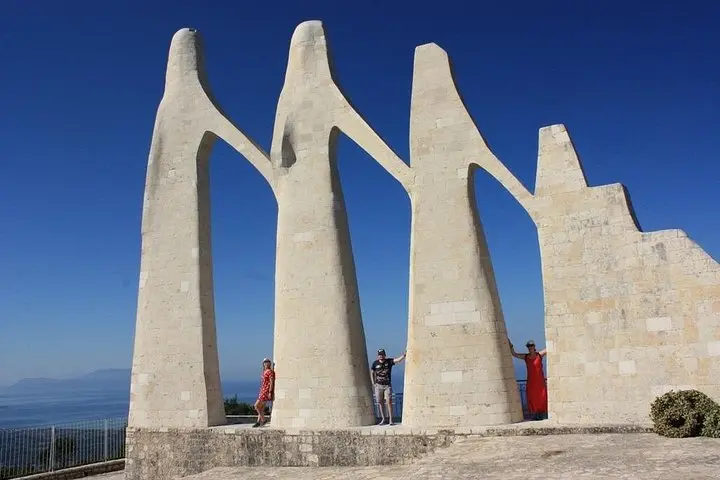
Nikopolis—founded by Octavian after Actium—still reads as an engineered city: long, straight streets, agora traces and amphitheater scars cut into a coastal plain. Kassope sits higher, its Hellenistic grid giving views down into a fertile valley once fought over for its crops. The Monument of Zalongo is a modern-era marker of resistance; below it the cliff faces tell a quieter geological story of uplift, limestone strata and karst scars that guide the Acheron down to the Ionian.
Local culture is present in small ways—tavernas serving regional fish and mountain cheeses, storytellers who mix Homeric lines with Ottoman-era memory. The necromanteion of Acheron, long linked to rituals for the dead, is visible in the river’s braided channels where dark water pushes toward the sea.
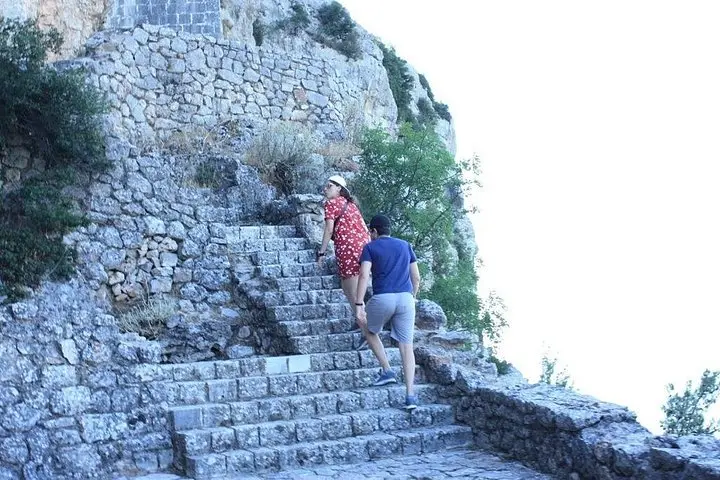
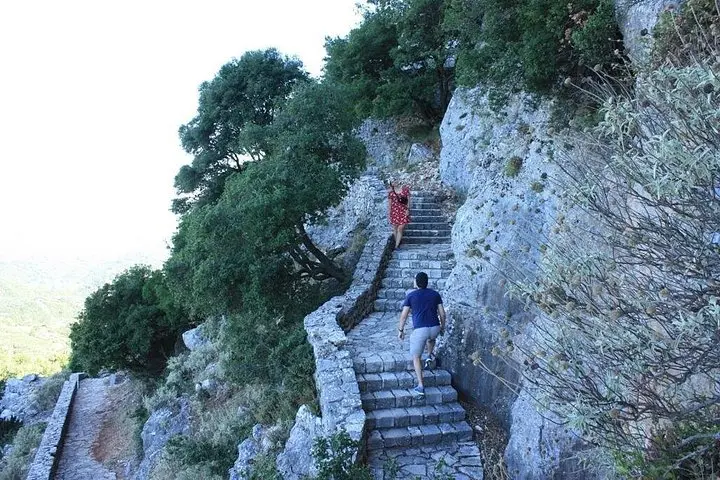
Practical guidance: expect a 4–6 hour day with mostly short walks and some uneven archaeological surfaces. Wear sturdy shoes, sun protection and carry water; cameras with a wide-angle lens are useful. Bring layers—the coast warms quickly but winds off the estuary can bite. Bookings usually include bottled water, snacks and some photo/video documentation; museum or site admissions may be separate. Aim for morning departures to avoid midday heat and to catch softer light across ruins.
Some admissions (notably at Kassope) may be included, but museum or protected-site fees can be extra—confirm at booking.
Short walks are family-friendly but uneven surfaces and steps make strollers impractical; infant seats are available in vehicles.
The private tour lasts about 4–6 hours and includes air-conditioned vehicle transport between sites.
You can view and visit the river’s mythic stretches and estuary; exact archaeological access varies by site and season.
Epirus Traveller operates guided outdoor trips and adventures with an emphasis on safety, stewardship, and memorable experiences.
Walk out of an air-conditioned van and the Ionian light hits marble and scrub; wind from the sea dares you to look farther. This full-day private tour threads the archaeological remains of Nikopolis, the hilltop grid of ancient Kassope, the cliff-top Monument of Zalongo and the myth-haunted Acheron estuary, stitching Roman ambition to Greek legend.
Walk out of an air-conditioned van and the Ionian light hits marble and scrub; wind from the sea dares you to look farther. This full-day private tour threads the archaeological remains of Nikopolis, the hilltop grid of ancient Kassope, the cliff-top Monument of Zalongo and the myth-haunted Acheron estuary, stitching Roman ambition to Greek legend.
Nikopolis—founded by Octavian after Actium—still reads as an engineered city: long, straight streets, agora traces and amphitheater scars cut into a coastal plain. Kassope sits higher, its Hellenistic grid giving views down into a fertile valley once fought over for its crops. The Monument of Zalongo is a modern-era marker of resistance; below it the cliff faces tell a quieter geological story of uplift, limestone strata and karst scars that guide the Acheron down to the Ionian.
Local culture is present in small ways—tavernas serving regional fish and mountain cheeses, storytellers who mix Homeric lines with Ottoman-era memory. The necromanteion of Acheron, long linked to rituals for the dead, is visible in the river’s braided channels where dark water pushes toward the sea.
Practical guidance: expect a 4–6 hour day with mostly short walks and some uneven archaeological surfaces. Wear sturdy shoes, sun protection and carry water; cameras with a wide-angle lens are useful. Bring layers—the coast warms quickly but winds off the estuary can bite. Bookings usually include bottled water, snacks and some photo/video documentation; museum or site admissions may be separate. Aim for morning departures to avoid midday heat and to catch softer light across ruins.