THE ADVENTURE COLLECTIVE® · Independent discovery and booking for outdoor travel

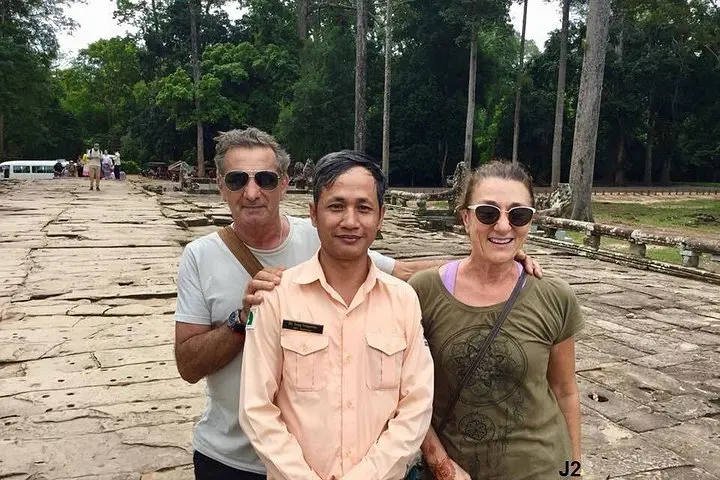
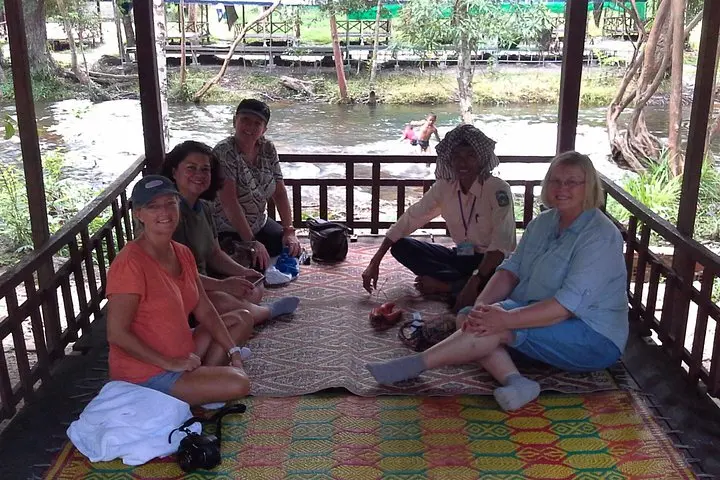
Spend a full day moving through Angkor’s great temples with a private guide who opens quiet routes and explains centuries of Khmer history. Expect long walks on uneven stone, dramatic bas-reliefs, and the jungle reclaiming Ta Prohm.
Spend a full day moving through Angkor’s great temples with a private guide who opens quiet routes and explains centuries of Khmer history. Expect long walks on uneven stone, dramatic bas-reliefs, and the jungle reclaiming Ta Prohm.
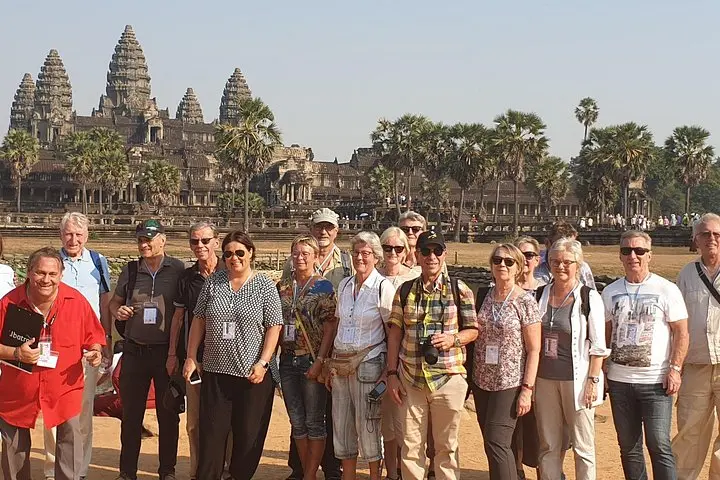
You step off the vehicle before sunrise and the air thickens with warm stone and damp earth as the eastern causeway of Angkor Wat appears through a break in the trees.
Verified experiences and guided adventures in the surrounding area.
Operated by Journey2 Angkor · Siem Reap, Siem Reap
You step off the vehicle before sunrise and the air thickens with warm stone and damp earth as the eastern causeway of Angkor Wat appears through a break in the trees.
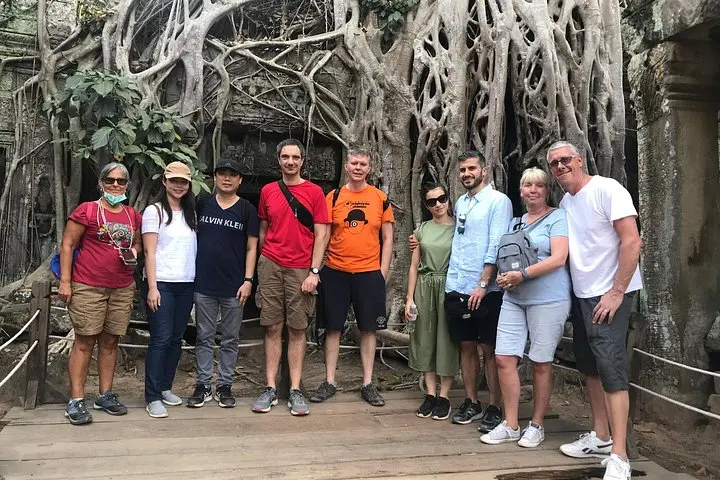
Entering from the quieter eastern side, the group moves along a narrow jungle path toward the northern library pool; bas-reliefs begin to speak in low relief—processions, legends and scenes of daily life carved in sandstone that has weathered but not surrendered its detail. From Angkor Wat’s upper terraces the silhouette of central towers punctures the sky; later you cross into Angkor Thom where the Bayon’s hundreds of serene faces watch like a deliberate audience. Baphuon’s stepped pyramid, the Terrace of Elephants and the Terrace of the Leper King map political ceremony and royal display. Ta Prohm closes the day, roots pressing around lintels as if the forest is still negotiating ownership.
Built for both Hindu and later Buddhist worship between the 10th and 13th centuries, the Angkor complex sits on sandstone and laterite laid over alluvial plains—materials that shape restoration choices and walking surfaces today. Local guides translate iconography and Khmer history, and they also handle practicalities: entrance e-tickets, route timing and small etiquette details.
Practical guidance: start early to avoid midday heat, wear flat shoes for uneven sandstone and tree roots, carry sun protection and at least 1–2 liters of water, and bring a lightweight shawl to cover knees and shoulders when entering sacred areas. A private guide keeps visits flexible—perfect for photographers and curious walkers who want the temples explained, not just seen.
Expect several hours on foot over uneven temple grounds—roughly 3–6 miles total depending on stops; most walks are gentle but include stone steps and short climbs.
Entrance fees are not included; your guide will provide a link in advance so you can purchase the Angkor pass electronically before arrival.
Yes; the tour is suitable for all ages and fitness levels, though participants should be able to manage walking and stairs; infant seats and flexible pacing are available.
This listing provides an English-speaking guide; other languages may be available on request—confirm at booking.
Journey2 Angkor operates guided outdoor trips and adventures with an emphasis on safety, stewardship, and memorable experiences.
You step off the vehicle before sunrise and the air thickens with warm stone and damp earth as the eastern causeway of Angkor Wat appears through a break in the trees.
You step off the vehicle before sunrise and the air thickens with warm stone and damp earth as the eastern causeway of Angkor Wat appears through a break in the trees.
Entering from the quieter eastern side, the group moves along a narrow jungle path toward the northern library pool; bas-reliefs begin to speak in low relief—processions, legends and scenes of daily life carved in sandstone that has weathered but not surrendered its detail. From Angkor Wat’s upper terraces the silhouette of central towers punctures the sky; later you cross into Angkor Thom where the Bayon’s hundreds of serene faces watch like a deliberate audience. Baphuon’s stepped pyramid, the Terrace of Elephants and the Terrace of the Leper King map political ceremony and royal display. Ta Prohm closes the day, roots pressing around lintels as if the forest is still negotiating ownership.
Built for both Hindu and later Buddhist worship between the 10th and 13th centuries, the Angkor complex sits on sandstone and laterite laid over alluvial plains—materials that shape restoration choices and walking surfaces today. Local guides translate iconography and Khmer history, and they also handle practicalities: entrance e-tickets, route timing and small etiquette details.
Practical guidance: start early to avoid midday heat, wear flat shoes for uneven sandstone and tree roots, carry sun protection and at least 1–2 liters of water, and bring a lightweight shawl to cover knees and shoulders when entering sacred areas. A private guide keeps visits flexible—perfect for photographers and curious walkers who want the temples explained, not just seen.