THE ADVENTURE COLLECTIVE® · Independent discovery and booking for outdoor travel

Paddle into a limestone cathedral and later stand beneath a thunderous cenote: this full-day from San Ignacio combines the hush of Barton Creek Cave with the raw power of Big Rock Falls. Expect canoeing, short hikes and a Belizean lunch.
Paddle into a limestone cathedral and later stand beneath a thunderous cenote: this full-day from San Ignacio combines the hush of Barton Creek Cave with the raw power of Big Rock Falls. Expect canoeing, short hikes and a Belizean lunch.
The paddle is soft and slow, the canoe cutting a mirror through water that has flowed the same route for millennia. Trees close overhead until the jungle becomes a vault and the sky reduces to a strip of silver; downstream, walls of limestone rise into cathedral ceilings dotted with calcite formations. This is Barton Creek Cave — the kind of place where the present borrows the atmosphere of the ancient. By afternoon, the sound changes: you trade the hush of the cave for the thunder of Big Rock Falls, where water drops into a deep cenote and sends a cool mist that dares you to stand under the curtain.
Verified experiences and guided adventures in the surrounding area.
Operated by Tukan Shuttles & Adventures · San Ignacio, Cayo District
The paddle is soft and slow, the canoe cutting a mirror through water that has flowed the same route for millennia. Trees close overhead until the jungle becomes a vault and the sky reduces to a strip of silver; downstream, walls of limestone rise into cathedral ceilings dotted with calcite formations. This is Barton Creek Cave — the kind of place where the present borrows the atmosphere of the ancient. By afternoon, the sound changes: you trade the hush of the cave for the thunder of Big Rock Falls, where water drops into a deep cenote and sends a cool mist that dares you to stand under the curtain.
Barton Creek Cave was used by the Maya for ceremonial offerings and remains threaded with archaeological clues — pottery shards and charcoal stains hint at rituals tied to water and the underworld. Geologically, the cave is a classic karst system: rain absorbed by the pine-forested hills dissolves limestone, forming passages, stalactites and stalagmites over thousands of years. The route to Big Rock Falls follows Privassion Creek down into Mountain Pine Ridge Reserve, a landscape of granite outcrops and pine savanna that feels almost alpine compared to the lowland rainforest.
Culturally, the trip passes close to Mennonite farmland outside San Ignacio; fields and horse-drawn carts provide a quiet counterpoint to the wild places you’ll visit. Local guides combine natural history with practical know-how — they steer canoes through the cave’s dark pools and point out formations while explaining Mayan use of cenotes and water caves.
Practical guide: the full-day excursion runs about 4–8 hours and requires a minimum of two people. Tours include canoe, life jacket, helmet, headlamp, bottled water and a Belizean lunch; bring sturdy water shoes, a quick-dry change of clothes, sun and insect protection, and a camera you don’t mind getting damp. The descent to Big Rock Falls is roughly 300 yards of trail with a 130-foot drop into the valley — expect boulder-scrambling and a short, steep walk. Swimming under the falls is optional but the pool can be cold and deep; life jackets are provided.
Timing matters: mornings give the best light for photos and cooler weather for the hike; the wet season raises water levels and makes the waterfall more dramatic but trails slipperier. Guides are experienced and tours are suitable for fit beginners; still, basic mobility and comfort in small boats makes the day easier. Lastly, be mindful of the sites: these are fragile archaeological and ecological areas — pack out trash, avoid touching formations, and follow your guide’s instructions to help protect the cave and the reserve for the next group to discover.
No—guides handle paddling and navigation; guests may help paddle but guided instruction is provided.
Yes—minimum height is generally 40 inches and infants must sit on laps; check with the operator for age-specific guidance.
No—swimming is optional. There’s a pool for plunges, but life jackets are available and you can relax on the rocks instead.
The canyon and cave sections have uneven terrain and low light; those with significant mobility limitations should consult the operator before booking.
The tour includes bottled water, juice, and a Belizean-style lunch with fresh fruit and regional dishes.
Bats may be present; keep noise low and avoid flash photography near roosts. Guides know local wildlife behavior and will point out sightings safely.
Tukan Shuttles & Adventures operates guided outdoor trips and adventures with an emphasis on safety, stewardship, and memorable experiences.
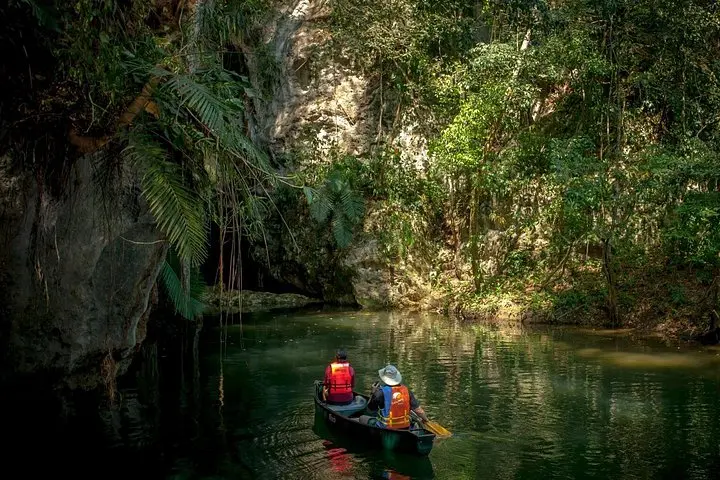
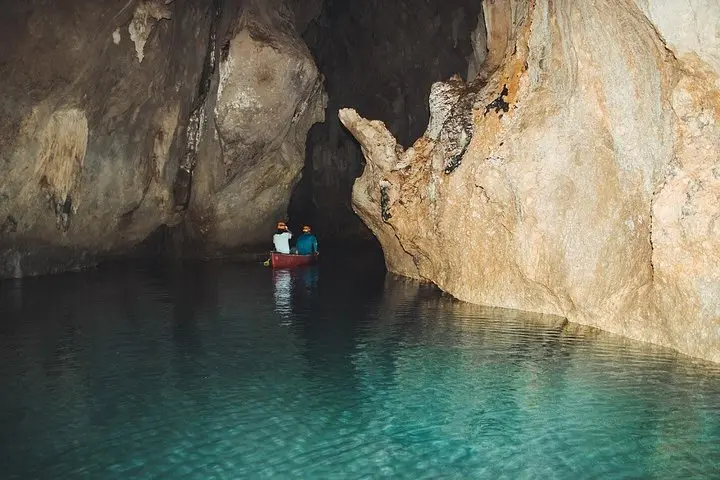
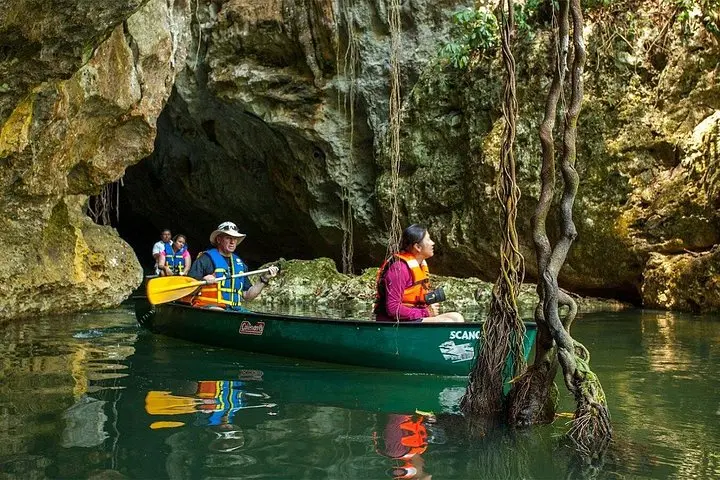
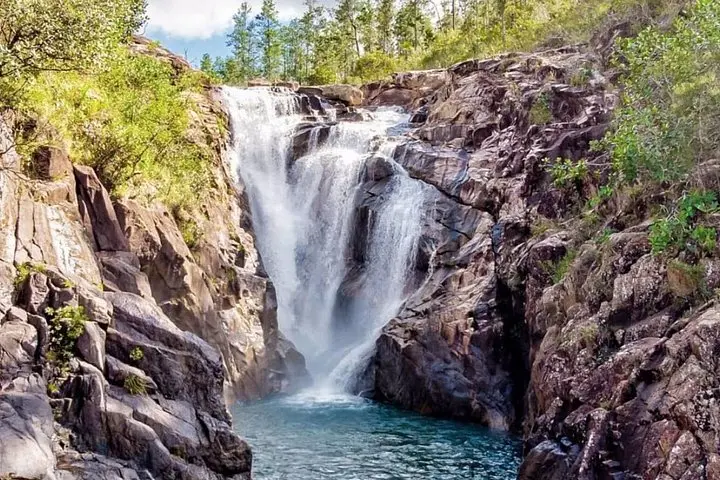
The paddle is soft and slow, the canoe cutting a mirror through water that has flowed the same route for millennia. Trees close overhead until the jungle becomes a vault and the sky reduces to a strip of silver; downstream, walls of limestone rise into cathedral ceilings dotted with calcite formations. This is Barton Creek Cave — the kind of place where the present borrows the atmosphere of the ancient. By afternoon, the sound changes: you trade the hush of the cave for the thunder of Big Rock Falls, where water drops into a deep cenote and sends a cool mist that dares you to stand under the curtain.
The paddle is soft and slow, the canoe cutting a mirror through water that has flowed the same route for millennia. Trees close overhead until the jungle becomes a vault and the sky reduces to a strip of silver; downstream, walls of limestone rise into cathedral ceilings dotted with calcite formations. This is Barton Creek Cave — the kind of place where the present borrows the atmosphere of the ancient. By afternoon, the sound changes: you trade the hush of the cave for the thunder of Big Rock Falls, where water drops into a deep cenote and sends a cool mist that dares you to stand under the curtain.
Barton Creek Cave was used by the Maya for ceremonial offerings and remains threaded with archaeological clues — pottery shards and charcoal stains hint at rituals tied to water and the underworld. Geologically, the cave is a classic karst system: rain absorbed by the pine-forested hills dissolves limestone, forming passages, stalactites and stalagmites over thousands of years. The route to Big Rock Falls follows Privassion Creek down into Mountain Pine Ridge Reserve, a landscape of granite outcrops and pine savanna that feels almost alpine compared to the lowland rainforest.
Culturally, the trip passes close to Mennonite farmland outside San Ignacio; fields and horse-drawn carts provide a quiet counterpoint to the wild places you’ll visit. Local guides combine natural history with practical know-how — they steer canoes through the cave’s dark pools and point out formations while explaining Mayan use of cenotes and water caves.
Practical guide: the full-day excursion runs about 4–8 hours and requires a minimum of two people. Tours include canoe, life jacket, helmet, headlamp, bottled water and a Belizean lunch; bring sturdy water shoes, a quick-dry change of clothes, sun and insect protection, and a camera you don’t mind getting damp. The descent to Big Rock Falls is roughly 300 yards of trail with a 130-foot drop into the valley — expect boulder-scrambling and a short, steep walk. Swimming under the falls is optional but the pool can be cold and deep; life jackets are provided.
Timing matters: mornings give the best light for photos and cooler weather for the hike; the wet season raises water levels and makes the waterfall more dramatic but trails slipperier. Guides are experienced and tours are suitable for fit beginners; still, basic mobility and comfort in small boats makes the day easier. Lastly, be mindful of the sites: these are fragile archaeological and ecological areas — pack out trash, avoid touching formations, and follow your guide’s instructions to help protect the cave and the reserve for the next group to discover.