THE ADVENTURE COLLECTIVE® · Independent discovery and booking for outdoor travel

Venture beyond the Angkor circuit to two rarely visited temple complexes—Beng Mealea’s jungle‑reclaimed stones and Koh Ker’s pyramidal summit—on a private, full‑day tour from Siem Reap. Expect remote roads, uneven ruins, and panoramic climbs.
Venture beyond the Angkor circuit to two rarely visited temple complexes—Beng Mealea’s jungle‑reclaimed stones and Koh Ker’s pyramidal summit—on a private, full‑day tour from Siem Reap. Expect remote roads, uneven ruins, and panoramic climbs.
Morning light spills across country roads as an air‑conditioned car threads past rice paddies toward a temple swallowed by jungle. The drive from Siem Reap is part of the experience—about 1.5 hours of rural Cambodia, villages slipping past the window—before the stone ruins of Beng Mealea appear, strewn with toppled towers and root‑torn corridors that dare visitors to explore.
Verified experiences and guided adventures in the surrounding area.
Operated by Tour East Cambodia · Siem Reap, Siem Reap Province
Morning light spills across country roads as an air‑conditioned car threads past rice paddies toward a temple swallowed by jungle. The drive from Siem Reap is part of the experience—about 1.5 hours of rural Cambodia, villages slipping past the window—before the stone ruins of Beng Mealea appear, strewn with toppled towers and root‑torn corridors that dare visitors to explore.
Beng Mealea dates to the Angkor period and shares architectural DNA with Angkor Wat, though time and vines have given it a wilder face. Koh Ker (often called Koh Kei in local itineraries) sits further northeast, a former 10th‑century capital crowned by a stepped pyramid at Prasat Thom offering panoramic views after a short climb. The geology is flat lowland sandstone; expect uneven flagstones, loose rubble, and dense undergrowth around the outer galleries.
Culturally, these sites are quieter than the main Angkor loop—local guides translate stone inscriptions into human stories and point out iconography tied to the Khmer Empire’s rise and religious shifts between Hinduism and Buddhism.
Practically, this private full‑day tour runs roughly nine hours and includes bottled water and a picnic lunch. Wear sturdy closed‑toe shoes, sun protection, and respectful clothing for sacred areas; be prepared for lots of walking on irregular surfaces and brief climbs to viewpoints. Bring insect repellent, a small daypack, and cash for souvenirs or snacks in villages you pass. Timing matters—start early to avoid the heat and to catch the ruins in the best light.
Expect about 1.5 hours to Beng Mealea; Koh Ker is further northeast, with total round‑trip driving built into the full‑day schedule.
This tour lists admissions as included, but confirm with your booking voucher or guide on the day of travel.
The tour notes infants must sit on laps; general walking is moderate, so older children who can manage uneven terrain will enjoy it.
Respectful attire covering shoulders and knees is required in sacred areas; bring a light scarf or sarong for quick coverage.
Tour East Cambodia operates guided outdoor trips and adventures with an emphasis on safety, stewardship, and memorable experiences.
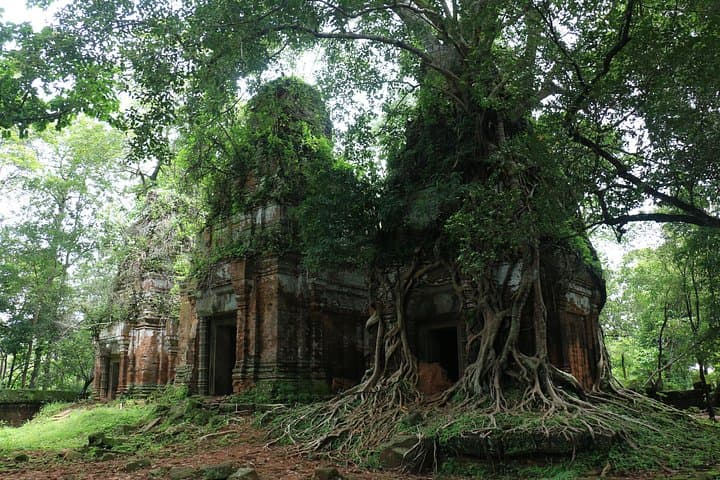

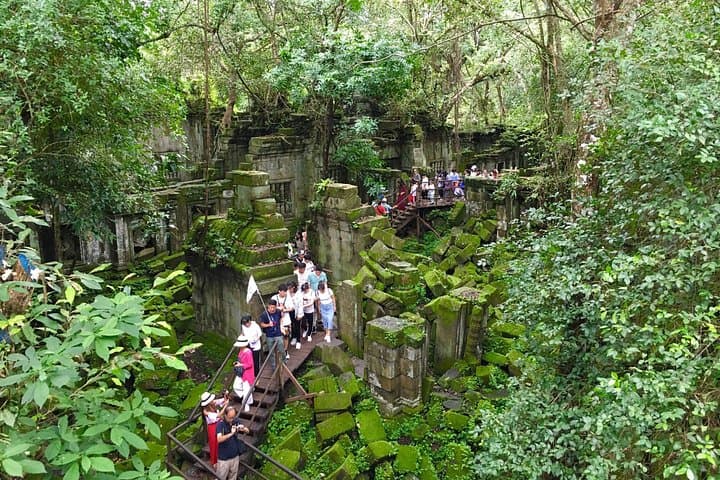
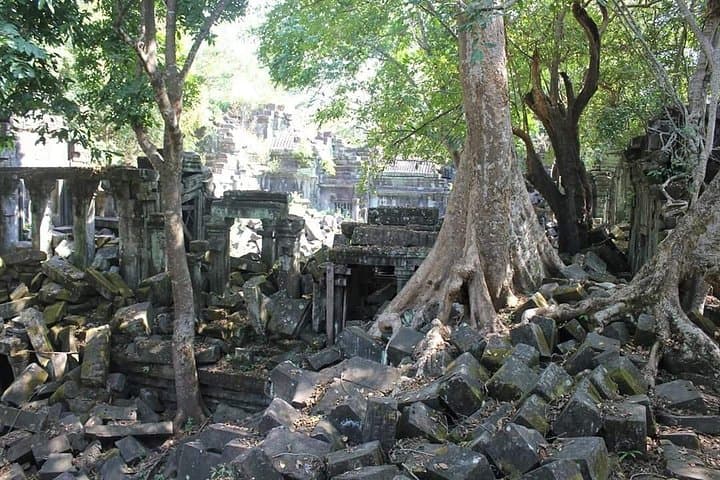
Morning light spills across country roads as an air‑conditioned car threads past rice paddies toward a temple swallowed by jungle. The drive from Siem Reap is part of the experience—about 1.5 hours of rural Cambodia, villages slipping past the window—before the stone ruins of Beng Mealea appear, strewn with toppled towers and root‑torn corridors that dare visitors to explore.
Morning light spills across country roads as an air‑conditioned car threads past rice paddies toward a temple swallowed by jungle. The drive from Siem Reap is part of the experience—about 1.5 hours of rural Cambodia, villages slipping past the window—before the stone ruins of Beng Mealea appear, strewn with toppled towers and root‑torn corridors that dare visitors to explore.
Beng Mealea dates to the Angkor period and shares architectural DNA with Angkor Wat, though time and vines have given it a wilder face. Koh Ker (often called Koh Kei in local itineraries) sits further northeast, a former 10th‑century capital crowned by a stepped pyramid at Prasat Thom offering panoramic views after a short climb. The geology is flat lowland sandstone; expect uneven flagstones, loose rubble, and dense undergrowth around the outer galleries.
Culturally, these sites are quieter than the main Angkor loop—local guides translate stone inscriptions into human stories and point out iconography tied to the Khmer Empire’s rise and religious shifts between Hinduism and Buddhism.
Practically, this private full‑day tour runs roughly nine hours and includes bottled water and a picnic lunch. Wear sturdy closed‑toe shoes, sun protection, and respectful clothing for sacred areas; be prepared for lots of walking on irregular surfaces and brief climbs to viewpoints. Bring insect repellent, a small daypack, and cash for souvenirs or snacks in villages you pass. Timing matters—start early to avoid the heat and to catch the ruins in the best light.