THE ADVENTURE COLLECTIVE® · Independent discovery and booking for outdoor travel

Wander Cairo’s oldest markets with a private guide through Khan el-Khalili, Bab Zuwayla and Gamalia Street. Expect centuries-old architecture, hands-on shopping, and practical tips for bargaining and safety on a five-hour walking tour.
Wander Cairo’s oldest markets with a private guide through Khan el-Khalili, Bab Zuwayla and Gamalia Street. Expect centuries-old architecture, hands-on shopping, and practical tips for bargaining and safety on a five-hour walking tour.
You step from a shaded side street and the market opens: alleys press together like pages of a thick book, copper lamps catch the light, and the scent of cumin and roasted coffee pushes forward. This private walking and shopping tour threads through Fatimid-era lanes where merchants still call out in the same cadence their families used for generations.
Verified experiences and guided adventures in the surrounding area.
Operated by Emo Tours Egypt · Cairo, Cairo Governorate
You step from a shaded side street and the market opens: alleys press together like pages of a thick book, copper lamps catch the light, and the scent of cumin and roasted coffee pushes forward. This private walking and shopping tour threads through Fatimid-era lanes where merchants still call out in the same cadence their families used for generations.
Khan el-Khalili dates to the 14th century and grew atop earlier Fatimid quarters; its carved wooden oriels and public fountains recall a time when Cairo was a crossroads of Islamic trade. As you move toward Bab Zuwayla and Gamalia Street the architecture shifts—stone and plaster façades, narrow archways, and centuries of repairs mapping the city's layered history. Local culture is tactile: textiles folded by hand, spices measured into paper cones, and street-side cafés where anise tea is an invitation to slow down.
Practical guidance: the full private tour runs about five hours with hotel pickup and drop-off; take comfortable, closed-toe shoes for cobblestones and long alleys, and carry small-denomination Egyptian pounds for purchases and tips. Bargain respectfully—start lower but expect to meet halfway. Plan to go mid-morning to early afternoon to avoid the busiest heat and the evening surge of locals. Keep valuables secure and use a money belt or inner pocket; bottled water is typically supplied but bring a refillable bottle if you prefer.
This is a walking day in historic Cairo—sensory, social, and structured around local life. With a guide you get context for the architecture and artisans, and the freedom to linger where a rhythm of trade still rules the street.
Yes—private pickup and drop-off from Cairo or Giza hotels is included in the tour price.
Lunch at a local restaurant (traditional Egyptian dishes such as koshary) is included if that option is selected when booking.
You can purchase a variety of goods, but be cautious with items labeled as antiques; verify provenance and local export rules before buying or taking fragile items abroad.
The tour is described as easy and suitable for most fitness levels, but the narrow, uneven alleys can be challenging for wheelchairs and some strollers—contact the operator to discuss accessibility and pickup logistics.
Emo Tours Egypt operates guided outdoor trips and adventures with an emphasis on safety, stewardship, and memorable experiences.
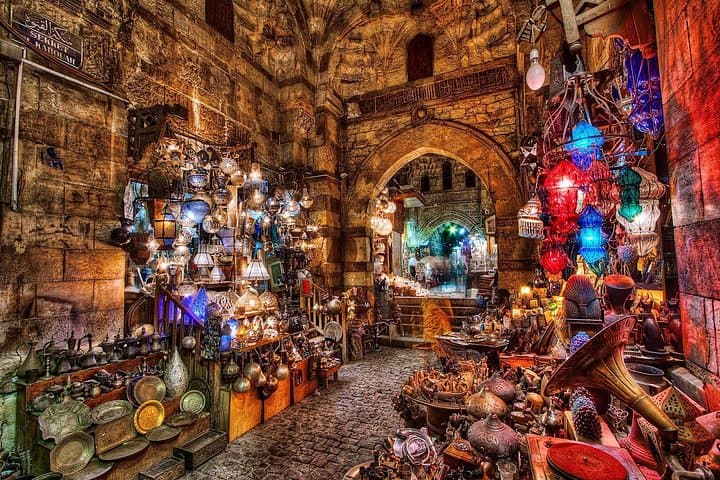
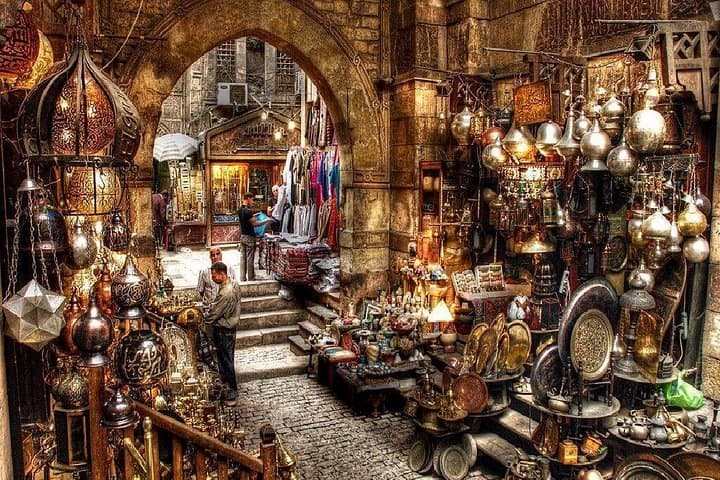
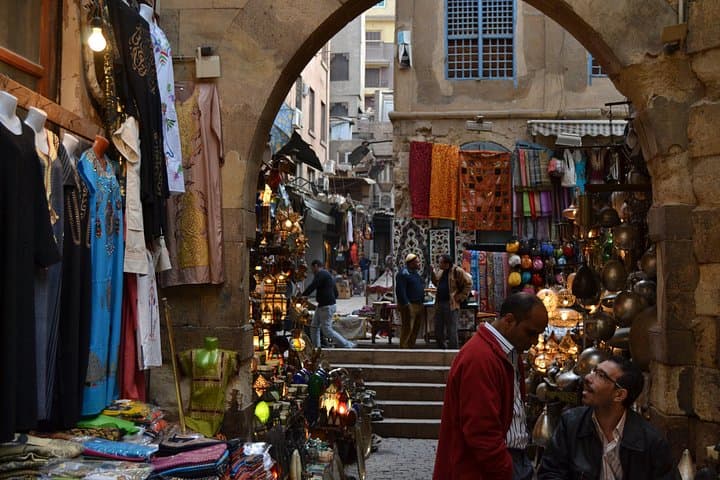
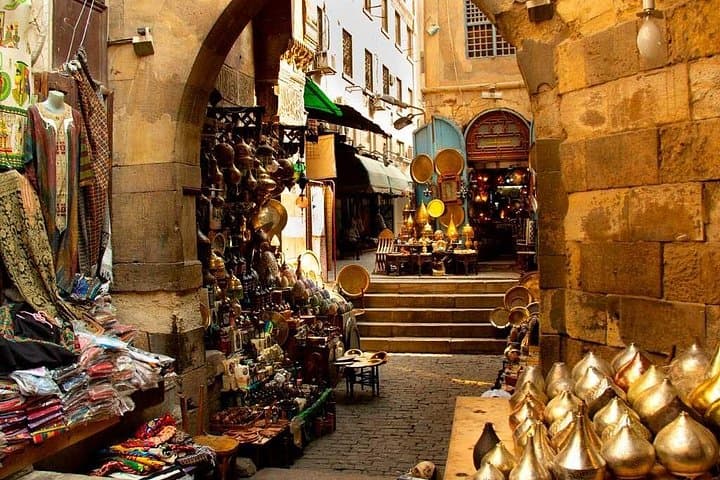
You step from a shaded side street and the market opens: alleys press together like pages of a thick book, copper lamps catch the light, and the scent of cumin and roasted coffee pushes forward. This private walking and shopping tour threads through Fatimid-era lanes where merchants still call out in the same cadence their families used for generations.
You step from a shaded side street and the market opens: alleys press together like pages of a thick book, copper lamps catch the light, and the scent of cumin and roasted coffee pushes forward. This private walking and shopping tour threads through Fatimid-era lanes where merchants still call out in the same cadence their families used for generations.
Khan el-Khalili dates to the 14th century and grew atop earlier Fatimid quarters; its carved wooden oriels and public fountains recall a time when Cairo was a crossroads of Islamic trade. As you move toward Bab Zuwayla and Gamalia Street the architecture shifts—stone and plaster façades, narrow archways, and centuries of repairs mapping the city's layered history. Local culture is tactile: textiles folded by hand, spices measured into paper cones, and street-side cafés where anise tea is an invitation to slow down.
Practical guidance: the full private tour runs about five hours with hotel pickup and drop-off; take comfortable, closed-toe shoes for cobblestones and long alleys, and carry small-denomination Egyptian pounds for purchases and tips. Bargain respectfully—start lower but expect to meet halfway. Plan to go mid-morning to early afternoon to avoid the busiest heat and the evening surge of locals. Keep valuables secure and use a money belt or inner pocket; bottled water is typically supplied but bring a refillable bottle if you prefer.
This is a walking day in historic Cairo—sensory, social, and structured around local life. With a guide you get context for the architecture and artisans, and the freedom to linger where a rhythm of trade still rules the street.