THE ADVENTURE COLLECTIVE® · Independent discovery and booking for outdoor travel

Hop a small-boat snorkel tour from Cancun to five distinct marine sites: coral reef, underwater sculpture, turtle grounds, shipwreck and a cenote. Small groups, gear provided, and about 2–3 hours make this a family-friendly way to sample the Caribbean’s underwater highlights.
Hop a small-boat snorkel tour from Cancun to five distinct marine sites: coral reef, underwater sculpture, turtle grounds, shipwreck and a cenote. Small groups, gear provided, and about 2–3 hours make this a family-friendly way to sample the Caribbean’s underwater highlights.
The boat slides away from the marina, engines low, and the Caribbean blue opens like a promise. Salt air pulls focus to the horizon as guides check masks and fins; groups are intentionally small — usually six people — so the ocean feels immediate, not anonymous.
Verified experiences and guided adventures in the surrounding area.
Operated by Total Snorkel Cancun · Cancun, Quintana Roo
The boat slides away from the marina, engines low, and the Caribbean blue opens like a promise. Salt air pulls focus to the horizon as guides check masks and fins; groups are intentionally small — usually six people — so the ocean feels immediate, not anonymous.
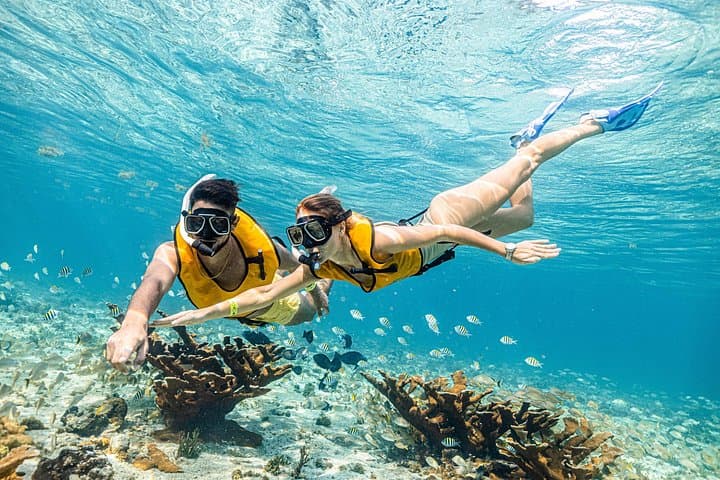
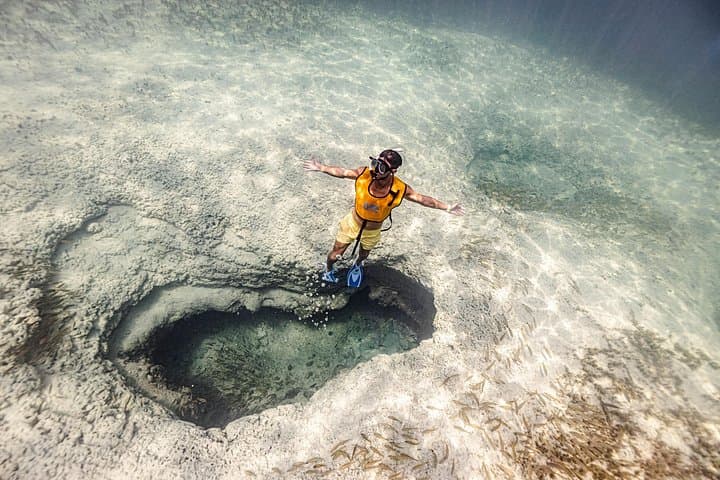
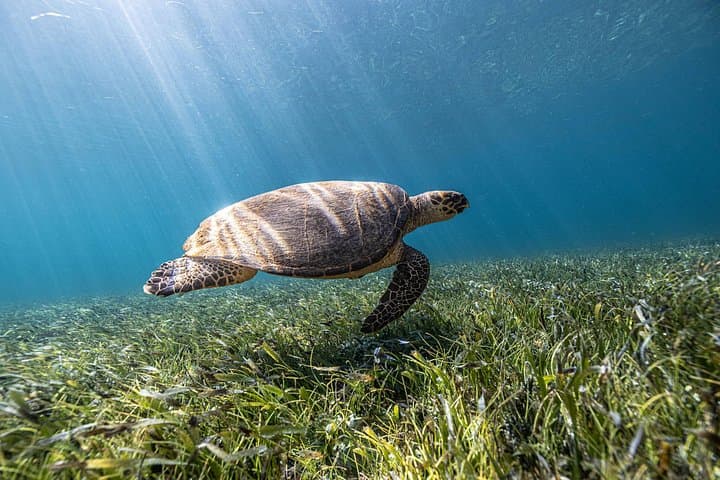
This half-day excursion stitches together Quintana Roo’s most accessible marine features: a shallow coral reef (8–12 ft) teeming with parrotfish and damselfish; two MUSA underwater sculpture galleries where concrete figures invite fish and photobombs; a high-probability turtle zone where green and loggerhead turtles graze seagrass; a coral-encrusted shipwreck that acts as an artificial reef; and an inland cenote, the region’s freshwater sinkhole carved from limestone by ancient groundwater.
The geology is straightforward: a porous limestone platform capped by reef growth and punctured by cenotes that tell the tale of a rising and falling sea. Culturally, the coastline sits within the Maya sphere — cenotes were sacred and remain ecologically and archaeologically sensitive.
Practically, the tour runs about 2–3 hours, departs from a Cancun marina, and includes snorkel gear, bottled water, and transport. Guides brief the group on buoyancy, reef-safe behavior, and how to approach turtles without stressing them.
Bring a snug mask, reef-safe sunscreen, and a willingness to enter water that alternates between glassy and gently current-swept. Pace yourself between sites; surface intervals and the boat’s shaded spots make the day comfortable for families and less confident swimmers. The result is a compact, high-value sampling of the Caribbean’s underwater personality.
No — tours are family‑friendly and guides assist non‑swimmers with flotation devices, though basic comfort in water is recommended.
Groups are small (often capped near six per boat) and the outing lasts about 2–3 hours including transfers between the five snorkel sites.
Turtle sightings are common — operator reports 96–98% chance — but wildlife is never guaranteed; sightings depend on season and animal behavior.
The cenote segment is shallow and guided for surface snorkeling; it’s not a technical cavern dive, so no specialized cave gear is required for this activity.
Total Snorkel Cancun operates guided outdoor trips and adventures with an emphasis on safety, stewardship, and memorable experiences.

The boat slides away from the marina, engines low, and the Caribbean blue opens like a promise. Salt air pulls focus to the horizon as guides check masks and fins; groups are intentionally small — usually six people — so the ocean feels immediate, not anonymous.
The boat slides away from the marina, engines low, and the Caribbean blue opens like a promise. Salt air pulls focus to the horizon as guides check masks and fins; groups are intentionally small — usually six people — so the ocean feels immediate, not anonymous.
This half-day excursion stitches together Quintana Roo’s most accessible marine features: a shallow coral reef (8–12 ft) teeming with parrotfish and damselfish; two MUSA underwater sculpture galleries where concrete figures invite fish and photobombs; a high-probability turtle zone where green and loggerhead turtles graze seagrass; a coral-encrusted shipwreck that acts as an artificial reef; and an inland cenote, the region’s freshwater sinkhole carved from limestone by ancient groundwater.
The geology is straightforward: a porous limestone platform capped by reef growth and punctured by cenotes that tell the tale of a rising and falling sea. Culturally, the coastline sits within the Maya sphere — cenotes were sacred and remain ecologically and archaeologically sensitive.
Practically, the tour runs about 2–3 hours, departs from a Cancun marina, and includes snorkel gear, bottled water, and transport. Guides brief the group on buoyancy, reef-safe behavior, and how to approach turtles without stressing them.
Bring a snug mask, reef-safe sunscreen, and a willingness to enter water that alternates between glassy and gently current-swept. Pace yourself between sites; surface intervals and the boat’s shaded spots make the day comfortable for families and less confident swimmers. The result is a compact, high-value sampling of the Caribbean’s underwater personality.