THE ADVENTURE COLLECTIVE® · Independent discovery and booking for outdoor travel
Walk into 18th-century America at Colonial Williamsburg: costumed interpreters, working trades, and staged performances turn a historic district into a two-day living museum. Plan for walking, printed ticket exchange, and time to explore both day and evening programs.
Walk into 18th-century America at Colonial Williamsburg: costumed interpreters, working trades, and staged performances turn a historic district into a two-day living museum. Plan for walking, printed ticket exchange, and time to explore both day and evening programs.
A morning mist lifts off the nearby James River and the brick streets of Colonial Williamsburg begin to dry under a clear Virginia sky. Costume interpreters step into period roles, horses clip-clop along carriage roads, and trade sites open their shutters; the town moves like a staged scene you can walk into. The air smells of wood smoke and fresh-cut timber where joiners work, and the city’s low-lying coastal plain frames broad, oak-lined avenues that push your pace forward.
Verified experiences and guided adventures in the surrounding area.
Operated by Colonial Williamsburg · Williamsburg, Virginia
A morning mist lifts off the nearby James River and the brick streets of Colonial Williamsburg begin to dry under a clear Virginia sky. Costume interpreters step into period roles, horses clip-clop along carriage roads, and trade sites open their shutters; the town moves like a staged scene you can walk into. The air smells of wood smoke and fresh-cut timber where joiners work, and the city’s low-lying coastal plain frames broad, oak-lined avenues that push your pace forward.
Founded as the capital of colonial Virginia and carefully restored in the 20th century, Colonial Williamsburg preserves 18th-century government buildings, taverns, and artisan workshops. Geologically, this is Tidewater Virginia: flat, river-fed ground with rich alluvial soils that supported early plantations and now sustain park-like greens. Culturally, the site is a living museum—interpretation blends military drill, political debate, and the daily labor of enslaved and free tradespeople to reflect Revolutionary-era life.
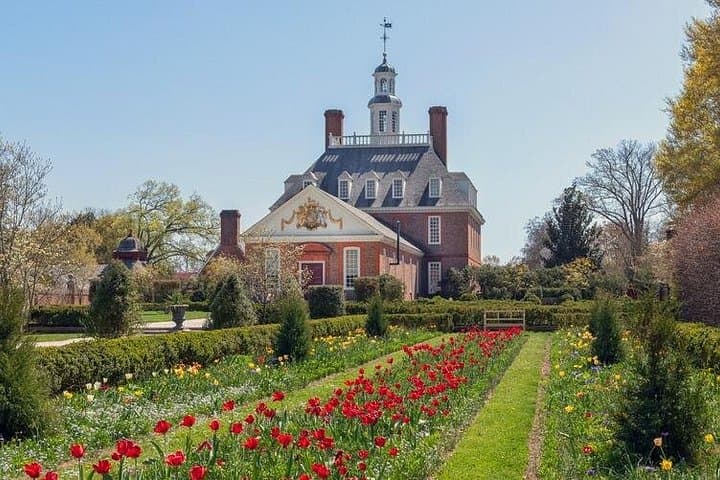
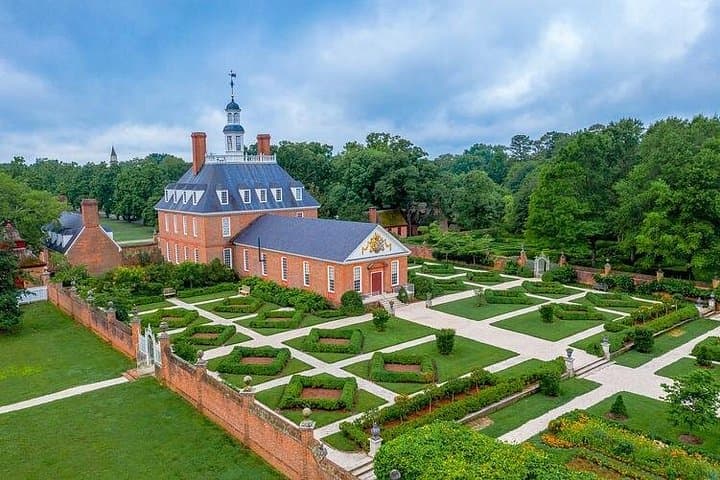
Plan practically: bring comfortable shoes for miles of walking, a printed or mobile ticket to exchange at the Visitor Center (101 Visitor Center Dr.), and time—single-day visitors should allow 4–8 hours, while history enthusiasts will want 1–2 days to include museums and evening programs. Accessibility services and a complimentary shuttle make the grounds easier to navigate; paid parking is not included with admission. Visit early for cooler light on the Governor’s Palace or stay after sunset for evening tours and performances that change the mood of the streets. Respect the exhibit spaces—ask before photographing staged interiors—and leave room in your schedule to simply listen to a town built to tell stories.
Print or show your mobile voucher at the Colonial Williamsburg Visitor Center (101 Visitor Center Dr.) to receive your admission and map before exploring.
Yes—many sites and shuttles are wheelchair accessible; check specific building access and request accommodations in advance if needed.
A focused visit can be 4–8 hours, but to see museums, multiple trade demonstrations, and evening programs plan for 1–2 days.
No; paid parking is not included with the ticket—follow Visitor Center guidance for available lots and shuttle options.
Colonial Williamsburg operates guided outdoor trips and adventures with an emphasis on safety, stewardship, and memorable experiences.
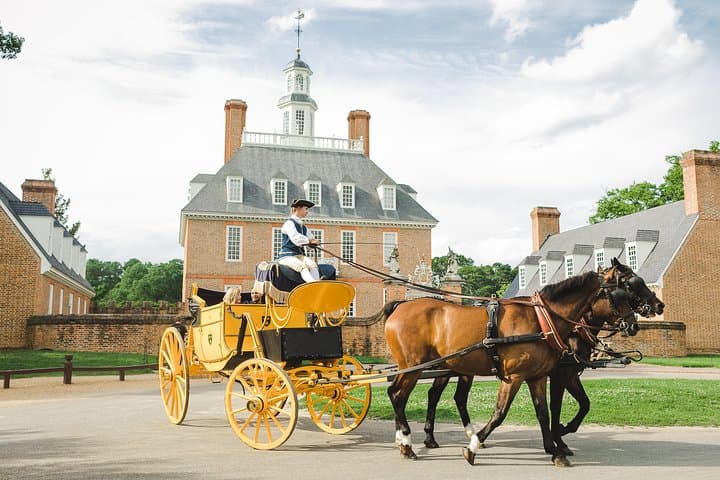
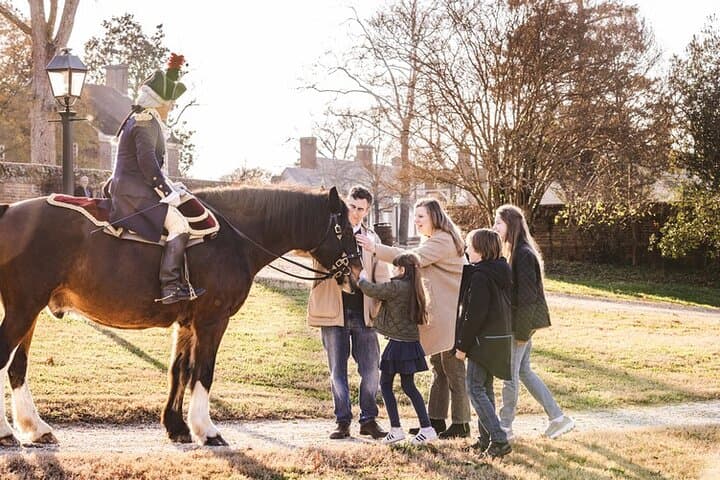
A morning mist lifts off the nearby James River and the brick streets of Colonial Williamsburg begin to dry under a clear Virginia sky. Costume interpreters step into period roles, horses clip-clop along carriage roads, and trade sites open their shutters; the town moves like a staged scene you can walk into. The air smells of wood smoke and fresh-cut timber where joiners work, and the city’s low-lying coastal plain frames broad, oak-lined avenues that push your pace forward.
A morning mist lifts off the nearby James River and the brick streets of Colonial Williamsburg begin to dry under a clear Virginia sky. Costume interpreters step into period roles, horses clip-clop along carriage roads, and trade sites open their shutters; the town moves like a staged scene you can walk into. The air smells of wood smoke and fresh-cut timber where joiners work, and the city’s low-lying coastal plain frames broad, oak-lined avenues that push your pace forward.
Founded as the capital of colonial Virginia and carefully restored in the 20th century, Colonial Williamsburg preserves 18th-century government buildings, taverns, and artisan workshops. Geologically, this is Tidewater Virginia: flat, river-fed ground with rich alluvial soils that supported early plantations and now sustain park-like greens. Culturally, the site is a living museum—interpretation blends military drill, political debate, and the daily labor of enslaved and free tradespeople to reflect Revolutionary-era life.
Plan practically: bring comfortable shoes for miles of walking, a printed or mobile ticket to exchange at the Visitor Center (101 Visitor Center Dr.), and time—single-day visitors should allow 4–8 hours, while history enthusiasts will want 1–2 days to include museums and evening programs. Accessibility services and a complimentary shuttle make the grounds easier to navigate; paid parking is not included with admission. Visit early for cooler light on the Governor’s Palace or stay after sunset for evening tours and performances that change the mood of the streets. Respect the exhibit spaces—ask before photographing staged interiors—and leave room in your schedule to simply listen to a town built to tell stories.
