THE ADVENTURE COLLECTIVE® · Independent discovery and booking for outdoor travel

Walk among towering Maya stelae and spend a day with rescued macaws on this two-day tour from Copán Ruinas. Expect guided archaeology, a conservation-focused aviary visit, private transfers, and a local hotel night.
Walk among towering Maya stelae and spend a day with rescued macaws on this two-day tour from Copán Ruinas. Expect guided archaeology, a conservation-focused aviary visit, private transfers, and a local hotel night.
You arrive at dawn with mist still rolling off low hills and the carved stone faces of Copán emerging from the green. The plaza opens like a chapter of history—stelae standing shoulder to shoulder, a stairway of glyphs that seems to hum underfoot, and a guide pointing out dates and dynasties as howler monkeys call from the tree line.
Verified experiences and guided adventures in the surrounding area.
Operated by El Salvador Positive Tours · Copán Ruinas, Copán
You arrive at dawn with mist still rolling off low hills and the carved stone faces of Copán emerging from the green. The plaza opens like a chapter of history—stelae standing shoulder to shoulder, a stairway of glyphs that seems to hum underfoot, and a guide pointing out dates and dynasties as howler monkeys call from the tree line.
Copán was one of the Classic Maya’s most literate city-states, flourishing from about 400–900 AD; its hieroglyphic stairway and finely carved altars are crucial to understanding Maya politics and astronomy. Geologically the site sits on limestone terraces that the jungle has partly reclaimed, so paths alternate between packed earth, cut stone, and short flights of uneven stairs. A quick transfer takes you to Macaw Mountain, a working aviary and rescue center where bright scarlets and blues wheel overhead—part conservation project, part hands-on education about species reintroduction in the region.
Expect two days of slow, focused exploration: guided archaeological walks, close-up looks at sculpted monuments, and time in a well-run bird park learning about captive breeding and habitat. Practicalities matter—mornings are coolest and light best for photography; afternoons bring humidity and short showers during the wet season. The tour typically includes private transport, an English-speaking guide, entrance fees, and a local hotel stay, so pack for comfort and mobility rather than technical climbing.
Bring steady shoes for uneven stones, water and sun protection, and a respectful mindset: the ruins are fragile and the wildlife program runs on careful stewardship. With the right preparation, this two-day loop delivers history, wildlife, and a clear sense of the living landscape that still shapes Copán.
Yes—this tour typically includes Copán ruins and Macaw Mountain tickets plus private, air-conditioned transport and one local hotel night.
Expect 1–4 miles over two days with uneven stone surfaces and several stair climbs; the pace is steady with frequent stops for interpretation.
Children are welcome, but uneven surfaces and stairs make parts of the site challenging for limited mobility; contact the operator about accessibility and vehicle drop-offs.
The dry season (December–April) offers drier trails and clearer skies; mornings year-round are best for cooler temperatures and light.
El Salvador Positive Tours operates guided outdoor trips and adventures with an emphasis on safety, stewardship, and memorable experiences.
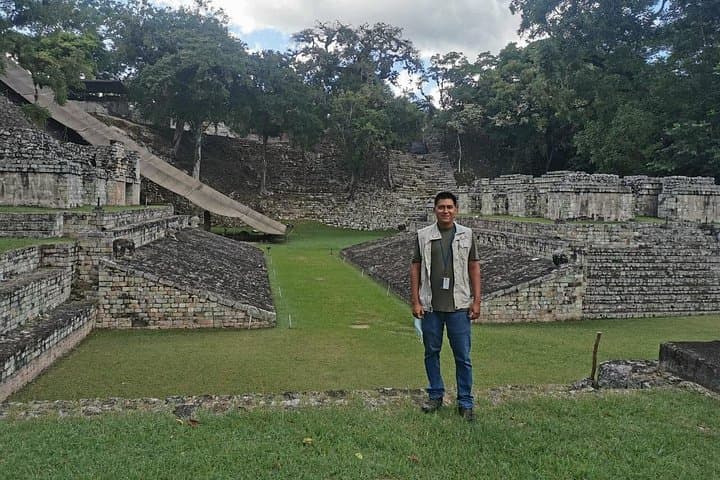


You arrive at dawn with mist still rolling off low hills and the carved stone faces of Copán emerging from the green. The plaza opens like a chapter of history—stelae standing shoulder to shoulder, a stairway of glyphs that seems to hum underfoot, and a guide pointing out dates and dynasties as howler monkeys call from the tree line.
You arrive at dawn with mist still rolling off low hills and the carved stone faces of Copán emerging from the green. The plaza opens like a chapter of history—stelae standing shoulder to shoulder, a stairway of glyphs that seems to hum underfoot, and a guide pointing out dates and dynasties as howler monkeys call from the tree line.
Copán was one of the Classic Maya’s most literate city-states, flourishing from about 400–900 AD; its hieroglyphic stairway and finely carved altars are crucial to understanding Maya politics and astronomy. Geologically the site sits on limestone terraces that the jungle has partly reclaimed, so paths alternate between packed earth, cut stone, and short flights of uneven stairs. A quick transfer takes you to Macaw Mountain, a working aviary and rescue center where bright scarlets and blues wheel overhead—part conservation project, part hands-on education about species reintroduction in the region.
Expect two days of slow, focused exploration: guided archaeological walks, close-up looks at sculpted monuments, and time in a well-run bird park learning about captive breeding and habitat. Practicalities matter—mornings are coolest and light best for photography; afternoons bring humidity and short showers during the wet season. The tour typically includes private transport, an English-speaking guide, entrance fees, and a local hotel stay, so pack for comfort and mobility rather than technical climbing.
Bring steady shoes for uneven stones, water and sun protection, and a respectful mindset: the ruins are fragile and the wildlife program runs on careful stewardship. With the right preparation, this two-day loop delivers history, wildlife, and a clear sense of the living landscape that still shapes Copán.