THE ADVENTURE COLLECTIVE® · Independent discovery and booking for outdoor travel

Escape the city for a day and discover Cuandixia’s four-century-old courtyards and mountain lanes with a private English-speaking driver. This self-guided day trip pairs flexible pickup with quiet, walkable streets and countryside scenery.
Escape the city for a day and discover Cuandixia’s four-century-old courtyards and mountain lanes with a private English-speaking driver. This self-guided day trip pairs flexible pickup with quiet, walkable streets and countryside scenery.
You step from Beijing's hum into mountain air that cools around old gray stone roofs. The private driver eases the car up the winding road and the countryside unfolds—terraced fields, scrub pines, and the slow geometry of courtyard houses climbing the slope. In Cuandixia the streets are narrow ledges; doors and wooden beams carry four centuries of use and weather.
Verified experiences and guided adventures in the surrounding area.
Operated by Leo's Guide & Driver Service · Beijing, Beijing Municipality
You step from Beijing's hum into mountain air that cools around old gray stone roofs. The private driver eases the car up the winding road and the countryside unfolds—terraced fields, scrub pines, and the slow geometry of courtyard houses climbing the slope. In Cuandixia the streets are narrow ledges; doors and wooden beams carry four centuries of use and weather.
The village grew prosperous as a post-road stop during the Ming and Qing dynasties, built by families migrating from Shanxi. Its seventy courtyard homes preserve regional vernacular architecture: stacked grey bricks, carved lintels and narrow alleys that once welcomed caravan traffic. Geologically, the Jingxi foothills are modest outcrops of granite and schist that forced trade routes into defined passes, shaping the village’s strategic location.
Culture here is straightforward—family-run homestays, small temples and a handful of restaurants serving regional countryside flavors. Local life still observes market rhythms and seasonal festivals, but tourism is managed gently; many houses are maintained as living heritage rather than staged exhibits.
Practical guidance: allow 2–3 hours for walking and photographing the main lanes, more if you visit a local family for dumplings or sketch carved beams. Wear sturdy shoes—stone streets are uneven and can be slippery when wet. Bring cash for small purchases; museums and some courtyards charge modest admission. Mobile signal can be patchy—download maps or save your driver’s contact before you leave. Plan an early departure from Beijing to avoid peak traffic and make the most of daylight on the return drive.
No — this is a self-guided day trip with a private English-speaking driver for transfers; you explore the village independently.
Expect roughly 2 hours each way without heavy traffic; plan for longer during peak travel times.
Lunch is not included; the itinerary suggests a local family restaurant where you can pay on-site.
Yes — pickup time and the day’s schedule are flexible and can be adjusted to your interests and local conditions.
Leo's Guide & Driver Service operates guided outdoor trips and adventures with an emphasis on safety, stewardship, and memorable experiences.


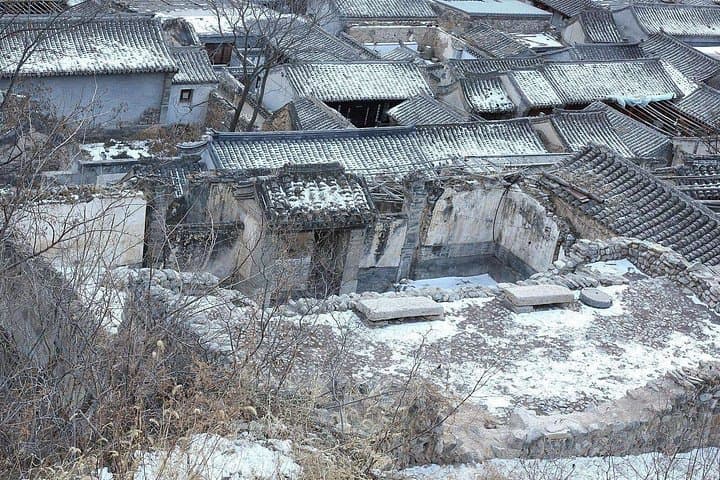
You step from Beijing's hum into mountain air that cools around old gray stone roofs. The private driver eases the car up the winding road and the countryside unfolds—terraced fields, scrub pines, and the slow geometry of courtyard houses climbing the slope. In Cuandixia the streets are narrow ledges; doors and wooden beams carry four centuries of use and weather.
You step from Beijing's hum into mountain air that cools around old gray stone roofs. The private driver eases the car up the winding road and the countryside unfolds—terraced fields, scrub pines, and the slow geometry of courtyard houses climbing the slope. In Cuandixia the streets are narrow ledges; doors and wooden beams carry four centuries of use and weather.
The village grew prosperous as a post-road stop during the Ming and Qing dynasties, built by families migrating from Shanxi. Its seventy courtyard homes preserve regional vernacular architecture: stacked grey bricks, carved lintels and narrow alleys that once welcomed caravan traffic. Geologically, the Jingxi foothills are modest outcrops of granite and schist that forced trade routes into defined passes, shaping the village’s strategic location.
Culture here is straightforward—family-run homestays, small temples and a handful of restaurants serving regional countryside flavors. Local life still observes market rhythms and seasonal festivals, but tourism is managed gently; many houses are maintained as living heritage rather than staged exhibits.
Practical guidance: allow 2–3 hours for walking and photographing the main lanes, more if you visit a local family for dumplings or sketch carved beams. Wear sturdy shoes—stone streets are uneven and can be slippery when wet. Bring cash for small purchases; museums and some courtyards charge modest admission. Mobile signal can be patchy—download maps or save your driver’s contact before you leave. Plan an early departure from Beijing to avoid peak traffic and make the most of daylight on the return drive.