THE ADVENTURE COLLECTIVE® · Independent discovery and booking for outdoor travel

Dubai Safari Park lets visitors move between African, Asian and Arabian habitats in one day, pairing guided bus safaris with walking routes, train shuttles and live shows. Perfect for families and wildlife fans seeking an accessible conservation-focused experience.
Dubai Safari Park lets visitors move between African, Asian and Arabian habitats in one day, pairing guided bus safaris with walking routes, train shuttles and live shows. Perfect for families and wildlife fans seeking an accessible conservation-focused experience.
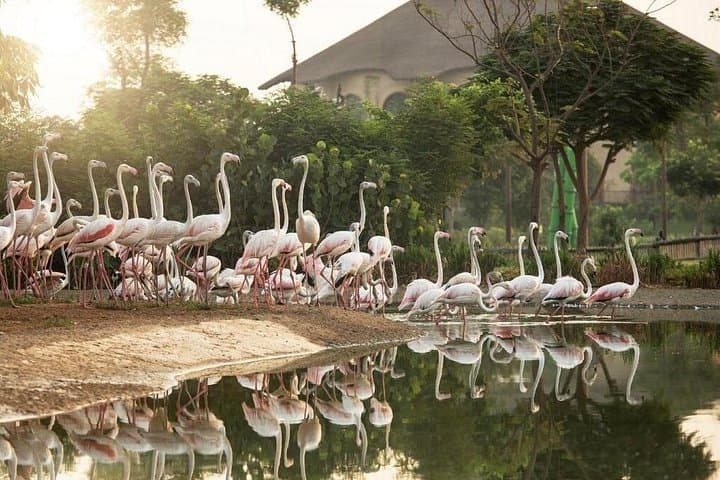
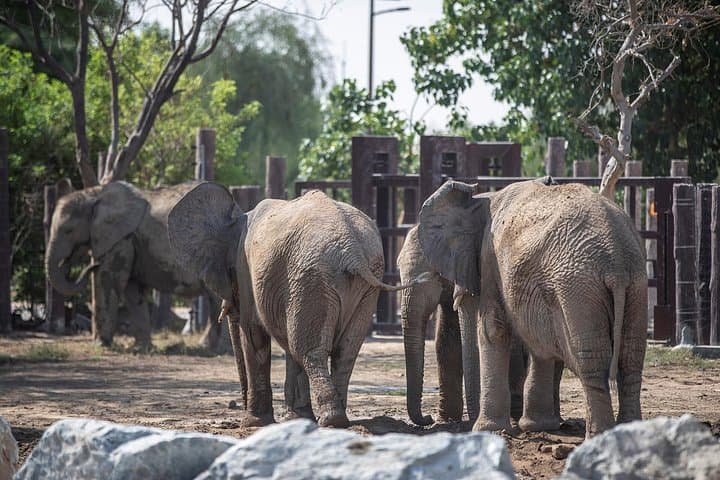
The morning air at Dubai Safari Park feels deliberate: heat rising from the desert flats while giraffes tilt their heads toward the sun and birds fill the walkways with urgent calls. Visitors enter wide, sculpted enclosures where landscape transitions from open savannah-style paddocks to shaded Asian groves and carefully managed desert plots, creating a compact world of ecosystems.
Verified experiences and guided adventures in the surrounding area.
Operated by Booketto DMC · Dubai, Dubai
The morning air at Dubai Safari Park feels deliberate: heat rising from the desert flats while giraffes tilt their heads toward the sun and birds fill the walkways with urgent calls. Visitors enter wide, sculpted enclosures where landscape transitions from open savannah-style paddocks to shaded Asian groves and carefully managed desert plots, creating a compact world of ecosystems.
Opened as part of Dubai’s shift toward large-scale conservation attractions, the park replaced the older Dubai Zoo and sits on roughly 119 hectares that were engineered to host mixed habitats for nearly 3,000 animals. Geologically the site is flat coastal plain—man-made earthworks, ponds and planting create microclimates that support African, Asian and Arabian species. Culturally the park blends leisure and education: live shows, keeper talks and feeding sessions aim to connect visitors to conservation programs run in partnership with international experts.
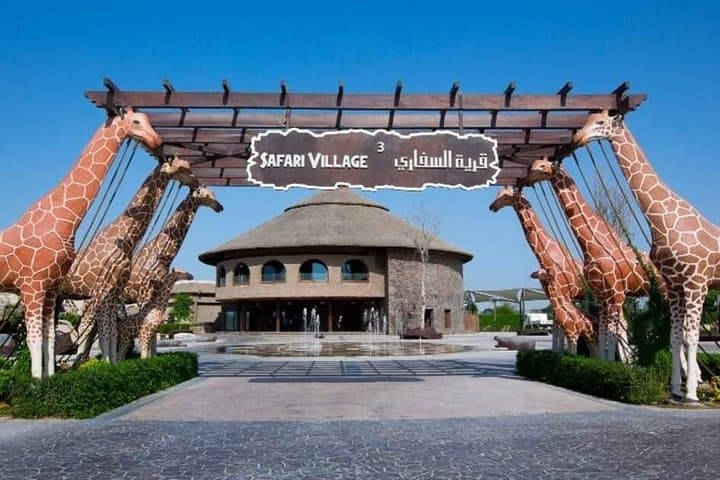
Practically, a typical visit mixes self-guided walking through Al Wadi, Asian and African villages with the Safari Journey—an interpretive 35-minute bus tour—and short electric-vehicle loops through the Arabian Desert area. Train shuttles reduce walking between hubs and kids’ farm areas provide hands-on experiences. Expect paved paths, shaded rest points, cafes and mandatory ID checks at entry.
Plan early to avoid midday heat, carry water and use the train to pace a full-day itinerary. Feeding interactions are limited and supervised; follow staff guidance. For families and wildlife enthusiasts the park delivers a dense, accessible introduction to regional and global species while emphasizing education and animal care.
Plan 4–5 hours for a comprehensive visit covering the main villages, Safari Journey bus tour and a live show; families may stay longer.
Yes—select feeding experiences are available, but they are supervised, limited, and often on a first-come, first-served basis.
Yes—wheelchair access is provided for key feeding interactions (giraffe, goat and bird areas) and main pathways are paved.
Yes—visitors must present a valid photo ID or passport at the entrance for admission.
Booketto DMC operates guided outdoor trips and adventures with an emphasis on safety, stewardship, and memorable experiences.
The morning air at Dubai Safari Park feels deliberate: heat rising from the desert flats while giraffes tilt their heads toward the sun and birds fill the walkways with urgent calls. Visitors enter wide, sculpted enclosures where landscape transitions from open savannah-style paddocks to shaded Asian groves and carefully managed desert plots, creating a compact world of ecosystems.
The morning air at Dubai Safari Park feels deliberate: heat rising from the desert flats while giraffes tilt their heads toward the sun and birds fill the walkways with urgent calls. Visitors enter wide, sculpted enclosures where landscape transitions from open savannah-style paddocks to shaded Asian groves and carefully managed desert plots, creating a compact world of ecosystems.
Opened as part of Dubai’s shift toward large-scale conservation attractions, the park replaced the older Dubai Zoo and sits on roughly 119 hectares that were engineered to host mixed habitats for nearly 3,000 animals. Geologically the site is flat coastal plain—man-made earthworks, ponds and planting create microclimates that support African, Asian and Arabian species. Culturally the park blends leisure and education: live shows, keeper talks and feeding sessions aim to connect visitors to conservation programs run in partnership with international experts.
Practically, a typical visit mixes self-guided walking through Al Wadi, Asian and African villages with the Safari Journey—an interpretive 35-minute bus tour—and short electric-vehicle loops through the Arabian Desert area. Train shuttles reduce walking between hubs and kids’ farm areas provide hands-on experiences. Expect paved paths, shaded rest points, cafes and mandatory ID checks at entry.
Plan early to avoid midday heat, carry water and use the train to pace a full-day itinerary. Feeding interactions are limited and supervised; follow staff guidance. For families and wildlife enthusiasts the park delivers a dense, accessible introduction to regional and global species while emphasizing education and animal care.