THE ADVENTURE COLLECTIVE® · Independent discovery and booking for outdoor travel

Pedal the East Bank of Luxor at your own pace and trade crowded buses for intimate encounters with temples, markets, and Nile-side life. This private bike rental puts high-quality bikes and local route maps in your hands—ideal for early mornings or glowing sunset rides.
Pedal the East Bank of Luxor at your own pace and trade crowded buses for intimate encounters with temples, markets, and Nile-side life. This private bike rental puts high-quality bikes and local route maps in your hands—ideal for early mornings or glowing sunset rides.
You lift your handlebars under a bright Egyptian sun and the city opens in a sequence of stone and river: narrow market alleys humming with vendors, broad Nile-front promenades, and the occasional column of temple stone rising like a marker of time. Cycling the East Bank of Luxor places you where ancient processions once moved and where daily life now unfolds—tea shops spilling onto the street, donkey carts threading beside motorbikes, and palm-lined corniches giving way to temple forecourts.
Verified experiences and guided adventures in the surrounding area.
Operated by Eyes of Egypt · Luxor, Luxor Governorate
You lift your handlebars under a bright Egyptian sun and the city opens in a sequence of stone and river: narrow market alleys humming with vendors, broad Nile-front promenades, and the occasional column of temple stone rising like a marker of time. Cycling the East Bank of Luxor places you where ancient processions once moved and where daily life now unfolds—tea shops spilling onto the street, donkey carts threading beside motorbikes, and palm-lined corniches giving way to temple forecourts.
East Luxor is the modern face of ancient Thebes. The East Bank holds Luxor Temple and the sprawling Karnak complex; their sandstone and granite record millennia of building campaigns that used local quarries and the steady Nile to move stone. Cultural rhythms — call to prayer, market bargaining, artisans at work — blend with a city shaped by the river’s floodplain rather than elevation, so expect flat, steady terrain underfoot and many paved or compacted-stone surfaces.
Practical guidance: choose a 3–6 hour window depending on appetite for stops—3 hours covers main sights and a souk, 6 hours lets you thread backstreets and sit for a relaxed lunch. Distances are modest: 8–12 km for a short loop, up to 35–45 km for a full day of slow touring. Temperatures climb mid-day; early morning or late afternoon yields cooler light and quieter streets. Helmets are provided, but bring a refillable water bottle, light layers for sun protection, and local cash for tea and market finds. Watch for mixed traffic, yield to pedestrians, and lock your bike at busy markets. With a well-tuned bike and a simple route map, East Luxor rewards curiosity: each turn offers a fresher angle on history and everyday Egyptian life.
Yes—safety helmets are included with every rental and should be worn in traffic and around crowded sites.
Yes—the rental is flexible so you can start whenever suits your plans, though early morning and late afternoon are best for comfort and light.
Yes—East Luxor is mostly flat with paved or compacted surfaces; routes are suitable for riders with basic cycling experience.
Yes—responsive roadside support is provided during the rental period for mechanical issues.
Eyes of Egypt operates guided outdoor trips and adventures with an emphasis on safety, stewardship, and memorable experiences.
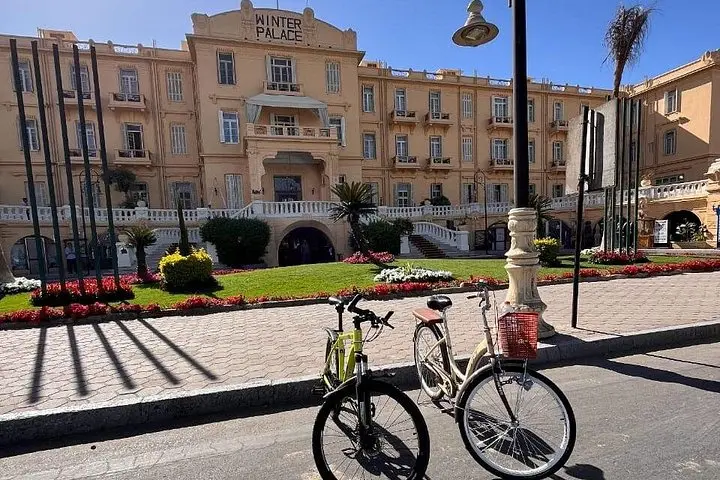
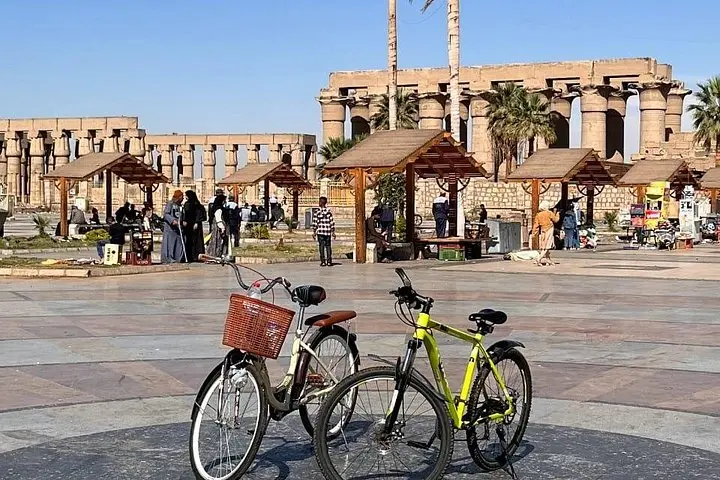
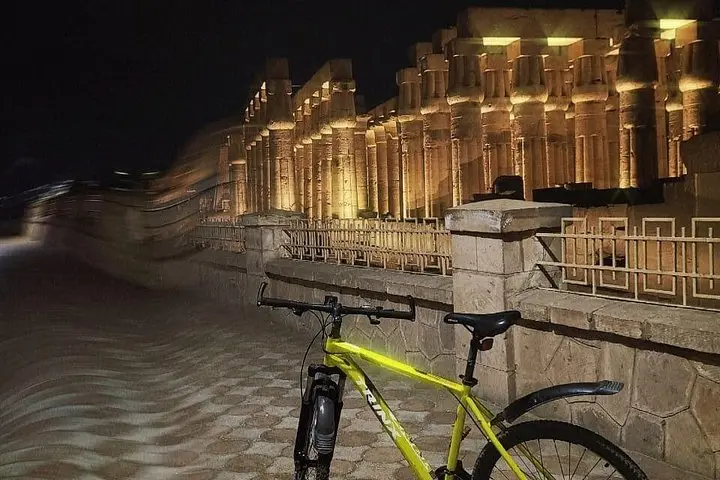
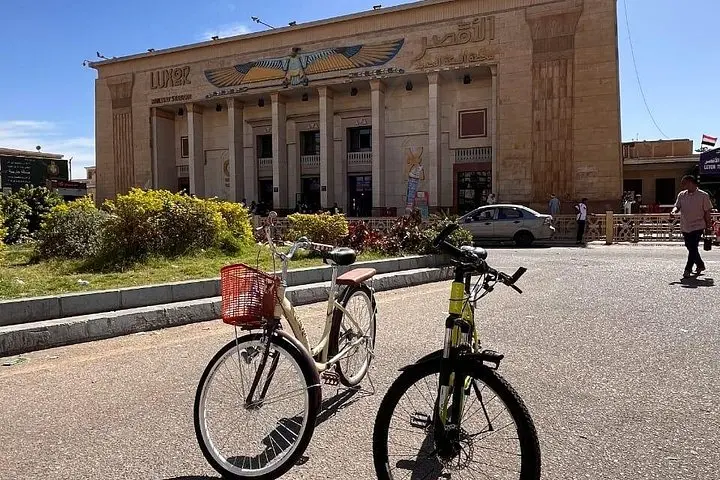
You lift your handlebars under a bright Egyptian sun and the city opens in a sequence of stone and river: narrow market alleys humming with vendors, broad Nile-front promenades, and the occasional column of temple stone rising like a marker of time. Cycling the East Bank of Luxor places you where ancient processions once moved and where daily life now unfolds—tea shops spilling onto the street, donkey carts threading beside motorbikes, and palm-lined corniches giving way to temple forecourts.
You lift your handlebars under a bright Egyptian sun and the city opens in a sequence of stone and river: narrow market alleys humming with vendors, broad Nile-front promenades, and the occasional column of temple stone rising like a marker of time. Cycling the East Bank of Luxor places you where ancient processions once moved and where daily life now unfolds—tea shops spilling onto the street, donkey carts threading beside motorbikes, and palm-lined corniches giving way to temple forecourts.
East Luxor is the modern face of ancient Thebes. The East Bank holds Luxor Temple and the sprawling Karnak complex; their sandstone and granite record millennia of building campaigns that used local quarries and the steady Nile to move stone. Cultural rhythms — call to prayer, market bargaining, artisans at work — blend with a city shaped by the river’s floodplain rather than elevation, so expect flat, steady terrain underfoot and many paved or compacted-stone surfaces.
Practical guidance: choose a 3–6 hour window depending on appetite for stops—3 hours covers main sights and a souk, 6 hours lets you thread backstreets and sit for a relaxed lunch. Distances are modest: 8–12 km for a short loop, up to 35–45 km for a full day of slow touring. Temperatures climb mid-day; early morning or late afternoon yields cooler light and quieter streets. Helmets are provided, but bring a refillable water bottle, light layers for sun protection, and local cash for tea and market finds. Watch for mixed traffic, yield to pedestrians, and lock your bike at busy markets. With a well-tuned bike and a simple route map, East Luxor rewards curiosity: each turn offers a fresher angle on history and everyday Egyptian life.