THE ADVENTURE COLLECTIVE® · Independent discovery and booking for outdoor travel

Walk Fes el-Bali with a local guide to see tanneries, madrasas and city gates on a private five-hour tour. Learn practical tips for navigating the medina’s narrow lanes while visiting historic sites and artisan workshops.
Walk Fes el-Bali with a local guide to see tanneries, madrasas and city gates on a private five-hour tour. Learn practical tips for navigating the medina’s narrow lanes while visiting historic sites and artisan workshops.
The morning air in Fes stings faintly of leather and spices as your guide leads you into a maze of alleys where light falls in narrow strips between ochre walls.
Verified experiences and guided adventures in the surrounding area.
Operated by MOROCCO TRIP DESERT · Fes, Fès-Meknès
The morning air in Fes stings faintly of leather and spices as your guide leads you into a maze of alleys where light falls in narrow strips between ochre walls.
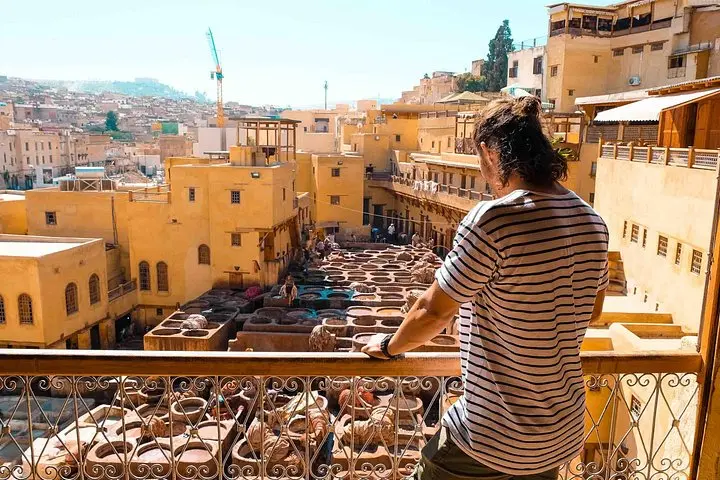
This private, five-hour walking tour threads the oldest urbanized pedestrian area in the world—Fes el-Bali—where workshops, fountains and hidden courtyards sit within a labyrinth of roughly 9,600 passageways. You’ll start at Seffarine Square where metalworkers strike copper to rhythm, then move toward the visual shock of the tannery pits: circular stone vats steaming with dyes and lime, daring you to keep your distance while your nose catalogues the scent.
Fes is one of Morocco’s cultural cores: the Al-Qarawiyyin University, established in the 9th century, remains a vital marker of Islamic scholarship. The medina’s walls and gates—Bab Boujloud among them—trace layers of Idrisid, Marinid and later French urban influence, and local pottery and woodwork preserve centuries-old techniques.
Practical guidance: wear sturdy, closed-toe shoes—the cobbles are uneven—and carry a reusable water bottle; most of the day is on foot with a short air-conditioned drive to city ramparts and ceramic studios. Expect multilingual local guides who help with bargaining at souks and explain etiquette for mosques (non-Muslim entry varies). Photography is welcome in markets but ask before snapping people or inside religious sites.
Timing matters: a 10:00 start avoids the midday heat and gives clearer rooftop views from the South Tower. Bring a lightweight scarf for sun and modesty; plan on enough time after the tour to browse ceramic workshops or relax at a rooftop café overlooking the medina.
This private tour runs about five hours and includes a guided walking tour of the medina plus short air-conditioned transfers to viewpoints, a ceramic workshop and the exterior of the Royal Palace; entry to religious sites is not typically included for non-Muslim visitors.
The operator lists wheelchair- and stroller-accessible transport options, but many medina alleys and historic sites have uneven surfaces and steps—confirm specific access needs with the provider before booking.
Yes—ceramic workshops and souk vendors expect bargaining; guides can advise on reasonable prices and reputable shops to avoid low-quality imitations.
Yes—guides commonly speak English, French and Spanish; specify language preference when booking to ensure a multilingual guide is assigned.
MOROCCO TRIP DESERT operates guided outdoor trips and adventures with an emphasis on safety, stewardship, and memorable experiences.
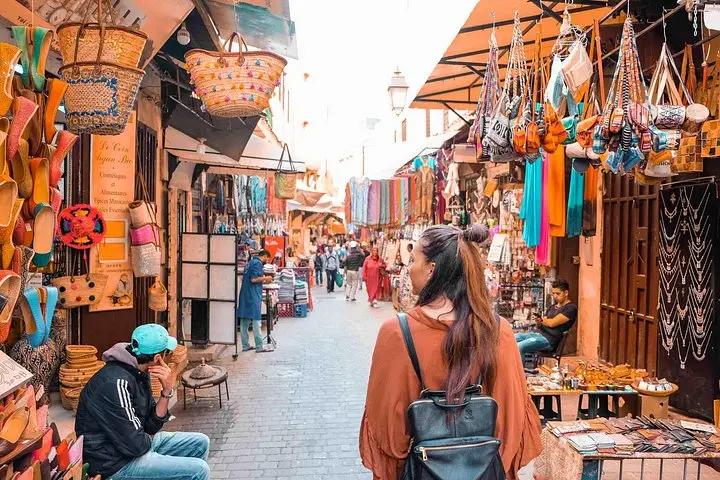
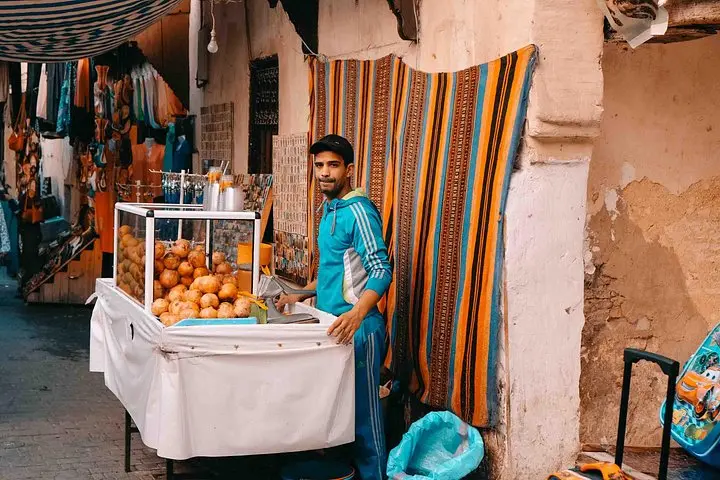
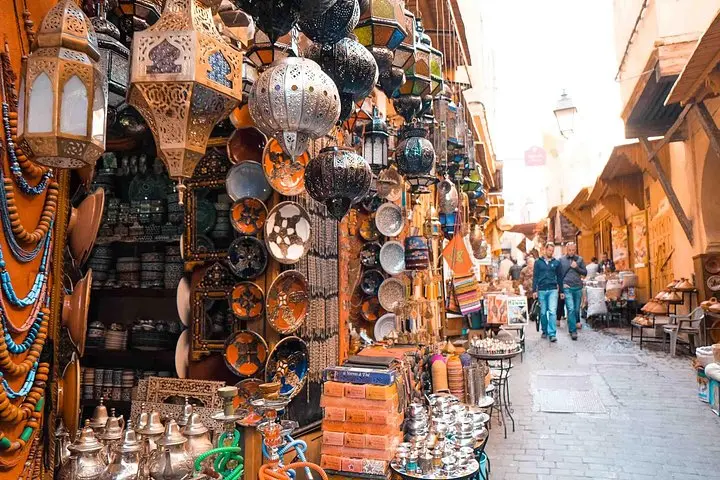
The morning air in Fes stings faintly of leather and spices as your guide leads you into a maze of alleys where light falls in narrow strips between ochre walls.
The morning air in Fes stings faintly of leather and spices as your guide leads you into a maze of alleys where light falls in narrow strips between ochre walls.
This private, five-hour walking tour threads the oldest urbanized pedestrian area in the world—Fes el-Bali—where workshops, fountains and hidden courtyards sit within a labyrinth of roughly 9,600 passageways. You’ll start at Seffarine Square where metalworkers strike copper to rhythm, then move toward the visual shock of the tannery pits: circular stone vats steaming with dyes and lime, daring you to keep your distance while your nose catalogues the scent.
Fes is one of Morocco’s cultural cores: the Al-Qarawiyyin University, established in the 9th century, remains a vital marker of Islamic scholarship. The medina’s walls and gates—Bab Boujloud among them—trace layers of Idrisid, Marinid and later French urban influence, and local pottery and woodwork preserve centuries-old techniques.
Practical guidance: wear sturdy, closed-toe shoes—the cobbles are uneven—and carry a reusable water bottle; most of the day is on foot with a short air-conditioned drive to city ramparts and ceramic studios. Expect multilingual local guides who help with bargaining at souks and explain etiquette for mosques (non-Muslim entry varies). Photography is welcome in markets but ask before snapping people or inside religious sites.
Timing matters: a 10:00 start avoids the midday heat and gives clearer rooftop views from the South Tower. Bring a lightweight scarf for sun and modesty; plan on enough time after the tour to browse ceramic workshops or relax at a rooftop café overlooking the medina.