THE ADVENTURE COLLECTIVE® · Independent discovery and booking for outdoor travel

Use a storytelling kit and mobile missions to navigate Donggung Palace, Wolji Pond, and Woljeonggyo Bridge—discover Silla-era history at your own pace. This self-guided cultural activity pairs game-like challenges with local context for a focused two-hour exploration.
Use a storytelling kit and mobile missions to navigate Donggung Palace, Wolji Pond, and Woljeonggyo Bridge—discover Silla-era history at your own pace. This self-guided cultural activity pairs game-like challenges with local context for a focused two-hour exploration.
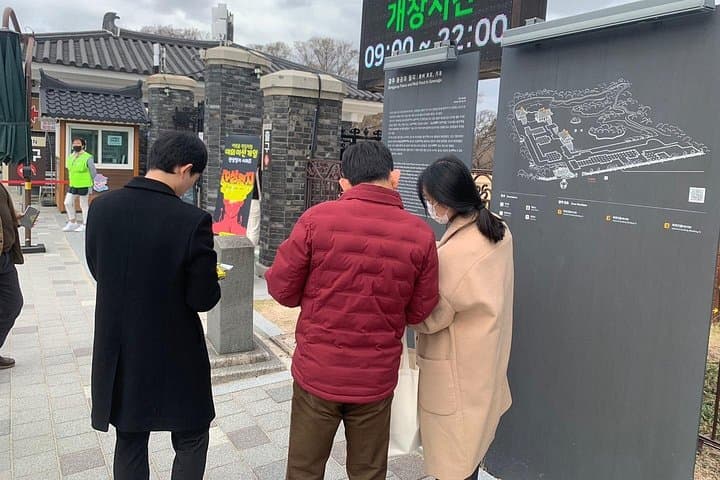
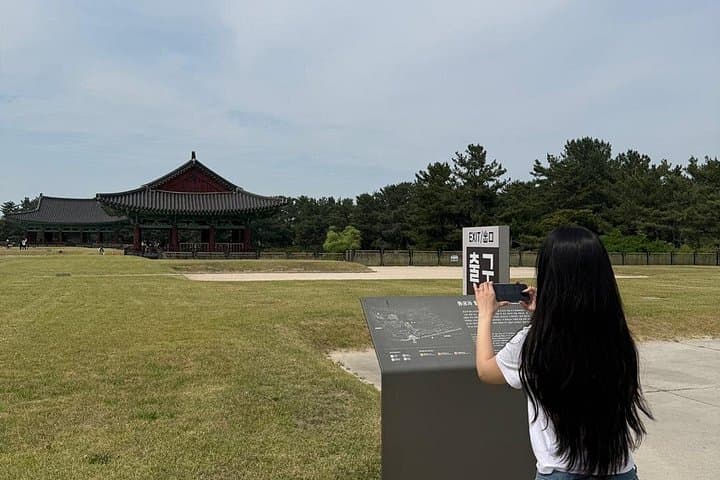
A hush of late-afternoon light pools over wide stone paths as you open the storytelling kit at Saisiot and map the first challenge. The kit—part printed booklet, part mobile interface—hands you a set of missions that push you to move through space like a detective: from the palace terraces of Donggung to the reflective bowl of Wolji (Anapji) and across Woljeonggyo Bridge.
Verified experiences and guided adventures in the surrounding area.
Operated by saisiot · Gyeongju, North Gyeongsang
A hush of late-afternoon light pools over wide stone paths as you open the storytelling kit at Saisiot and map the first challenge. The kit—part printed booklet, part mobile interface—hands you a set of missions that push you to move through space like a detective: from the palace terraces of Donggung to the reflective bowl of Wolji (Anapji) and across Woljeonggyo Bridge.
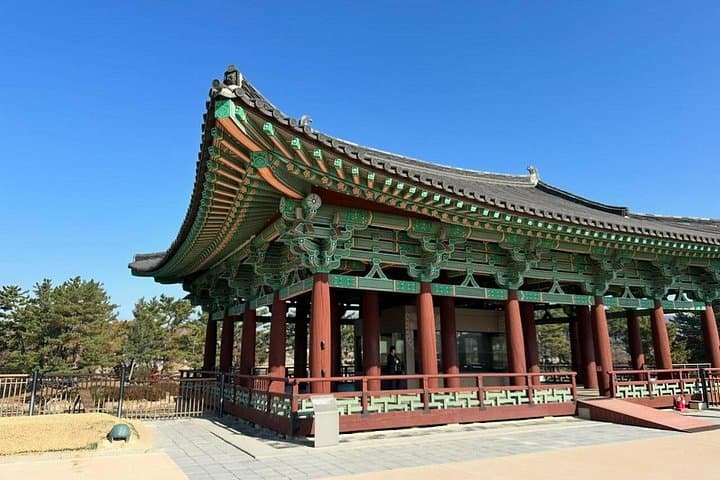
Gyeongju was the political heart of the Silla kingdom for nearly a thousand years; the engineered ponds and palace foundations you’ll encounter are deliberate, historical gestures—water and stone arranged to project power and ritual. Geologically the area sits on a low basin of weathered granite and coastal plains, which means flat walking punctuated by stepped palace platforms and tiled bridges.
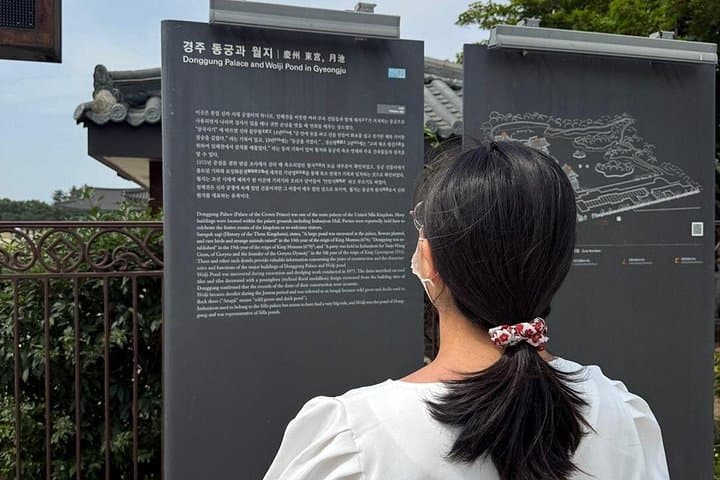
Culturally, the experience is a gamified primer: clues link architectural details to Silla court life, and mini-challenges encourage you to read inscriptions and compare skyline lines. Locals still bring offerings and quiet ceremony to certain sites; approach with curiosity and respect.
Practical guidance: allow two hours, wear comfortable walking shoes for mixed paving and wooden bridge decks, and bring a charged phone—the mobile interface provides supplemental content. Morning and dusk offer cooler temperatures and softer light for photos; weekends draw families and school groups. The activity is wheelchair-accessible in main areas but expect some uneven historic surfaces. Remember to conserve battery, carry water, and follow signage—this is an archaeological landscape, not a theme park. If you want a quieter rhythm, schedule a weekday morning and let the missions pace your discovery.
Yes—admission fees to Donggung Palace and Wolji Pond are included as part of the activity package.
Main routes and Saisiot are wheelchair accessible, but some historic surfaces and bridges may be uneven; check access at each site and plan accordingly.
The itinerary is designed for about two hours, though participants can move faster or linger at points of interest.
No—the program is self-guided using a printed storytelling kit and mobile interface, though staff at Saisiot provide instructions and support.
saisiot operates guided outdoor trips and adventures with an emphasis on safety, stewardship, and memorable experiences.
A hush of late-afternoon light pools over wide stone paths as you open the storytelling kit at Saisiot and map the first challenge. The kit—part printed booklet, part mobile interface—hands you a set of missions that push you to move through space like a detective: from the palace terraces of Donggung to the reflective bowl of Wolji (Anapji) and across Woljeonggyo Bridge.
A hush of late-afternoon light pools over wide stone paths as you open the storytelling kit at Saisiot and map the first challenge. The kit—part printed booklet, part mobile interface—hands you a set of missions that push you to move through space like a detective: from the palace terraces of Donggung to the reflective bowl of Wolji (Anapji) and across Woljeonggyo Bridge.
Gyeongju was the political heart of the Silla kingdom for nearly a thousand years; the engineered ponds and palace foundations you’ll encounter are deliberate, historical gestures—water and stone arranged to project power and ritual. Geologically the area sits on a low basin of weathered granite and coastal plains, which means flat walking punctuated by stepped palace platforms and tiled bridges.
Culturally, the experience is a gamified primer: clues link architectural details to Silla court life, and mini-challenges encourage you to read inscriptions and compare skyline lines. Locals still bring offerings and quiet ceremony to certain sites; approach with curiosity and respect.
Practical guidance: allow two hours, wear comfortable walking shoes for mixed paving and wooden bridge decks, and bring a charged phone—the mobile interface provides supplemental content. Morning and dusk offer cooler temperatures and softer light for photos; weekends draw families and school groups. The activity is wheelchair-accessible in main areas but expect some uneven historic surfaces. Remember to conserve battery, carry water, and follow signage—this is an archaeological landscape, not a theme park. If you want a quieter rhythm, schedule a weekday morning and let the missions pace your discovery.