THE ADVENTURE COLLECTIVE® · Independent discovery and booking for outdoor travel

Discover Hanga Roa on a focused 2–3 hour private tour: see the Tahai ceremonial complex, the island’s only church, coastal moai at Hanga Piko, and the town’s main square with a local guide. Learn about moai construction, Rapa Nui culture, and practical tips for timing and accessibility.
Discover Hanga Roa on a focused 2–3 hour private tour: see the Tahai ceremonial complex, the island’s only church, coastal moai at Hanga Piko, and the town’s main square with a local guide. Learn about moai construction, Rapa Nui culture, and practical tips for timing and accessibility.
You step off the van into wind that smells of salt and volcanic stone, Hanga Roa spread low between the ocean’s white edges and the dark, cooled flows of ancient cones.
Verified experiences and guided adventures in the surrounding area.
Operated by Kapua Tours & Experience · Hanga Roa, Valparaíso Region
You step off the van into wind that smells of salt and volcanic stone, Hanga Roa spread low between the ocean’s white edges and the dark, cooled flows of ancient cones.
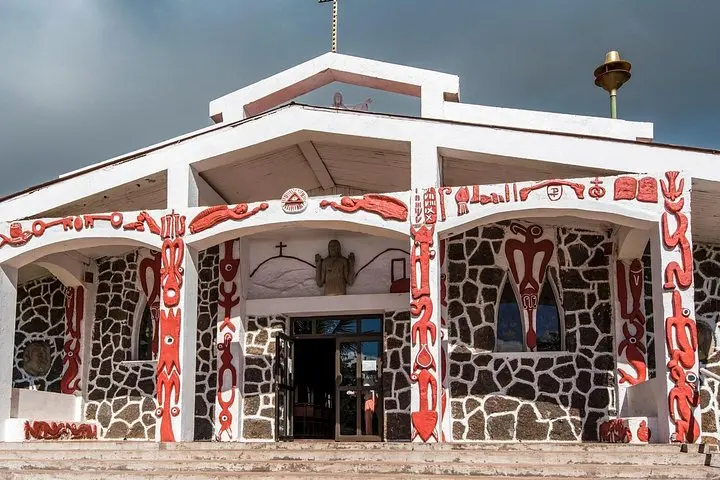
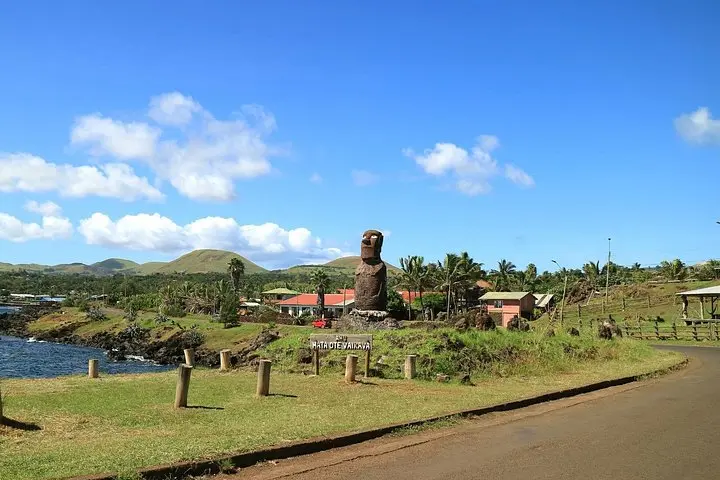
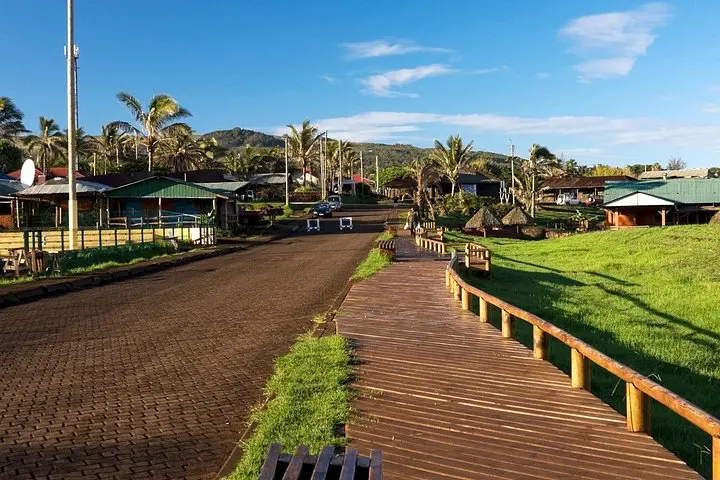
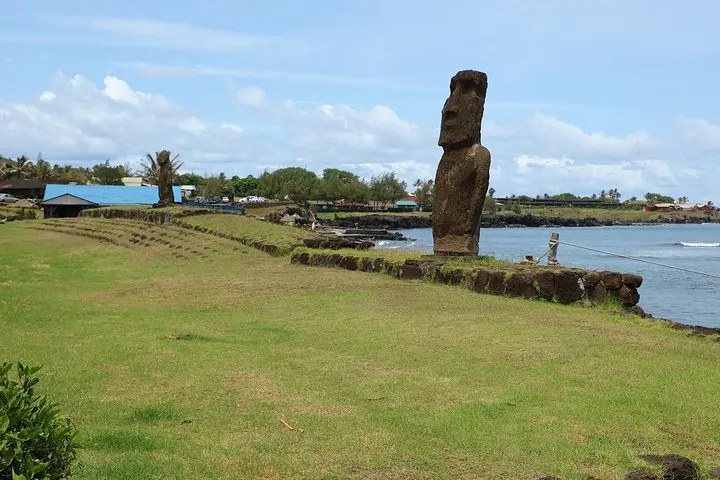
This two-to-three hour private tour threads through the city’s compact streets and coastal platforms: the small Catholic church with its colonial echoes; Tahai’s restored ahu where moai stand like questions facing the Pacific; the island cemetery with quiet rituals; and the single moai at Caleta Hanga Piko near the fishing cove. Guides born on the island explain the heavy, deliberate work of carving and transporting moai from volcanic tuff and basalt quarries, and how the community’s social rhythms shaped those stone icons.
Geology here is immediate — black sand beaches from eroded lava, rocky headlands cut by wind, and tufas that tell of explosive eruptions. Culture is living: Rapa Nui language, chants, and the museum’s collections ground the tour in local memory rather than museum-still relics. The ocean plays a role too, its currents nudging the shoreline and testing human resilience.
Practical notes: the tour includes private transport and an expert local guide, runs about 2–3 hours, and is accessible for many mobility levels. Bring sun protection, steady walking shoes for mixed pavement and rock, and a light wind layer. Expect brief stops for photos and interpretation; if you want sunset silhouettes at Tahai, book later in the day. Respect site boundaries — do not climb moai — and check whether park fees apply before you go.
The private tour runs approximately 2–3 hours with several short stops at cultural and coastal points of interest.
Some significant sites on Rapa Nui fall under Rapa Nui National Park and may require an entrance fee; confirm with the operator whether park admission is included.
The operator lists wheelchair-accessible options and accessible transport, but accessibility at some outdoor sites can be uneven — notify the operator about mobility needs when booking.
Yes — photography is allowed, but climbing or touching moai and ahu is prohibited to protect the monuments and follow local customs.
Kapua Tours & Experience operates guided outdoor trips and adventures with an emphasis on safety, stewardship, and memorable experiences.
You step off the van into wind that smells of salt and volcanic stone, Hanga Roa spread low between the ocean’s white edges and the dark, cooled flows of ancient cones.
You step off the van into wind that smells of salt and volcanic stone, Hanga Roa spread low between the ocean’s white edges and the dark, cooled flows of ancient cones.
This two-to-three hour private tour threads through the city’s compact streets and coastal platforms: the small Catholic church with its colonial echoes; Tahai’s restored ahu where moai stand like questions facing the Pacific; the island cemetery with quiet rituals; and the single moai at Caleta Hanga Piko near the fishing cove. Guides born on the island explain the heavy, deliberate work of carving and transporting moai from volcanic tuff and basalt quarries, and how the community’s social rhythms shaped those stone icons.
Geology here is immediate — black sand beaches from eroded lava, rocky headlands cut by wind, and tufas that tell of explosive eruptions. Culture is living: Rapa Nui language, chants, and the museum’s collections ground the tour in local memory rather than museum-still relics. The ocean plays a role too, its currents nudging the shoreline and testing human resilience.
Practical notes: the tour includes private transport and an expert local guide, runs about 2–3 hours, and is accessible for many mobility levels. Bring sun protection, steady walking shoes for mixed pavement and rock, and a light wind layer. Expect brief stops for photos and interpretation; if you want sunset silhouettes at Tahai, book later in the day. Respect site boundaries — do not climb moai — and check whether park fees apply before you go.