THE ADVENTURE COLLECTIVE® · Independent discovery and booking for outdoor travel
Walk among the Nabataean rock-cut tombs of Hegra and hear stories carved directly into sandstone. This three-hour guided experience combines archaeology, geology and desert light for an accessible, unforgettable half-day outing.
Walk among the Nabataean rock-cut tombs of Hegra and hear stories carved directly into sandstone. This three-hour guided experience combines archaeology, geology and desert light for an accessible, unforgettable half-day outing.
You arrive into an open desert room where sculpted sandstone faces catch the sun and throw long shadows across hard-packed sand. The cliffs here do the talking: carved facades stare back with doorways and inscriptions, and a single, unfinished tomb—Qasr al-Farid—stands alone like a stage set cut from the bedrock.
Verified experiences and guided adventures in the surrounding area.
Operated by GLOBAL EXPLORERS · AlUla, Al Madinah Province
You arrive into an open desert room where sculpted sandstone faces catch the sun and throw long shadows across hard-packed sand. The cliffs here do the talking: carved facades stare back with doorways and inscriptions, and a single, unfinished tomb—Qasr al-Farid—stands alone like a stage set cut from the bedrock.
Hegra (Madain Saleh) is the southern echo of Petra, the northern capital of the Nabataean kingdom that controlled trade routes across Arabia. The geology is predominantly sandstone and etchable siltstone, wind-polished into ridges and alcoves; these layers preserve both tomb architecture and centuries of graffiti and inscriptions. Cultural life here revolved around caravan trade, water management in cisterns and wells, and funerary display—Diwan spaces and carved portals speak to ritual and status.
On a typical three-hour guided visit you’ll move among numbered monuments, hear stories from a bilingual local guide, and pause at viewpoints that reveal the scale of the rock faces. The walking is mostly flat but includes uneven rock and loose sand; expect short stretches of careful footing rather than long climbs. Practicalities: tours usually include entrance fees and optional hotel pickup from AlUla, and operate best in cooler hours—early morning or late afternoon—for light and comfort.
Bring sun protection, at least 2–3 liters of water, and shoes with good grip; keep to marked routes and avoid touching carved surfaces to protect fragile sandstone. With straightforward logistics and deep history, Hegra rewards patience: the silence itself feels like a storyteller that won’t be rushed.
The tour runs about three hours and covers the main tombs and viewpoints with pauses for explanation and photos.
The site accepts strollers on flatter routes but some areas have uneven ground and steps—check with the operator about specific accessibility needs.
Entrance fees are listed as included; hotel pickup from AlUla is offered if that option is booked—confirm at booking.
Photography is generally allowed in the open areas; avoid flash and follow guide instructions—some sensitive interiors may be restricted.
GLOBAL EXPLORERS operates guided outdoor trips and adventures with an emphasis on safety, stewardship, and memorable experiences.
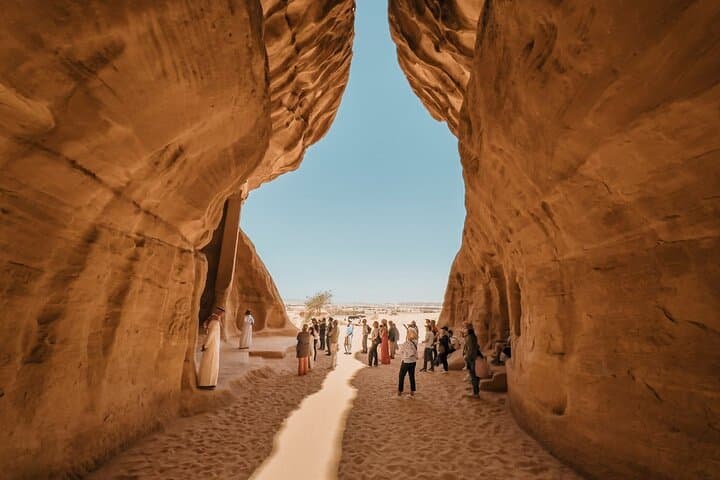
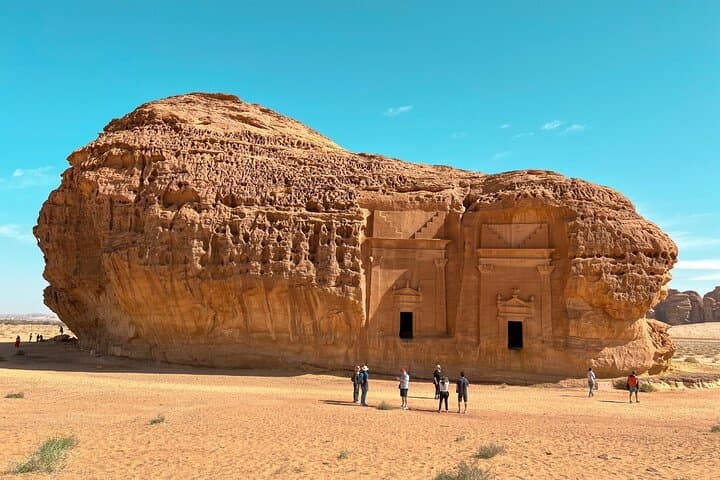
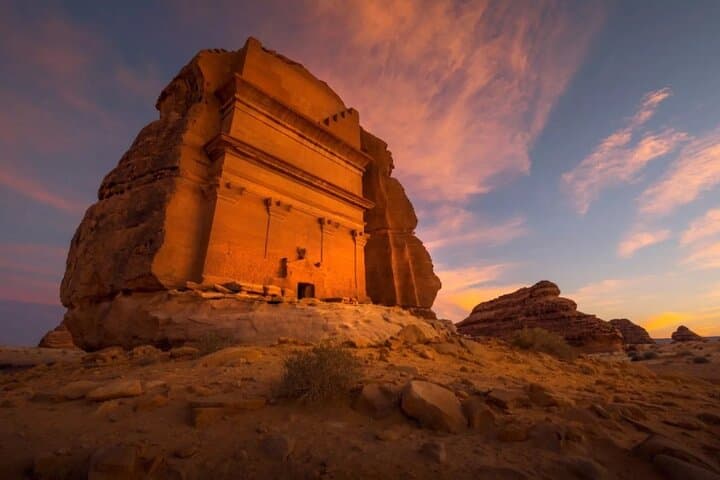
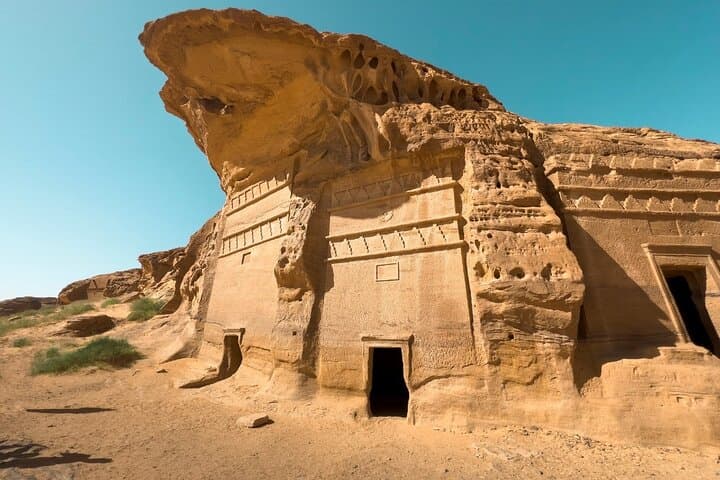
You arrive into an open desert room where sculpted sandstone faces catch the sun and throw long shadows across hard-packed sand. The cliffs here do the talking: carved facades stare back with doorways and inscriptions, and a single, unfinished tomb—Qasr al-Farid—stands alone like a stage set cut from the bedrock.
You arrive into an open desert room where sculpted sandstone faces catch the sun and throw long shadows across hard-packed sand. The cliffs here do the talking: carved facades stare back with doorways and inscriptions, and a single, unfinished tomb—Qasr al-Farid—stands alone like a stage set cut from the bedrock.
Hegra (Madain Saleh) is the southern echo of Petra, the northern capital of the Nabataean kingdom that controlled trade routes across Arabia. The geology is predominantly sandstone and etchable siltstone, wind-polished into ridges and alcoves; these layers preserve both tomb architecture and centuries of graffiti and inscriptions. Cultural life here revolved around caravan trade, water management in cisterns and wells, and funerary display—Diwan spaces and carved portals speak to ritual and status.
On a typical three-hour guided visit you’ll move among numbered monuments, hear stories from a bilingual local guide, and pause at viewpoints that reveal the scale of the rock faces. The walking is mostly flat but includes uneven rock and loose sand; expect short stretches of careful footing rather than long climbs. Practicalities: tours usually include entrance fees and optional hotel pickup from AlUla, and operate best in cooler hours—early morning or late afternoon—for light and comfort.
Bring sun protection, at least 2–3 liters of water, and shoes with good grip; keep to marked routes and avoid touching carved surfaces to protect fragile sandstone. With straightforward logistics and deep history, Hegra rewards patience: the silence itself feels like a storyteller that won’t be rushed.
