THE ADVENTURE COLLECTIVE® · Independent discovery and booking for outdoor travel

Leave Guiyang for a full-day private excursion to Hoer Tiankeng and Nanjiang Grand Canyon—two dramatic karst landscapes where sinkholes and river gorges reveal millions of years of limestone erosion. Expect steep viewpoints, waterfalls, and a mix of cultural and geological highlights.
Leave Guiyang for a full-day private excursion to Hoer Tiankeng and Nanjiang Grand Canyon—two dramatic karst landscapes where sinkholes and river gorges reveal millions of years of limestone erosion. Expect steep viewpoints, waterfalls, and a mix of cultural and geological highlights.
The day starts before sunrise in Guiyang, with a private van threading through low karst ridges as the city slips behind you. Two hours later the ground opens into Hoer Tiankeng: a near-perfect circular sinkhole that stares down like a calved amphitheater. Walk to the rim and feel the scale—the pit measures roughly 300 meters across and drops nearly 290 meters, a carved void where water and time have been relentless.
Verified experiences and guided adventures in the surrounding area.
Operated by Private China Tours · Guiyang, Guizhou
The day starts before sunrise in Guiyang, with a private van threading through low karst ridges as the city slips behind you. Two hours later the ground opens into Hoer Tiankeng: a near-perfect circular sinkhole that stares down like a calved amphitheater. Walk to the rim and feel the scale—the pit measures roughly 300 meters across and drops nearly 290 meters, a carved void where water and time have been relentless.
This landscape is the product of karst geology. Limestone dissolved by rain and underground streams has collapsed and hollowed out chambers over millions of years, leaving dramatic cliffs, vertical shafts, and a complex subterranean drainage. Around both sites, local ethnic communities—Miao and Bouyei among them—have shaped hill agriculture and village settlement patterns, adding human texture to the geology.
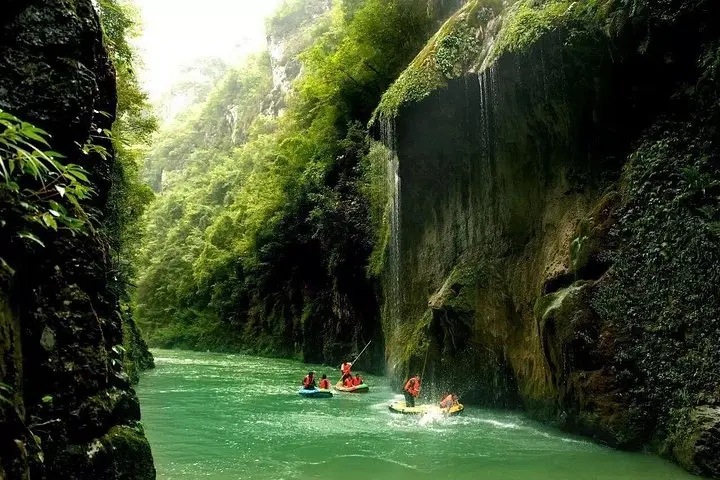
Later the tour moves to Nanjiang Grand Canyon, a river-carved gorge more than 40 kilometers long with steep walls and dozens of waterfall types. The canyon’s deepest sections approach 398 meters, and trails and viewpoints reveal cascading water, narrow valleys, and dense secondary forest that shelters a surprisingly varied ecology.
Practicalities: expect an 8–9 hour day with hotel pickup and private guide, moderate walking on uneven surfaces, and several viewpoint stops rather than technical hiking. Bring sturdy shoes, layered clothing for variable canyon microclimates, and rain protection in summer. Carry cash for small purchases and a camera with a wide lens—these vistas reward patience and framing.
The drive to Hoer Tiankeng is about two hours each way depending on traffic; the full tour runs about 8–9 hours including stops.
The operator lists entrance fees and private transport among inclusions; verify whether any local conservation fees or optional activities require extra payment.
Yes—walks are short and non-technical, but the itinerary involves stairs and rim viewpoints; travelers with serious mobility issues or recent spinal/heart conditions should avoid it.
This particular private tour includes an English-speaking local guide who provides interpretation, logistics, and cultural context throughout the day.
Private China Tours operates guided outdoor trips and adventures with an emphasis on safety, stewardship, and memorable experiences.
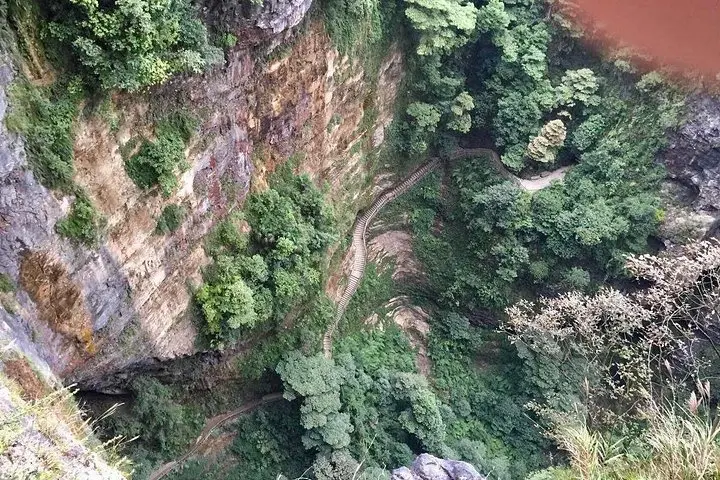
The day starts before sunrise in Guiyang, with a private van threading through low karst ridges as the city slips behind you. Two hours later the ground opens into Hoer Tiankeng: a near-perfect circular sinkhole that stares down like a calved amphitheater. Walk to the rim and feel the scale—the pit measures roughly 300 meters across and drops nearly 290 meters, a carved void where water and time have been relentless.
The day starts before sunrise in Guiyang, with a private van threading through low karst ridges as the city slips behind you. Two hours later the ground opens into Hoer Tiankeng: a near-perfect circular sinkhole that stares down like a calved amphitheater. Walk to the rim and feel the scale—the pit measures roughly 300 meters across and drops nearly 290 meters, a carved void where water and time have been relentless.
This landscape is the product of karst geology. Limestone dissolved by rain and underground streams has collapsed and hollowed out chambers over millions of years, leaving dramatic cliffs, vertical shafts, and a complex subterranean drainage. Around both sites, local ethnic communities—Miao and Bouyei among them—have shaped hill agriculture and village settlement patterns, adding human texture to the geology.
Later the tour moves to Nanjiang Grand Canyon, a river-carved gorge more than 40 kilometers long with steep walls and dozens of waterfall types. The canyon’s deepest sections approach 398 meters, and trails and viewpoints reveal cascading water, narrow valleys, and dense secondary forest that shelters a surprisingly varied ecology.
Practicalities: expect an 8–9 hour day with hotel pickup and private guide, moderate walking on uneven surfaces, and several viewpoint stops rather than technical hiking. Bring sturdy shoes, layered clothing for variable canyon microclimates, and rain protection in summer. Carry cash for small purchases and a camera with a wide lens—these vistas reward patience and framing.