THE ADVENTURE COLLECTIVE® · Independent discovery and booking for outdoor travel

Walk Kirkwall’s narrow lanes from Saint Magnus Cathedral to the ruined palaces on a 3–4 hour guided tour that unpacks 1,200 years of Norse and Scottish history. Expect cobbles, coastal views, and local tales from expert guides.
Walk Kirkwall’s narrow lanes from Saint Magnus Cathedral to the ruined palaces on a 3–4 hour guided tour that unpacks 1,200 years of Norse and Scottish history. Expect cobbles, coastal views, and local tales from expert guides.
Stone and sea air meet on the streets of Kirkwall: flags snap above narrow lanes, gulls wheel over the harbours, and the cathedral’s square offers a sudden, cool quiet. A guided walking tour in Kirkwall moves at a human pace—through the old market, past the inner and outer harbours, and around the ruined walls of earls and bishops who once shaped Orkney’s story.
Verified experiences and guided adventures in the surrounding area.
Operated by Experience Orkney · Kirkwall, Orkney Islands
Stone and sea air meet on the streets of Kirkwall: flags snap above narrow lanes, gulls wheel over the harbours, and the cathedral’s square offers a sudden, cool quiet. A guided walking tour in Kirkwall moves at a human pace—through the old market, past the inner and outer harbours, and around the ruined walls of earls and bishops who once shaped Orkney’s story.
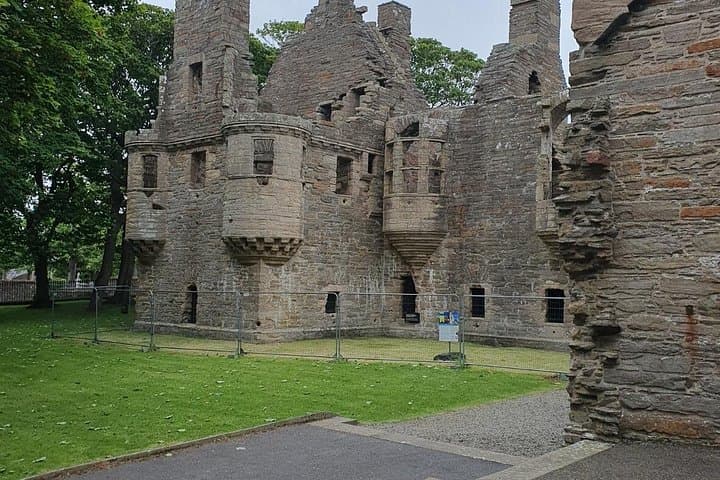
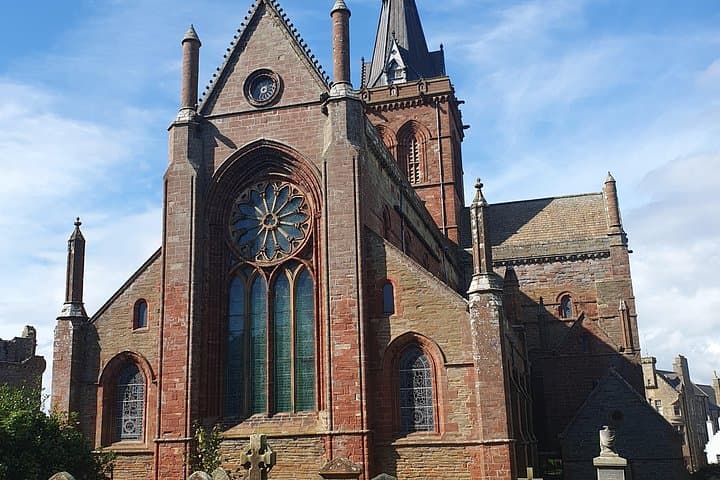
The town bears clear Norse lines: 12th-century Saint Magnus Cathedral anchors Kirkwall’s medieval core while the Bishop’s Palace ruins and the early-17th-century Earl’s Palace show later shifts in power and style. Beneath the buildings, Old Red Sandstone and glacially-scoured shorelines speak to Orkney’s geological past; the town grew where sheltered waters met fertile links for trade.
Culture here is direct and local—museums, the old market square, and modest pubs preserve Orcadian music, dialect, and fishing traditions. Guides point out small features: the Girnel (grain store) carvings, Saint Olaf’s Kirk, and a long-ago castle site by the “Big Tree.”
Practical guidance: the full tour runs about 3–4 hours and is physically easy; most surfaces are paved but include cobbles and occasional steps. Wear sturdy walking shoes and a waterproof layer; wind and sudden showers are common. Public transport serves the town and most sites are clustered, but the tour includes entry fees for palace ruins. Mobility access reaches Saint Magnus Cathedral; check with the operator for wheelchair needs at other sites.
Bring a charged camera, allow time afterward for the museum, and treat ruins and shorelines with leave-no-trace care—the stones and seabirds rely on visitors to keep the place intact.
The guided tour typically lasts 3–4 hours (180–240 minutes), covering the cathedral, palaces, harbours, and museum.
Saint Magnus Cathedral is wheelchair accessible; other historic sites include uneven ground or steps—check with the operator for specific accessibility needs.
The tour includes entry for the Bishop’s and Earls’ Palaces as noted in the inclusions; verify current fees when booking.
Dress in layers with a waterproof outer layer and sturdy shoes suitable for cobbles; wind can make temperatures feel cooler than forecast.
Experience Orkney operates guided outdoor trips and adventures with an emphasis on safety, stewardship, and memorable experiences.


Stone and sea air meet on the streets of Kirkwall: flags snap above narrow lanes, gulls wheel over the harbours, and the cathedral’s square offers a sudden, cool quiet. A guided walking tour in Kirkwall moves at a human pace—through the old market, past the inner and outer harbours, and around the ruined walls of earls and bishops who once shaped Orkney’s story.
Stone and sea air meet on the streets of Kirkwall: flags snap above narrow lanes, gulls wheel over the harbours, and the cathedral’s square offers a sudden, cool quiet. A guided walking tour in Kirkwall moves at a human pace—through the old market, past the inner and outer harbours, and around the ruined walls of earls and bishops who once shaped Orkney’s story.
The town bears clear Norse lines: 12th-century Saint Magnus Cathedral anchors Kirkwall’s medieval core while the Bishop’s Palace ruins and the early-17th-century Earl’s Palace show later shifts in power and style. Beneath the buildings, Old Red Sandstone and glacially-scoured shorelines speak to Orkney’s geological past; the town grew where sheltered waters met fertile links for trade.
Culture here is direct and local—museums, the old market square, and modest pubs preserve Orcadian music, dialect, and fishing traditions. Guides point out small features: the Girnel (grain store) carvings, Saint Olaf’s Kirk, and a long-ago castle site by the “Big Tree.”
Practical guidance: the full tour runs about 3–4 hours and is physically easy; most surfaces are paved but include cobbles and occasional steps. Wear sturdy walking shoes and a waterproof layer; wind and sudden showers are common. Public transport serves the town and most sites are clustered, but the tour includes entry fees for palace ruins. Mobility access reaches Saint Magnus Cathedral; check with the operator for wheelchair needs at other sites.
Bring a charged camera, allow time afterward for the museum, and treat ruins and shorelines with leave-no-trace care—the stones and seabirds rely on visitors to keep the place intact.