THE ADVENTURE COLLECTIVE® · Independent discovery and booking for outdoor travel

Glide through Fort Kochi in a private tuk-tuk and discover Chinese fishing nets, spice warehouses, and colonial-era landmarks on a 4–6 hour tour tailored for cruise passengers. Local guides customize the route for photos, shopping, and cultural insights.
Glide through Fort Kochi in a private tuk-tuk and discover Chinese fishing nets, spice warehouses, and colonial-era landmarks on a 4–6 hour tour tailored for cruise passengers. Local guides customize the route for photos, shopping, and cultural insights.
Stepping off the ship, the warm sea air and the rattle of tuk-tuk engines pull you into Fort Kochi’s maze of lanes. The tour begins with the slow, theatrical sweep of the Chinese fishing nets—huge cantilevered frames that lower like mechanical arms into the Arabian Sea—then threads through spice stalls whose aromas push at the edges of your senses.
Verified experiences and guided adventures in the surrounding area.
Operated by Hidden Gems of Kochi Tuk-Tuk Tour · Kochi, Kerala
Stepping off the ship, the warm sea air and the rattle of tuk-tuk engines pull you into Fort Kochi’s maze of lanes. The tour begins with the slow, theatrical sweep of the Chinese fishing nets—huge cantilevered frames that lower like mechanical arms into the Arabian Sea—then threads through spice stalls whose aromas push at the edges of your senses.
Fort Kochi and Mattancherry wear layers of history: Portuguese churches where European explorers once debated empire, Dutch-era cemeteries with weathered stones, and the Paradesi Synagogue tucked on Synagogue Lane. Geologically the coast is a low-lying spit shaped by tidal patterns of the Arabian Sea; culturally it’s a crossroads where Arab, Chinese, Jewish and European traders left tangible traces in architecture, food and markets.
Your guide widens the frame—pointing out the old Dhobi Khana laundry, the carved gables of Mattancherry Palace, and quiet alleys where hand-rolled spices are still sold by weight. The private tuk-tuk format makes tight streets accessible and lets the driver tailor stops for photos, short walks, or a quick curry.
Practical edge: tours run 4–6 hours with cruise-terminal and hotel pickup; mornings or late afternoons avoid midday heat. Expect uneven pavements, periodic crowds near major sites, and many chances to buy spices or souvenirs—carry small bills. Wear comfortable walking shoes, bring sunscreen and a refillable water bottle (bottled water is provided), and confirm pickup details with your operator. The route is wheelchair-accessible in many spots, but cobbled lanes and steps can limit access at some heritage sites.
Yes—pickup and drop-off at the cruise terminal or your Kochi hotel are included; confirm your ship’s arrival time when booking.
Yes—the private format allows the guide to adjust stops, timing, and shopping time to your interests within the tour duration.
Many parts of Fort Kochi are wheelchair-accessible and transport is accessible, but some heritage sites have steps or uneven ground—notify the operator of accessibility needs in advance.
Most stops are viewed externally or include photo stops; any specific museum or palace entry fees are typically not included—ask your guide beforehand.
Hidden Gems of Kochi Tuk-Tuk Tour operates guided outdoor trips and adventures with an emphasis on safety, stewardship, and memorable experiences.

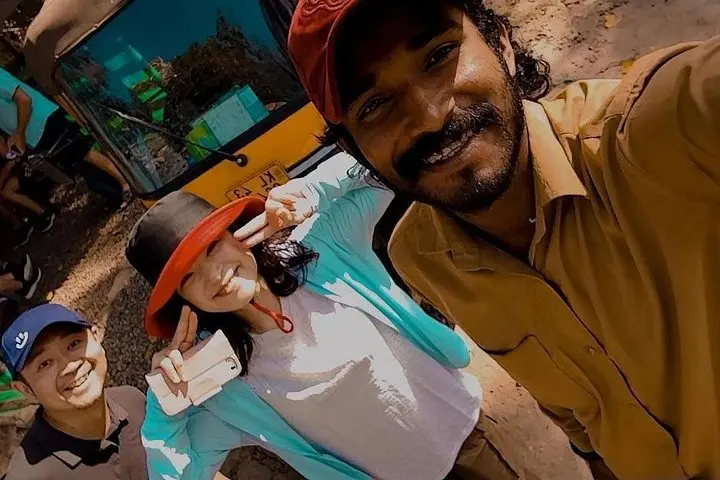
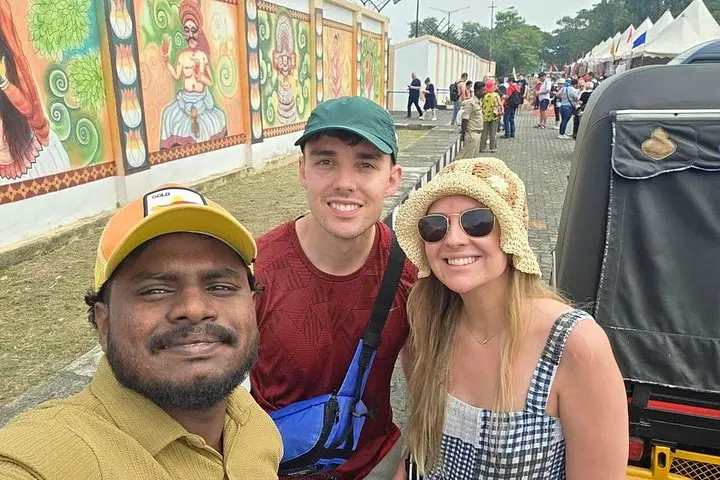
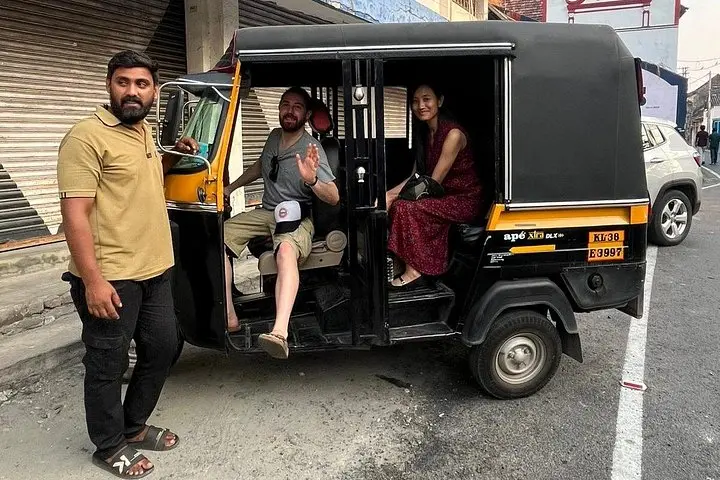
Stepping off the ship, the warm sea air and the rattle of tuk-tuk engines pull you into Fort Kochi’s maze of lanes. The tour begins with the slow, theatrical sweep of the Chinese fishing nets—huge cantilevered frames that lower like mechanical arms into the Arabian Sea—then threads through spice stalls whose aromas push at the edges of your senses.
Stepping off the ship, the warm sea air and the rattle of tuk-tuk engines pull you into Fort Kochi’s maze of lanes. The tour begins with the slow, theatrical sweep of the Chinese fishing nets—huge cantilevered frames that lower like mechanical arms into the Arabian Sea—then threads through spice stalls whose aromas push at the edges of your senses.
Fort Kochi and Mattancherry wear layers of history: Portuguese churches where European explorers once debated empire, Dutch-era cemeteries with weathered stones, and the Paradesi Synagogue tucked on Synagogue Lane. Geologically the coast is a low-lying spit shaped by tidal patterns of the Arabian Sea; culturally it’s a crossroads where Arab, Chinese, Jewish and European traders left tangible traces in architecture, food and markets.
Your guide widens the frame—pointing out the old Dhobi Khana laundry, the carved gables of Mattancherry Palace, and quiet alleys where hand-rolled spices are still sold by weight. The private tuk-tuk format makes tight streets accessible and lets the driver tailor stops for photos, short walks, or a quick curry.
Practical edge: tours run 4–6 hours with cruise-terminal and hotel pickup; mornings or late afternoons avoid midday heat. Expect uneven pavements, periodic crowds near major sites, and many chances to buy spices or souvenirs—carry small bills. Wear comfortable walking shoes, bring sunscreen and a refillable water bottle (bottled water is provided), and confirm pickup details with your operator. The route is wheelchair-accessible in many spots, but cobbled lanes and steps can limit access at some heritage sites.