THE ADVENTURE COLLECTIVE® · Independent discovery and booking for outdoor travel

Stand before a 1,000‑year‑old Hawaiian fishpond, hear stories of voyaging canoes, and ride a trolley through tropical gardens at Kualoa Ranch. This 3–4 hour Kualoa Grown Tour pairs cultural history with easy walking and vivid coastal scenery.
Stand before a 1,000‑year‑old Hawaiian fishpond, hear stories of voyaging canoes, and ride a trolley through tropical gardens at Kualoa Ranch. This 3–4 hour Kualoa Grown Tour pairs cultural history with easy walking and vivid coastal scenery.
A brackish pond stretches like a muted mirror beneath steep emerald ridges; windward trade breezes lift the pandanus and banana leaves and carry stories older than the island’s paved roads. On the Kualoa Grown Tour, a bright green trolley eases along a lane that opens onto Moliʻi — a 153‑acre Hawaiian fishpond whose stone walls still keep time with the tide. The first steps off the trolley are quiet: the pond’s ancient rockwork juts from shallow water, eels and mullet slip past the stones, and guides fold oral history into the measured rhythm of the place.
Verified experiences and guided adventures in the surrounding area.
Operated by Kualoa Ranch · Kaneohe, Hawaii
A brackish pond stretches like a muted mirror beneath steep emerald ridges; windward trade breezes lift the pandanus and banana leaves and carry stories older than the island’s paved roads. On the Kualoa Grown Tour, a bright green trolley eases along a lane that opens onto Moliʻi — a 153‑acre Hawaiian fishpond whose stone walls still keep time with the tide. The first steps off the trolley are quiet: the pond’s ancient rockwork juts from shallow water, eels and mullet slip past the stones, and guides fold oral history into the measured rhythm of the place.
Moliʻi is carbon‑dated at 800–1,000 years old and listed on the National Register of Historic Places. That longevity isn’t accidental; the fishpond is an engineered conversation between people and ocean. Early Hawaiians raised fish behind stone walls that tamed currents and invited specific species to breed — an aquaculture practice sophisticated in both design and communal labor. Geologically, Kualoa sits on the eroded flank of Koʻolau Volcano; the same volcanic folds that make the valley dramatic also supply nutrient‑rich waters and sheltered bays that supported complex coastal systems.
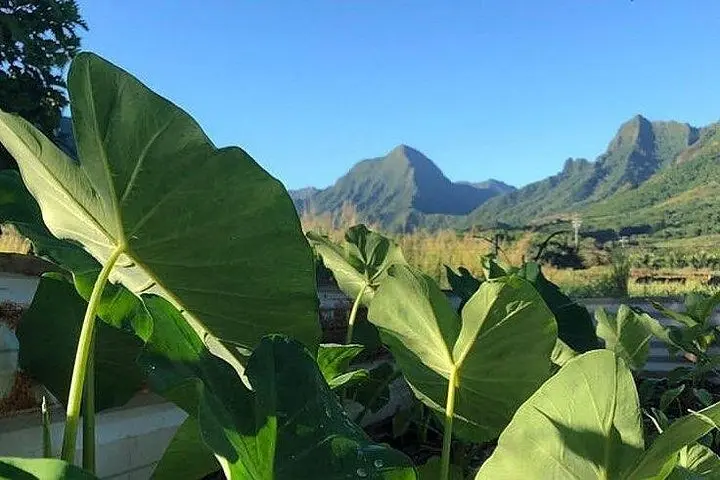
Culturally, the tour is more than a nature stop. Guides link the pond to voyaging canoe traditions and the land‑stewardship systems of ahupuaʻa, explaining how food security once relied on synchronized knowledge of tides, seasons and community. The adjacent tropical gardens showcase species introduced over centuries — taro, breadfruit, citrus — and the trolley lets travelers see both cultivated rows and wild stands without long hikes.
Practicalities are straightforward: the experience runs about 3–4 hours, and physical demand is low — most paths are flat with short boardwalks and well‑built viewing points. Check‑in is at the Kualoa Ranch Ticket Office (49‑560 Kamehameha Hwy) and is required 45 minutes before departure; bring the photo ID that matches your reservation. Storage lockers are available for a small deposit and restrooms are on site. Expect shifting weather — sudden showers can soften the mud near the pond walls, and sun can be intense, so plan for both.
For photographers and history‑minded travelers alike, the pond rewards a slow pace: morning light picks out the lichen on the kuleana stones, while late afternoon flattens the reflection into glass. Respect cultural protocols — don’t climb on the ancient walls, and keep voices low at interpretive stops. Whether you come for the living history, the plantings, or the pure pleasure of a coastal valley that still breathes with human history, the Kualoa Grown Tour is a compact, accessible way to see how Hawaiian ingenuity shaped the shoreline and continues to inform stewardship today.
The Kualoa Grown Tour lasts approximately 3–4 hours and includes trolley transport and guided stops at the fishpond and gardens.
Much of the site has level paths and boardwalks, but accessibility may be limited in some viewing areas; contact Kualoa Ranch in advance to discuss specific needs.
Yes — the tour is suitable for families. Infants must sit on an adult’s lap and family‑friendly programming is provided.
No — the pond is an active, managed cultural site and swimming or fishing is not permitted to protect native practices and ongoing aquaculture.
Bring sun protection year‑round and a lightweight rain layer during wetter months; closed‑toe shoes are recommended if ground is muddy.
Service animals are permitted, but pets are not; notify the operator if you require special accommodations.
Kualoa Ranch operates guided outdoor trips and adventures with an emphasis on safety, stewardship, and memorable experiences.
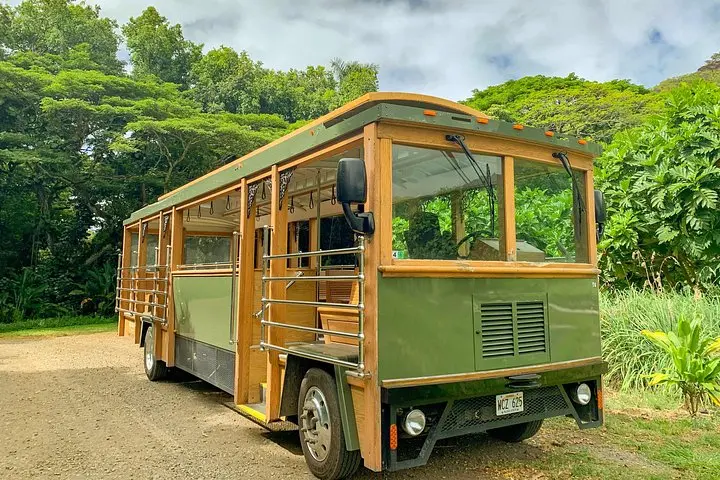
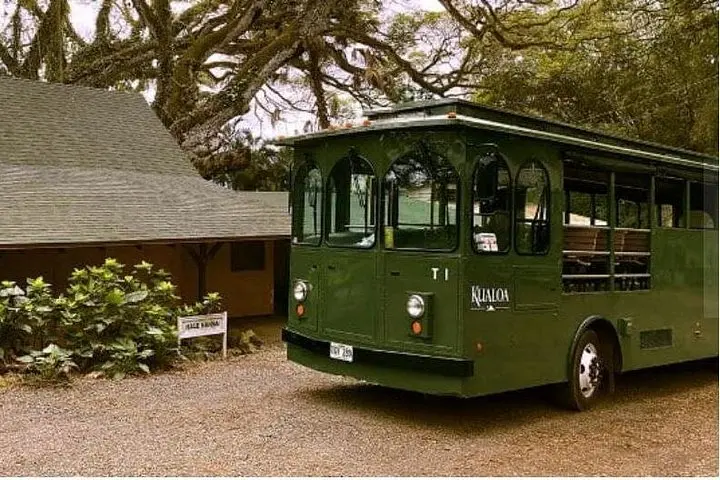
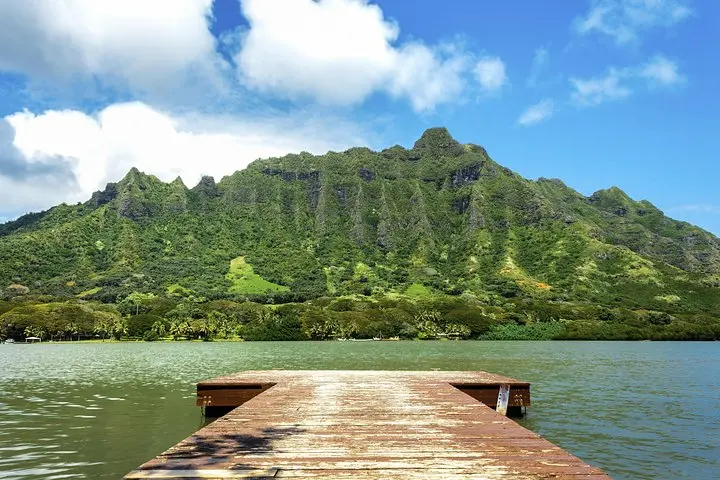
A brackish pond stretches like a muted mirror beneath steep emerald ridges; windward trade breezes lift the pandanus and banana leaves and carry stories older than the island’s paved roads. On the Kualoa Grown Tour, a bright green trolley eases along a lane that opens onto Moliʻi — a 153‑acre Hawaiian fishpond whose stone walls still keep time with the tide. The first steps off the trolley are quiet: the pond’s ancient rockwork juts from shallow water, eels and mullet slip past the stones, and guides fold oral history into the measured rhythm of the place.
A brackish pond stretches like a muted mirror beneath steep emerald ridges; windward trade breezes lift the pandanus and banana leaves and carry stories older than the island’s paved roads. On the Kualoa Grown Tour, a bright green trolley eases along a lane that opens onto Moliʻi — a 153‑acre Hawaiian fishpond whose stone walls still keep time with the tide. The first steps off the trolley are quiet: the pond’s ancient rockwork juts from shallow water, eels and mullet slip past the stones, and guides fold oral history into the measured rhythm of the place.
Moliʻi is carbon‑dated at 800–1,000 years old and listed on the National Register of Historic Places. That longevity isn’t accidental; the fishpond is an engineered conversation between people and ocean. Early Hawaiians raised fish behind stone walls that tamed currents and invited specific species to breed — an aquaculture practice sophisticated in both design and communal labor. Geologically, Kualoa sits on the eroded flank of Koʻolau Volcano; the same volcanic folds that make the valley dramatic also supply nutrient‑rich waters and sheltered bays that supported complex coastal systems.
Culturally, the tour is more than a nature stop. Guides link the pond to voyaging canoe traditions and the land‑stewardship systems of ahupuaʻa, explaining how food security once relied on synchronized knowledge of tides, seasons and community. The adjacent tropical gardens showcase species introduced over centuries — taro, breadfruit, citrus — and the trolley lets travelers see both cultivated rows and wild stands without long hikes.
Practicalities are straightforward: the experience runs about 3–4 hours, and physical demand is low — most paths are flat with short boardwalks and well‑built viewing points. Check‑in is at the Kualoa Ranch Ticket Office (49‑560 Kamehameha Hwy) and is required 45 minutes before departure; bring the photo ID that matches your reservation. Storage lockers are available for a small deposit and restrooms are on site. Expect shifting weather — sudden showers can soften the mud near the pond walls, and sun can be intense, so plan for both.
For photographers and history‑minded travelers alike, the pond rewards a slow pace: morning light picks out the lichen on the kuleana stones, while late afternoon flattens the reflection into glass. Respect cultural protocols — don’t climb on the ancient walls, and keep voices low at interpretive stops. Whether you come for the living history, the plantings, or the pure pleasure of a coastal valley that still breathes with human history, the Kualoa Grown Tour is a compact, accessible way to see how Hawaiian ingenuity shaped the shoreline and continues to inform stewardship today.