THE ADVENTURE COLLECTIVE® · Independent discovery and booking for outdoor travel

Ride an electric MTB along Lagos’s Fisherman Trail to Ponta da Piedade, passing a medieval castle, sea caves, and panoramic cliff viewpoints. This 2.5-hour guided tour blends easy e-bike climbs with coastal geology and local maritime history.
Ride an electric MTB along Lagos’s Fisherman Trail to Ponta da Piedade, passing a medieval castle, sea caves, and panoramic cliff viewpoints. This 2.5-hour guided tour blends easy e-bike climbs with coastal geology and local maritime history.
Morning in Lagos begins with the soft hum of electric motors and the Atlantic throwing light over the cliffs. Riders push off along the Fisherman Trail, tires crunching on compacted sandstone, passing the crenellated walls of the medieval castle and the low, squat lighthouse that has watched fishing boats for centuries. At Ponta da Piedade, sea-sculpted spires and grotto mouths gape like doors to a hidden ocean, and the wind seems to urge you closer to the rail.
Verified experiences and guided adventures in the surrounding area.
Operated by Portugal E-Bikes · Lagos, Faro
Morning in Lagos begins with the soft hum of electric motors and the Atlantic throwing light over the cliffs. Riders push off along the Fisherman Trail, tires crunching on compacted sandstone, passing the crenellated walls of the medieval castle and the low, squat lighthouse that has watched fishing boats for centuries. At Ponta da Piedade, sea-sculpted spires and grotto mouths gape like doors to a hidden ocean, and the wind seems to urge you closer to the rail.
This coastline is a classroom of geology—layered limestone and marl, eroded into arches, stacks, and narrow channels. Lagos itself is steeped in maritime history: a launching point during Portugal’s Age of Discovery and a working harbor where traditional fishing culture persists alongside tourist cafes. Local guides tie those stories into the route, pointing out fortifications, old quays, and the small coves where fishermen still dry nets.
The guided tour runs about 2.5 hours over mixed paved and compact-trail terrain with short rocky sections and several lookout stops. Electric-assist bikes make the coastal climbs manageable for most riders; the guide adjusts pace and route for group ability and weather. Practical notes: helmets are provided and closed-toe shoes are required; bring water, sunscreen, and a light wind layer—sea spray and afternoon gusts can cool you quickly. Arrive 15 minutes early for a safety briefing and bike fit, follow the guide’s directions on cliff approaches, and expect a mix of easy pedaling and short, scenic walks at viewpoints.
Yes—helmets are supplied and must be worn for the duration of the tour.
Not recommended for guests over 100 kg (220 lb) or over approximately 75 years; booking asks for age and height to confirm suitability.
Operators may change or cancel departures due to weather; full refund is available if cancelled at least 24 hours prior or if the tour is cancelled for weather reasons.
E-bikes provide assistance so basic fitness is fine; riders should be able to pedal for short stretches and stand on pedals during climbs.
Portugal E-Bikes operates guided outdoor trips and adventures with an emphasis on safety, stewardship, and memorable experiences.
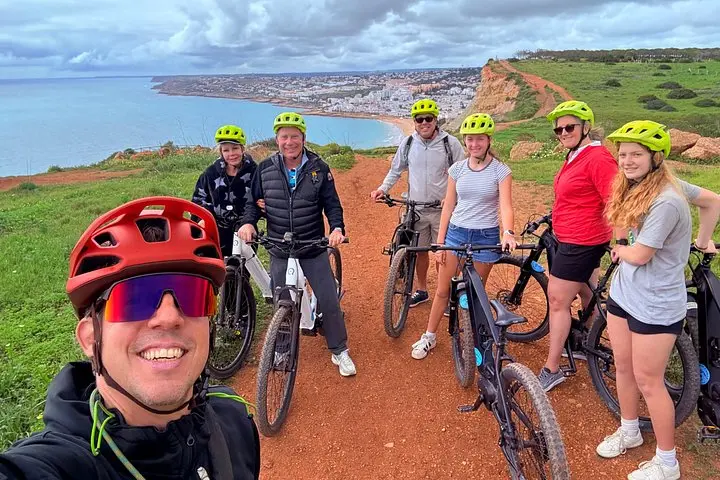
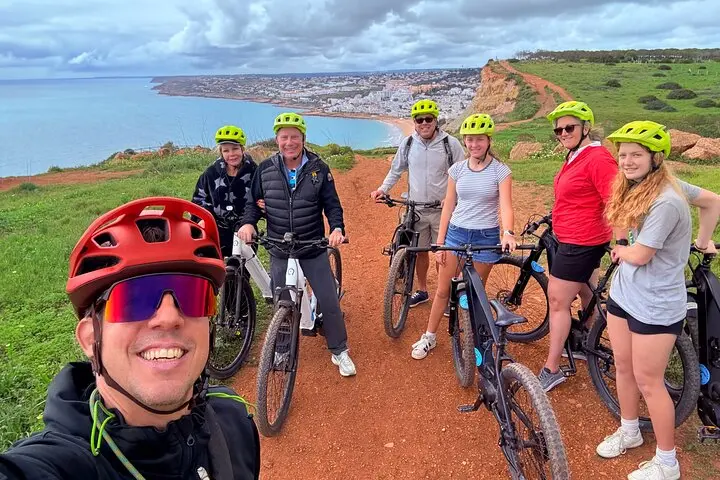
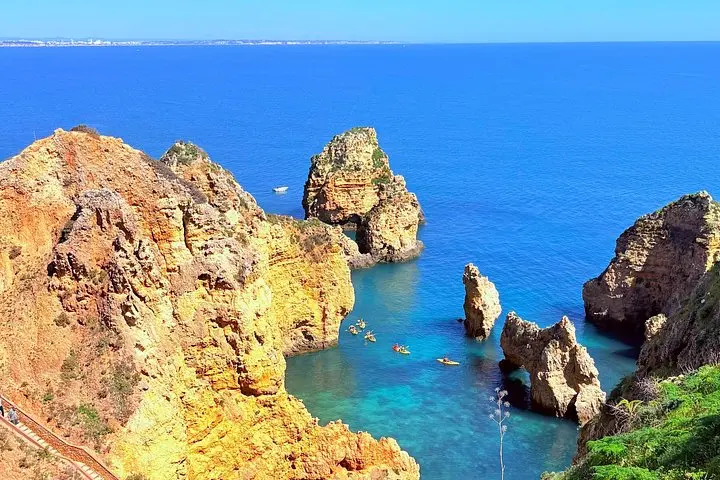
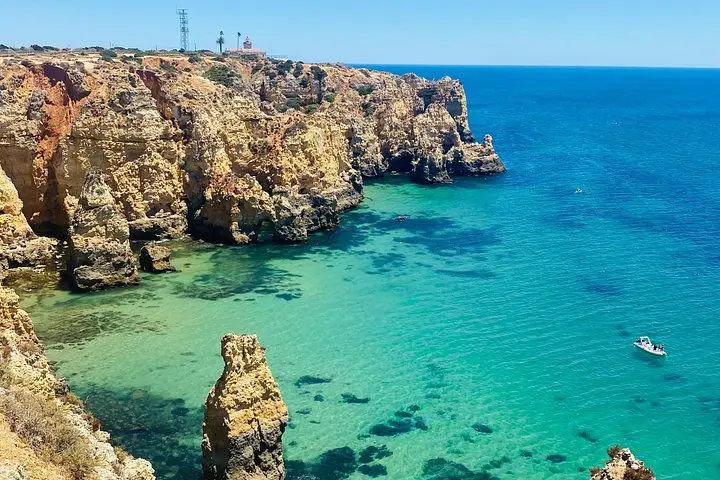
Morning in Lagos begins with the soft hum of electric motors and the Atlantic throwing light over the cliffs. Riders push off along the Fisherman Trail, tires crunching on compacted sandstone, passing the crenellated walls of the medieval castle and the low, squat lighthouse that has watched fishing boats for centuries. At Ponta da Piedade, sea-sculpted spires and grotto mouths gape like doors to a hidden ocean, and the wind seems to urge you closer to the rail.
Morning in Lagos begins with the soft hum of electric motors and the Atlantic throwing light over the cliffs. Riders push off along the Fisherman Trail, tires crunching on compacted sandstone, passing the crenellated walls of the medieval castle and the low, squat lighthouse that has watched fishing boats for centuries. At Ponta da Piedade, sea-sculpted spires and grotto mouths gape like doors to a hidden ocean, and the wind seems to urge you closer to the rail.
This coastline is a classroom of geology—layered limestone and marl, eroded into arches, stacks, and narrow channels. Lagos itself is steeped in maritime history: a launching point during Portugal’s Age of Discovery and a working harbor where traditional fishing culture persists alongside tourist cafes. Local guides tie those stories into the route, pointing out fortifications, old quays, and the small coves where fishermen still dry nets.
The guided tour runs about 2.5 hours over mixed paved and compact-trail terrain with short rocky sections and several lookout stops. Electric-assist bikes make the coastal climbs manageable for most riders; the guide adjusts pace and route for group ability and weather. Practical notes: helmets are provided and closed-toe shoes are required; bring water, sunscreen, and a light wind layer—sea spray and afternoon gusts can cool you quickly. Arrive 15 minutes early for a safety briefing and bike fit, follow the guide’s directions on cliff approaches, and expect a mix of easy pedaling and short, scenic walks at viewpoints.