THE ADVENTURE COLLECTIVE® · Independent discovery and booking for outdoor travel

Visit Lhasa’s Potala Palace, Jokhang Temple and living monasteries, then cross Nagenla Pass to sunrise at Namtso Lake. This 5-night tour includes the Tibet Travel Permit and mixes cultural immersion with high-altitude landscapes.
Visit Lhasa’s Potala Palace, Jokhang Temple and living monasteries, then cross Nagenla Pass to sunrise at Namtso Lake. This 5-night tour includes the Tibet Travel Permit and mixes cultural immersion with high-altitude landscapes.
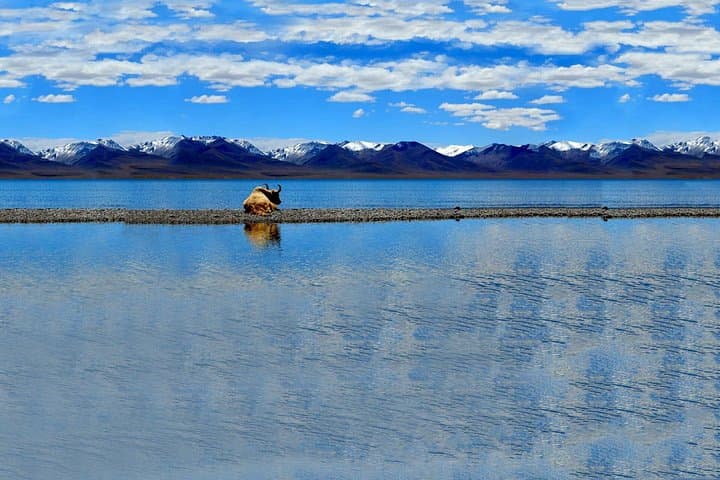
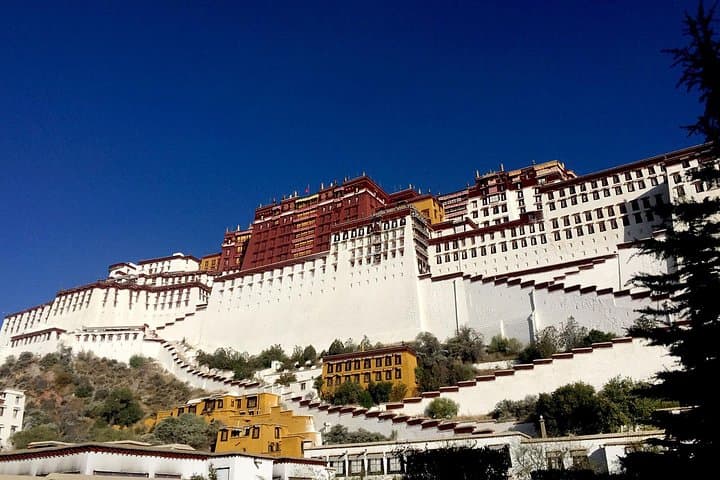
You arrive in Lhasa under thin, cold air; prayer flags snap like small flags of color against an immense sky. The city’s low-slung buildings and the Potala’s white-and-red mass sit at the edge of the Tibetan Plateau, while a road north climbs toward a glassy bowl of water—Namtso—whose surface dares you to feel the scale of this high country.
Verified experiences and guided adventures in the surrounding area.
Operated by Century Holiday · Lhasa, Tibet Autonomous Region
You arrive in Lhasa under thin, cold air; prayer flags snap like small flags of color against an immense sky. The city’s low-slung buildings and the Potala’s white-and-red mass sit at the edge of the Tibetan Plateau, while a road north climbs toward a glassy bowl of water—Namtso—whose surface dares you to feel the scale of this high country.
This five-night itinerary threads Lhasa’s holy sites—the Potala Palace, Jokhang Temple and the Barkhor circuit—with monastery life at Drepung and Sera, then crosses high pasture and Nagenla Pass (~5,000 m) to reach Namtso (≈4,718 m). Geologically the lake is an endorheic salt basin carved by plateau uplift; culturally it is one of Tibetan Buddhism’s most sacred lakes, a place of pilgrimage and solitary sunrise rituals.
Expect basic comforts: city hotels in Lhasa offer western-style rooms but the standards differ from China’s major metropolises; at Namtso, accommodation can be tented or a simple guesthouse with limited hot water. Weather shifts fast—sunny mornings can become wind-swept and cold by afternoon.
Practical guidance: allow 20+ days before travel for the Tibet Travel Permit application handled by your operator, carry layers for 4,500–5,000 m altitudes, and hydrate to mitigate acute mountain sickness. Airport shuttle schedules are fixed; plan baggage and pick-up details in advance. This tour balances cultural depth and high-altitude scenery—prepare responsibly and the plateau delivers clarity and quiet that’s hard to forget.
Yes—foreign visitors require a Tibet Travel Permit (TTP) in addition to a Chinese visa; this tour includes the TTP application handled by the local operator.
The itinerary involves long coach transfers and high elevations but minimal technical activity; it’s suitable for most travelers in reasonable health with acclimatization.
Hotels in Lhasa are 3–4 star by local standards (often slightly below mainland China equivalents); at Namtso expect tented or basic guesthouse lodging with limited hot water.
Travel from Kathmandu is not recommended—the operator advises against it because securing a Tibet group visa via Nepal is often difficult and time-consuming.
Century Holiday operates guided outdoor trips and adventures with an emphasis on safety, stewardship, and memorable experiences.

You arrive in Lhasa under thin, cold air; prayer flags snap like small flags of color against an immense sky. The city’s low-slung buildings and the Potala’s white-and-red mass sit at the edge of the Tibetan Plateau, while a road north climbs toward a glassy bowl of water—Namtso—whose surface dares you to feel the scale of this high country.
You arrive in Lhasa under thin, cold air; prayer flags snap like small flags of color against an immense sky. The city’s low-slung buildings and the Potala’s white-and-red mass sit at the edge of the Tibetan Plateau, while a road north climbs toward a glassy bowl of water—Namtso—whose surface dares you to feel the scale of this high country.
This five-night itinerary threads Lhasa’s holy sites—the Potala Palace, Jokhang Temple and the Barkhor circuit—with monastery life at Drepung and Sera, then crosses high pasture and Nagenla Pass (~5,000 m) to reach Namtso (≈4,718 m). Geologically the lake is an endorheic salt basin carved by plateau uplift; culturally it is one of Tibetan Buddhism’s most sacred lakes, a place of pilgrimage and solitary sunrise rituals.
Expect basic comforts: city hotels in Lhasa offer western-style rooms but the standards differ from China’s major metropolises; at Namtso, accommodation can be tented or a simple guesthouse with limited hot water. Weather shifts fast—sunny mornings can become wind-swept and cold by afternoon.
Practical guidance: allow 20+ days before travel for the Tibet Travel Permit application handled by your operator, carry layers for 4,500–5,000 m altitudes, and hydrate to mitigate acute mountain sickness. Airport shuttle schedules are fixed; plan baggage and pick-up details in advance. This tour balances cultural depth and high-altitude scenery—prepare responsibly and the plateau delivers clarity and quiet that’s hard to forget.