THE ADVENTURE COLLECTIVE® · Independent discovery and booking for outdoor travel
Walk the ramparts of North America’s largest reconstructed 18th-century French town and follow a coastal lighthouse trail that frames the Gulf of St. Lawrence. This guided 4–5 hour tour combines living-history demonstrations with sweeping ocean views and accessible seaside walks.
Walk the ramparts of North America’s largest reconstructed 18th-century French town and follow a coastal lighthouse trail that frames the Gulf of St. Lawrence. This guided 4–5 hour tour combines living-history demonstrations with sweeping ocean views and accessible seaside walks.
A salt-skimmed wind meets the stone wall as visitors step through the gate at Fortress of Louisbourg, the air carrying the faint tang of the Atlantic and coal-smoke echoes from the 18th century. The tour unfolds across broad parade grounds and narrow reconstructed streets where costumed interpreters hammer, bake, and drill — history performed rather than explained.
Verified experiences and guided adventures in the surrounding area.
Operated by HIGHLAND TOURS · Louisbourg, Nova Scotia
A salt-skimmed wind meets the stone wall as visitors step through the gate at Fortress of Louisbourg, the air carrying the faint tang of the Atlantic and coal-smoke echoes from the 18th century. The tour unfolds across broad parade grounds and narrow reconstructed streets where costumed interpreters hammer, bake, and drill — history performed rather than explained.
Built and rebuilt on Cape Breton’s rocky shore, Louisbourg occupies a strategic sweep of coastline once contested by French and British imperial ambitions. The present site is North America’s largest reconstructed 18th-century French town; its thick masonry and earthworks trace geology shaped by glaciation and ocean abrasion, where basalt and sandstone meet gullied coves. Nearby, the 1923 concrete lighthouse on Lighthouse Point punctuates views across the Gulf of St. Lawrence and connects maritime culture to eras of coal export and rail lines now remembered at the Sydney & Louisbourg Railway Museum.
Practical details matter here: the guided itinerary runs roughly 4–5 hours and includes outdoor walking on uneven cobbles, grassy ramparts and short coastal trails. Wear sturdy footwear and layer for wind and spray; bring a refillable water bottle and a light rain shell. Morning light reduces glare on ocean vistas and makes interpreter demonstrations easier to follow. Allow extra time to explore the lighthouse trail and the small museum exhibits. Respect living-history protocols — photography during demonstrations can be restricted — and stay on marked paths to protect archaeological remains and coastal vegetation. The result is a compact, sensory history lesson with sweeping seascapes and hands-on moments that make the past feel immediate and weathered by the same winds you’ll feel on the ramparts.
The guided tour runs approximately 4–5 hours (270 minutes) and includes time at the fortress, lighthouse viewpoints, and nearby museum stops.
Yes—infants and small children can use a stroller on many paths, but some cobbled streets and ramparts are uneven and may require carrying or folding a stroller.
Admission fees are listed as included under the tour’s inclusions; check the booking page for confirmation and any seasonal changes.
Public transportation options are available nearby, but many travelers stay in Sydney and travel by car or shuttle for the 40–50 minute drive.
HIGHLAND TOURS operates guided outdoor trips and adventures with an emphasis on safety, stewardship, and memorable experiences.
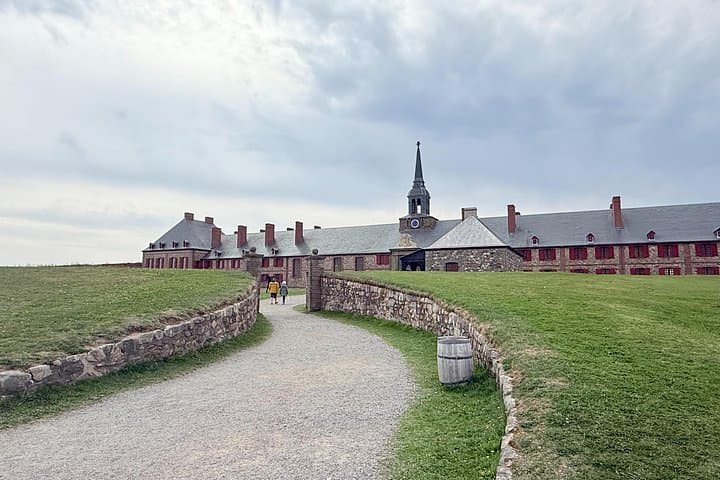
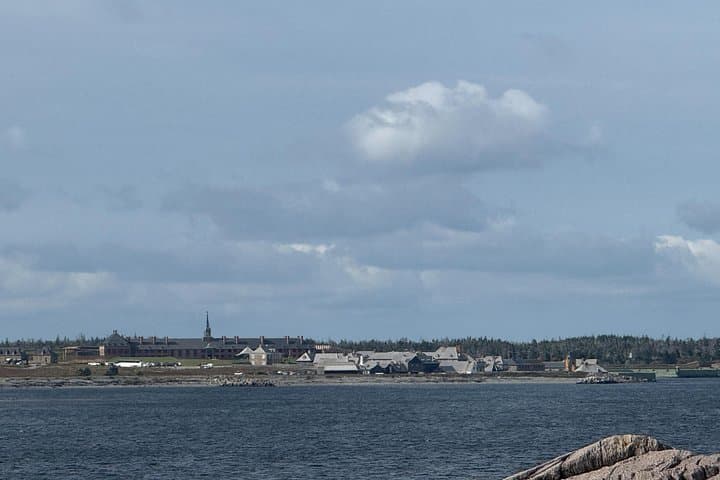
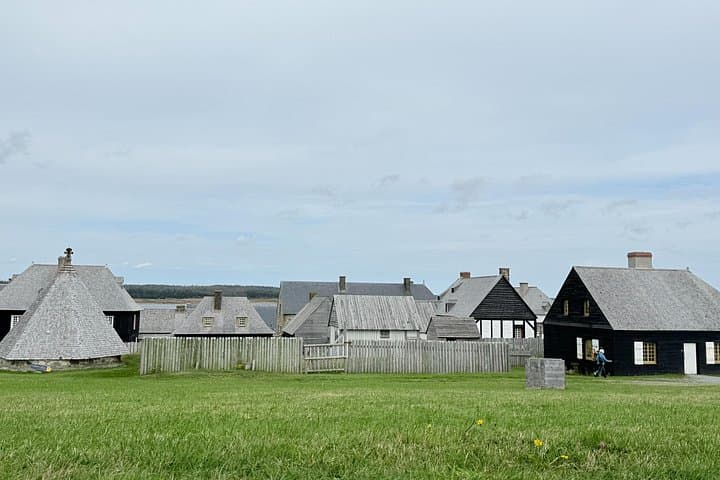
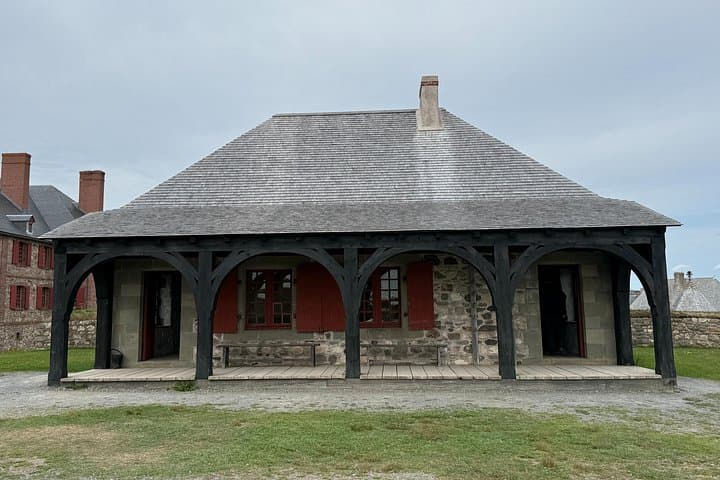
A salt-skimmed wind meets the stone wall as visitors step through the gate at Fortress of Louisbourg, the air carrying the faint tang of the Atlantic and coal-smoke echoes from the 18th century. The tour unfolds across broad parade grounds and narrow reconstructed streets where costumed interpreters hammer, bake, and drill — history performed rather than explained.
A salt-skimmed wind meets the stone wall as visitors step through the gate at Fortress of Louisbourg, the air carrying the faint tang of the Atlantic and coal-smoke echoes from the 18th century. The tour unfolds across broad parade grounds and narrow reconstructed streets where costumed interpreters hammer, bake, and drill — history performed rather than explained.
Built and rebuilt on Cape Breton’s rocky shore, Louisbourg occupies a strategic sweep of coastline once contested by French and British imperial ambitions. The present site is North America’s largest reconstructed 18th-century French town; its thick masonry and earthworks trace geology shaped by glaciation and ocean abrasion, where basalt and sandstone meet gullied coves. Nearby, the 1923 concrete lighthouse on Lighthouse Point punctuates views across the Gulf of St. Lawrence and connects maritime culture to eras of coal export and rail lines now remembered at the Sydney & Louisbourg Railway Museum.
Practical details matter here: the guided itinerary runs roughly 4–5 hours and includes outdoor walking on uneven cobbles, grassy ramparts and short coastal trails. Wear sturdy footwear and layer for wind and spray; bring a refillable water bottle and a light rain shell. Morning light reduces glare on ocean vistas and makes interpreter demonstrations easier to follow. Allow extra time to explore the lighthouse trail and the small museum exhibits. Respect living-history protocols — photography during demonstrations can be restricted — and stay on marked paths to protect archaeological remains and coastal vegetation. The result is a compact, sensory history lesson with sweeping seascapes and hands-on moments that make the past feel immediate and weathered by the same winds you’ll feel on the ramparts.
