THE ADVENTURE COLLECTIVE® · Independent discovery and booking for outdoor travel

Spend a full day exploring Luxor’s East Bank, visiting Karnak’s Hypostyle Hall and the intimate Luxor Temple with a private guide. This eight-hour tour includes hotel pickup, admissions, and straightforward walking between sites.
Spend a full day exploring Luxor’s East Bank, visiting Karnak’s Hypostyle Hall and the intimate Luxor Temple with a private guide. This eight-hour tour includes hotel pickup, admissions, and straightforward walking between sites.
The morning light in Luxor cuts across the Nile and settles on sandstone columns, bathing Karnak’s Hypostyle Hall in a hard, ochre glow. You meet your guide at hotel pickup and the city’s pulse — motorbikes, market calls, and river traffic — quickly falls away as you step into four millennia of stone and story.
Verified experiences and guided adventures in the surrounding area.
Operated by Egypt Wonderful Tours · Luxor, Luxor Governorate
The morning light in Luxor cuts across the Nile and settles on sandstone columns, bathing Karnak’s Hypostyle Hall in a hard, ochre glow. You meet your guide at hotel pickup and the city’s pulse — motorbikes, market calls, and river traffic — quickly falls away as you step into four millennia of stone and story.
Karnak grew over centuries as successive pharaohs added pylons, obelisks and the 134-column Hypostyle Hall. A short drive brings you to Luxor Temple, later in origin but no less dramatic, where reliefs celebrate Ramesses II and the rituals that tied city life to the river’s cycle. The East Bank was the administrative and ceremonial heart of ancient Thebes; its temples marked the sunrise side of the Nile, where palaces and processional routes reinforced royal power.
Geologically the monuments rise from Nile silt and local sandstone quarried nearby, their colors shifting with the sun. Culturally, the area remains a living place: local vendors, mosque calls, and rooftop cafés thread modern life through ancient stone.
Practically, expect an 8-hour privately guided day with included admissions and hotel pickup. Walks are flat but involve uneven stone, steps and sun exposure; plan for 6–10 km of easy walking between stops and breaks. Bring water, sun protection and comfortable shoes. Cameras are welcome, though some interiors limit flash and tripods. Aim for a morning start or late afternoon to avoid the peak heat; quiet, cooler hours make inscriptions easier to read and photos clearer.
This tour is straightforward, historically dense and ideal for travelers seeking direct contact with Egypt’s imperial past without rough trekking — just focused exploration where the past still speaks through stone.
Yes — the itinerary specifies that admissions to Karnak and Luxor Temple are included in this tour.
Yes — the tour includes pickup from Luxor hotels according to the itinerary and booking questions.
The tour is rated easy and suitable for most fitness levels, but temple grounds have uneven stone and steps; those with limited mobility should check accessibility and notify the operator in advance.
Photography is generally allowed, but flash, tripods and certain areas may be restricted—follow your guide and posted signs.
Egypt Wonderful Tours operates guided outdoor trips and adventures with an emphasis on safety, stewardship, and memorable experiences.
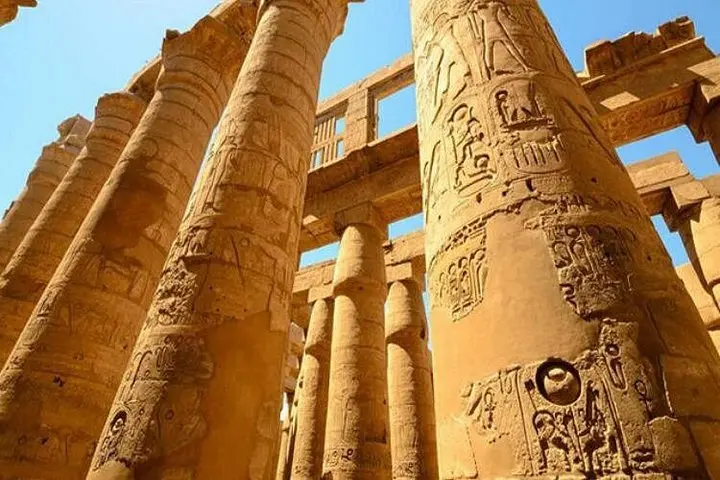
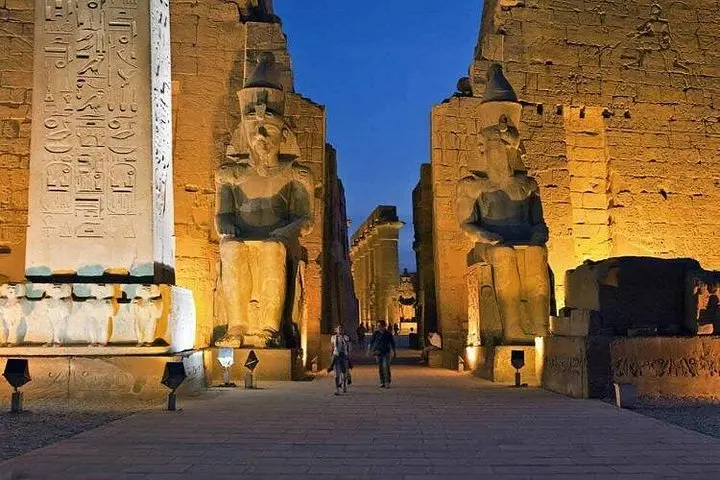
The morning light in Luxor cuts across the Nile and settles on sandstone columns, bathing Karnak’s Hypostyle Hall in a hard, ochre glow. You meet your guide at hotel pickup and the city’s pulse — motorbikes, market calls, and river traffic — quickly falls away as you step into four millennia of stone and story.
The morning light in Luxor cuts across the Nile and settles on sandstone columns, bathing Karnak’s Hypostyle Hall in a hard, ochre glow. You meet your guide at hotel pickup and the city’s pulse — motorbikes, market calls, and river traffic — quickly falls away as you step into four millennia of stone and story.
Karnak grew over centuries as successive pharaohs added pylons, obelisks and the 134-column Hypostyle Hall. A short drive brings you to Luxor Temple, later in origin but no less dramatic, where reliefs celebrate Ramesses II and the rituals that tied city life to the river’s cycle. The East Bank was the administrative and ceremonial heart of ancient Thebes; its temples marked the sunrise side of the Nile, where palaces and processional routes reinforced royal power.
Geologically the monuments rise from Nile silt and local sandstone quarried nearby, their colors shifting with the sun. Culturally, the area remains a living place: local vendors, mosque calls, and rooftop cafés thread modern life through ancient stone.
Practically, expect an 8-hour privately guided day with included admissions and hotel pickup. Walks are flat but involve uneven stone, steps and sun exposure; plan for 6–10 km of easy walking between stops and breaks. Bring water, sun protection and comfortable shoes. Cameras are welcome, though some interiors limit flash and tripods. Aim for a morning start or late afternoon to avoid the peak heat; quiet, cooler hours make inscriptions easier to read and photos clearer.
This tour is straightforward, historically dense and ideal for travelers seeking direct contact with Egypt’s imperial past without rough trekking — just focused exploration where the past still speaks through stone.