THE ADVENTURE COLLECTIVE® · Independent discovery and booking for outdoor travel

Cover more Madrid in less time aboard an electric bike—glide past Cibeles, Puerta de Alcalá and the Santiago Bernabéu with a bilingual local guide. This three-hour tour balances relaxed pedaling with informed stops for photos and history.
Cover more Madrid in less time aboard an electric bike—glide past Cibeles, Puerta de Alcalá and the Santiago Bernabéu with a bilingual local guide. This three-hour tour balances relaxed pedaling with informed stops for photos and history.
The city unfolds under two wheels: wide boulevards hum with traffic, orange trees scent the air, and the Santiago Bernabéu rises like a modern landmark on the northern skyline. On this three-hour electric bike tour, the city’s main arteries—Cibeles, Puerta de Alcalá and the shady approaches to El Retiro—move past at an easy pace, the motor nudging you up gentle grades while a local guide stitches the route together.
Verified experiences and guided adventures in the surrounding area.
Operated by Wonder Tours · Madrid, Madrid
The city unfolds under two wheels: wide boulevards hum with traffic, orange trees scent the air, and the Santiago Bernabéu rises like a modern landmark on the northern skyline. On this three-hour electric bike tour, the city’s main arteries—Cibeles, Puerta de Alcalá and the shady approaches to El Retiro—move past at an easy pace, the motor nudging you up gentle grades while a local guide stitches the route together.
Madrid’s streets tell layered stories. Paseo del Prado carries 18th-century urban planning and the Prado Museum’s art-filled gravity; Gran Vía echoes early-20th-century ambition; Santiago Bernabéu embodies post-war football culture and stadium architecture. Beneath the pavement the geology is flat, with Madrid built on a plateau of Miocene sediments—easy terrain for cycling and generous sightlines across plazas and monuments.
Cultural notes arrive in quick bursts: the ritual of midday tapas, the city’s coffee culture, and how football shapes local identity. Guides often point out quieter corners—the rose garden in El Retiro or a ceramic-faced building on Calle de Alcalá—small detours that feel like local privileges.
Practical guidance: rides average 3 hours and cover several kilometers with frequent stops for photos and narration. Electric assistance makes the route accessible for most fitness levels; wear closed-toe shoes, bring a refillable water bottle, and layer for sudden shade-to-sun transitions. Helmets and rain ponchos are supplied; expect a relaxed pace but keep pace with the group on busy avenues. Morning or late-afternoon departures provide the best light and cooler temperatures for cycling through Madrid’s living streets.
No—electric assist reduces effort and guides are experienced; participants should be comfortable balancing and pedaling but no special skills are needed.
Yes, helmets are supplied and their use is typically mandatory for safety.
Meeting and finishing points are centrally located—confirm the exact plaza or meeting landmark on your booking confirmation as operators may vary start locations.
Children can join but must be accompanied by an adult; check age and height restrictions with the operator in advance.
Wonder Tours operates guided outdoor trips and adventures with an emphasis on safety, stewardship, and memorable experiences.
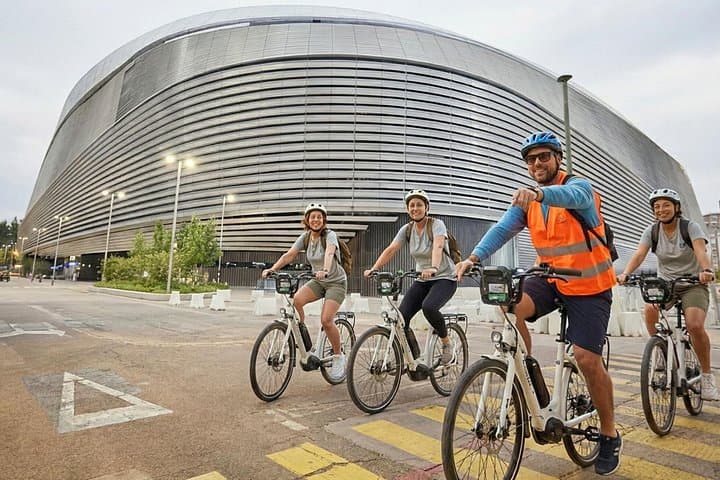


The city unfolds under two wheels: wide boulevards hum with traffic, orange trees scent the air, and the Santiago Bernabéu rises like a modern landmark on the northern skyline. On this three-hour electric bike tour, the city’s main arteries—Cibeles, Puerta de Alcalá and the shady approaches to El Retiro—move past at an easy pace, the motor nudging you up gentle grades while a local guide stitches the route together.
The city unfolds under two wheels: wide boulevards hum with traffic, orange trees scent the air, and the Santiago Bernabéu rises like a modern landmark on the northern skyline. On this three-hour electric bike tour, the city’s main arteries—Cibeles, Puerta de Alcalá and the shady approaches to El Retiro—move past at an easy pace, the motor nudging you up gentle grades while a local guide stitches the route together.
Madrid’s streets tell layered stories. Paseo del Prado carries 18th-century urban planning and the Prado Museum’s art-filled gravity; Gran Vía echoes early-20th-century ambition; Santiago Bernabéu embodies post-war football culture and stadium architecture. Beneath the pavement the geology is flat, with Madrid built on a plateau of Miocene sediments—easy terrain for cycling and generous sightlines across plazas and monuments.
Cultural notes arrive in quick bursts: the ritual of midday tapas, the city’s coffee culture, and how football shapes local identity. Guides often point out quieter corners—the rose garden in El Retiro or a ceramic-faced building on Calle de Alcalá—small detours that feel like local privileges.
Practical guidance: rides average 3 hours and cover several kilometers with frequent stops for photos and narration. Electric assistance makes the route accessible for most fitness levels; wear closed-toe shoes, bring a refillable water bottle, and layer for sudden shade-to-sun transitions. Helmets and rain ponchos are supplied; expect a relaxed pace but keep pace with the group on busy avenues. Morning or late-afternoon departures provide the best light and cooler temperatures for cycling through Madrid’s living streets.