THE ADVENTURE COLLECTIVE® · Independent discovery and booking for outdoor travel

Three days from Hanoi take you through the White Thai valleys of Mai Chau and the limestone ridges of Pu Luong. Expect village homestays, waterfall swims, long terrace views and full‑day treks on variable dirt trails.
Three days from Hanoi take you through the White Thai valleys of Mai Chau and the limestone ridges of Pu Luong. Expect village homestays, waterfall swims, long terrace views and full‑day treks on variable dirt trails.
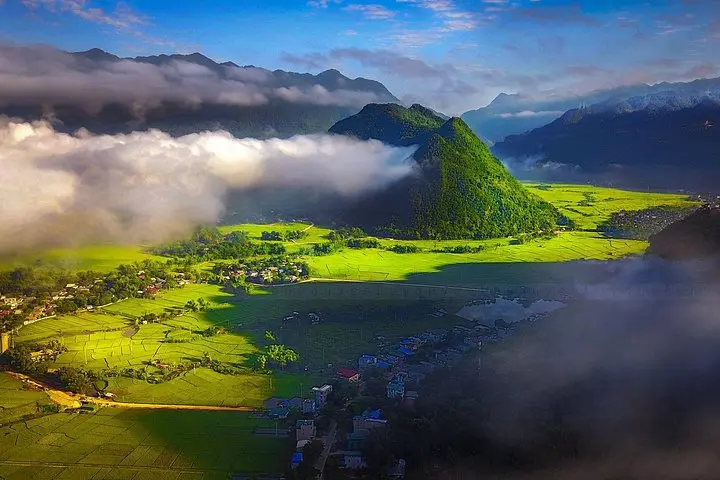
Morning mist lifts off terraces as the minivan winds six hours from Hanoi into a landscape that changes from lowland paddy to steep limestone ridges. By mid-afternoon the tour drops you into Mai Chau’s white‑Thai stilt houses: a short cycle along village lanes, a cup of local tea, and the quiet of a valley that still runs on walking pace.
Verified experiences and guided adventures in the surrounding area.
Operated by Eco Travel Go Green VietNam · Mai Chau, Hoa Binh Province
Morning mist lifts off terraces as the minivan winds six hours from Hanoi into a landscape that changes from lowland paddy to steep limestone ridges. By mid-afternoon the tour drops you into Mai Chau’s white‑Thai stilt houses: a short cycle along village lanes, a cup of local tea, and the quiet of a valley that still runs on walking pace.
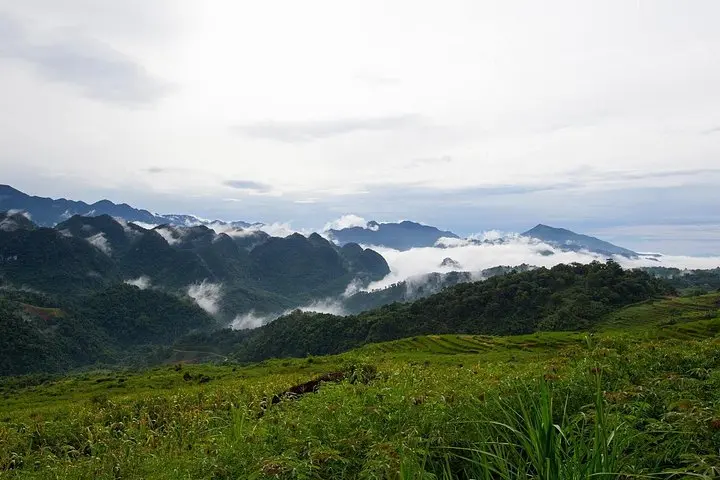
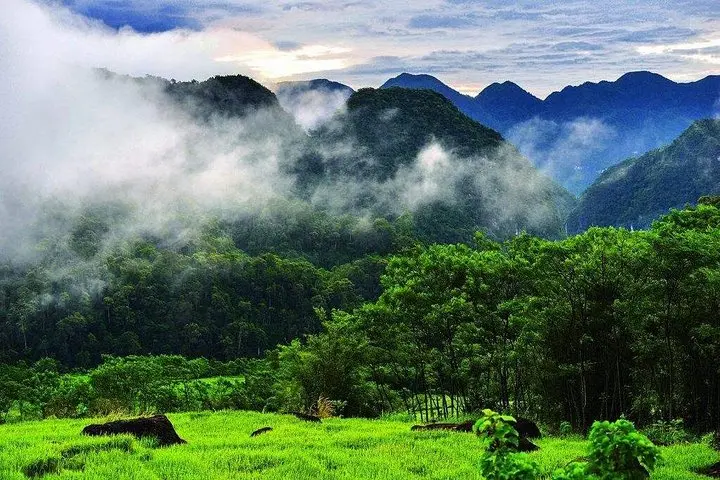
The route threads through two distinctive landscapes: Mai Chau’s cultivated valley—centuries of wet‑rice engineering by Thai communities—and Pu Luong Nature Reserve, where karst outcrops and mixed evergreen forest create sudden cliffs and hidden streams. Pu Luong’s geology is limestone and shale, carved into terraces and small caves; human history here centers on upland ethnic groups who built stilt architecture and sophisticated brocade traditions still visible at village workshops and the Pho Doan market.
Expect guided day treks up narrow dirt trails, waterfall swims at Hieu, and viewpoints over infinity rice terraces. Accommodations alternate between homestay comfort in Mai Chau and the more remote Pu Luong Eco Garden; meals emphasize local mountain cuisine and garden‑to‑table lunches.
Practical notes: trails can be slippery after rain and include steep descents and uneven footpaths—good shoes and trekking poles help. Carry hydration and insect protection; expect minimal signage and short, steep climbs to viewpoints. Best light for photos is early morning and late afternoon when terraces pick up shadow and relief. Travel with a local guide for navigation, cultural context, and to support community‑based tourism that helps preserve these fragile upland landscapes.
Days include several hours of walking on dirt paths with some steep ascents and descents; they’re rated moderate and suitable for travelers in decent health.
Swimming is possible when flows are moderate—usually outside the high monsoon; guides will advise against entering water during heavy rain or strong currents.
Vietnamese dong is preferred; small vendors and homestays usually accept cash only. ATMs are limited once you leave Mai Chau.
Guides and hosts typically accommodate common dietary needs if notified in advance during booking; bring snacks for specific allergies or preferences.
Eco Travel Go Green VietNam operates guided outdoor trips and adventures with an emphasis on safety, stewardship, and memorable experiences.
Morning mist lifts off terraces as the minivan winds six hours from Hanoi into a landscape that changes from lowland paddy to steep limestone ridges. By mid-afternoon the tour drops you into Mai Chau’s white‑Thai stilt houses: a short cycle along village lanes, a cup of local tea, and the quiet of a valley that still runs on walking pace.
Morning mist lifts off terraces as the minivan winds six hours from Hanoi into a landscape that changes from lowland paddy to steep limestone ridges. By mid-afternoon the tour drops you into Mai Chau’s white‑Thai stilt houses: a short cycle along village lanes, a cup of local tea, and the quiet of a valley that still runs on walking pace.
The route threads through two distinctive landscapes: Mai Chau’s cultivated valley—centuries of wet‑rice engineering by Thai communities—and Pu Luong Nature Reserve, where karst outcrops and mixed evergreen forest create sudden cliffs and hidden streams. Pu Luong’s geology is limestone and shale, carved into terraces and small caves; human history here centers on upland ethnic groups who built stilt architecture and sophisticated brocade traditions still visible at village workshops and the Pho Doan market.
Expect guided day treks up narrow dirt trails, waterfall swims at Hieu, and viewpoints over infinity rice terraces. Accommodations alternate between homestay comfort in Mai Chau and the more remote Pu Luong Eco Garden; meals emphasize local mountain cuisine and garden‑to‑table lunches.
Practical notes: trails can be slippery after rain and include steep descents and uneven footpaths—good shoes and trekking poles help. Carry hydration and insect protection; expect minimal signage and short, steep climbs to viewpoints. Best light for photos is early morning and late afternoon when terraces pick up shadow and relief. Travel with a local guide for navigation, cultural context, and to support community‑based tourism that helps preserve these fragile upland landscapes.