THE ADVENTURE COLLECTIVE® · Independent discovery and booking for outdoor travel

Muang Boran compacts Thailand’s architectural history into a walkable open-air museum — from Sukhothai stonework to Ayutthaya prangs. Allow half a day to explore scaled reconstructions, with sun protection and a plan for getting between widely spaced sites.
Muang Boran compacts Thailand’s architectural history into a walkable open-air museum — from Sukhothai stonework to Ayutthaya prangs. Allow half a day to explore scaled reconstructions, with sun protection and a plan for getting between widely spaced sites.
You step through a gate and the scale of Muang Boran unfolds like a map come to life: low-slung temple roofs, limestone pagodas and palace facades arranged across broad lawns and canals that catch the light. Paths curve past miniaturized capitals — Sukhothai stones, Ayutthaya prang, Lanna roofs — each built to show techniques and proportions rather than exact scale.
Verified experiences and guided adventures in the surrounding area.
Operated by Sightseeing Phuket · Samut Prakan, Samut Prakan Province
You step through a gate and the scale of Muang Boran unfolds like a map come to life: low-slung temple roofs, limestone pagodas and palace facades arranged across broad lawns and canals that catch the light. Paths curve past miniaturized capitals — Sukhothai stones, Ayutthaya prang, Lanna roofs — each built to show techniques and proportions rather than exact scale.
The site was created by Khun Lek Viriyaphant in the 20th century to gather Thailand’s architectural heritage in a single outdoor campus. Buildings are often one-third scale or reconstructed originals moved and reassembled; the layout follows a stylized map of Thailand so visitors can follow regional styles from Dvaravati through Rattanakosin in a matter of hours. Geologically the park sits on low coastal plain west of the Gulf of Thailand, so terrain is flat, with planted groves, irrigation canals and occasional ponds that attract wading birds.
Expect a museum that feels like a gentle walking loop rather than a single landmark: photography opportunities are everywhere, and interpretive plaques explain era and provenance. Cultural notes: respect temple etiquette when entering shrines, remove shoes, and modest dress is expected inside sacred reconstructions.
Practical guidance: arrive early to avoid midday heat and allow 4–6 hours to move at a relaxed pace; bring sun protection, refillable water and cash for snacks. Mobility is easy on paved paths but there are long distances between clusters — consider renting a bicycle or golf cart if you want to cover more ground. The museum is open daily; check local transport options from Bangkok and plan around Thailand’s hot and rainy seasons.
Most visitors spend 4–6 hours to see highlights at a relaxed pace; full-day visits allow time for photography and breaks.
Primary paths are paved and many areas are accessible, but some reconstructed buildings have steps — check with staff for specific access routes.
Yes — the park offers bicycle and golf-cart rentals to cover the wide distances between monuments.
There are small vendors and cafes serving snacks and drinks; packing a light lunch is a good idea for longer visits.
Sightseeing Phuket operates guided outdoor trips and adventures with an emphasis on safety, stewardship, and memorable experiences.
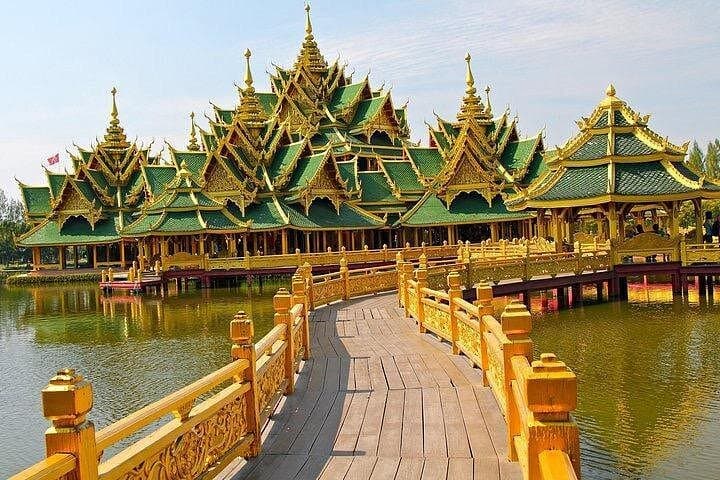
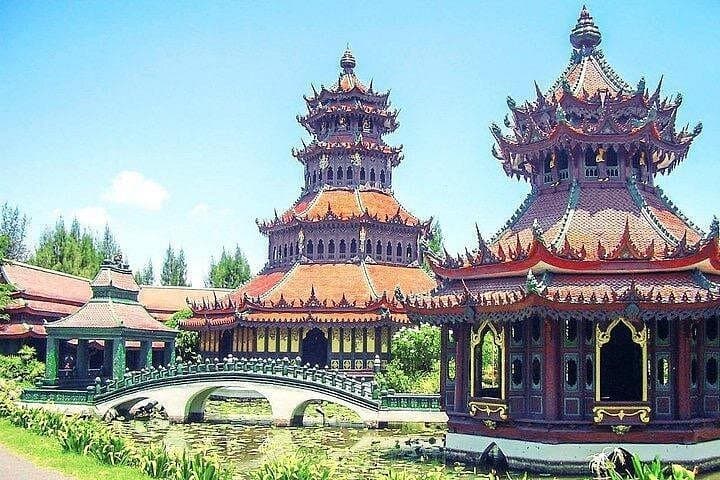
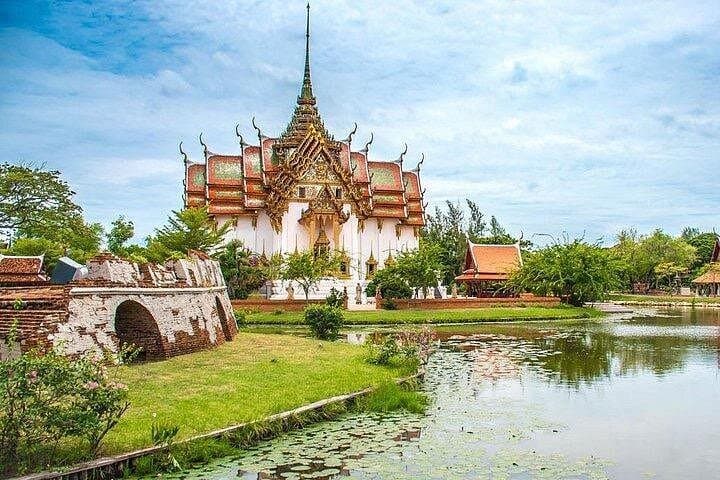
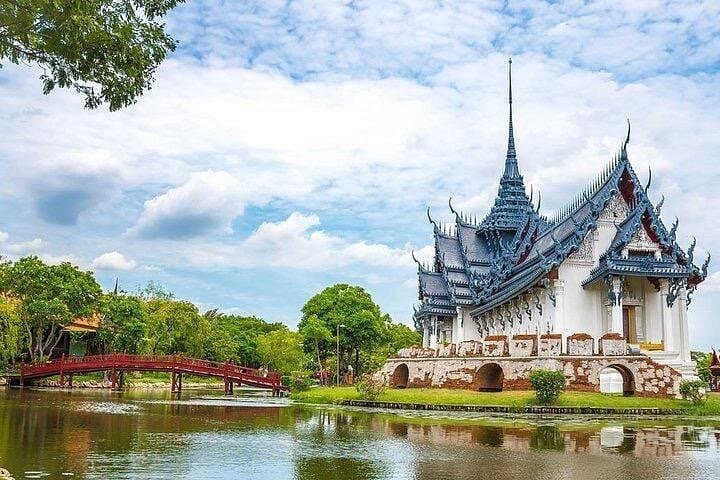
You step through a gate and the scale of Muang Boran unfolds like a map come to life: low-slung temple roofs, limestone pagodas and palace facades arranged across broad lawns and canals that catch the light. Paths curve past miniaturized capitals — Sukhothai stones, Ayutthaya prang, Lanna roofs — each built to show techniques and proportions rather than exact scale.
You step through a gate and the scale of Muang Boran unfolds like a map come to life: low-slung temple roofs, limestone pagodas and palace facades arranged across broad lawns and canals that catch the light. Paths curve past miniaturized capitals — Sukhothai stones, Ayutthaya prang, Lanna roofs — each built to show techniques and proportions rather than exact scale.
The site was created by Khun Lek Viriyaphant in the 20th century to gather Thailand’s architectural heritage in a single outdoor campus. Buildings are often one-third scale or reconstructed originals moved and reassembled; the layout follows a stylized map of Thailand so visitors can follow regional styles from Dvaravati through Rattanakosin in a matter of hours. Geologically the park sits on low coastal plain west of the Gulf of Thailand, so terrain is flat, with planted groves, irrigation canals and occasional ponds that attract wading birds.
Expect a museum that feels like a gentle walking loop rather than a single landmark: photography opportunities are everywhere, and interpretive plaques explain era and provenance. Cultural notes: respect temple etiquette when entering shrines, remove shoes, and modest dress is expected inside sacred reconstructions.
Practical guidance: arrive early to avoid midday heat and allow 4–6 hours to move at a relaxed pace; bring sun protection, refillable water and cash for snacks. Mobility is easy on paved paths but there are long distances between clusters — consider renting a bicycle or golf cart if you want to cover more ground. The museum is open daily; check local transport options from Bangkok and plan around Thailand’s hot and rainy seasons.